THE ADVENTURE COLLECTIVE® · Independent discovery and booking for outdoor travel

Trace 1,700 years of history through Diocletian’s Palace as a local guide points out Roman engineering, Venetian squares and Game of Thrones filming spots. This two-hour walking tour blends archaeological depth with on-set stories and practical tips for exploring Split’s historic core.
Trace 1,700 years of history through Diocletian’s Palace as a local guide points out Roman engineering, Venetian squares and Game of Thrones filming spots. This two-hour walking tour blends archaeological depth with on-set stories and practical tips for exploring Split’s historic core.
Stand on the Riva at sunrise and the sea breathes against Split’s waterfront while the Brass Gates open onto 1,700 years of history.
Verified experiences and guided adventures in the surrounding area.
Operated by Ina Nikolic · Split, Split-Dalmatia County
Stand on the Riva at sunrise and the sea breathes against Split’s waterfront while the Brass Gates open onto 1,700 years of history.
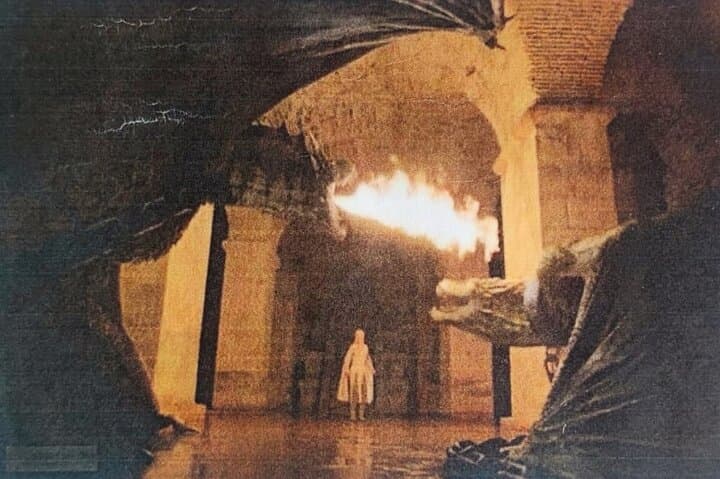
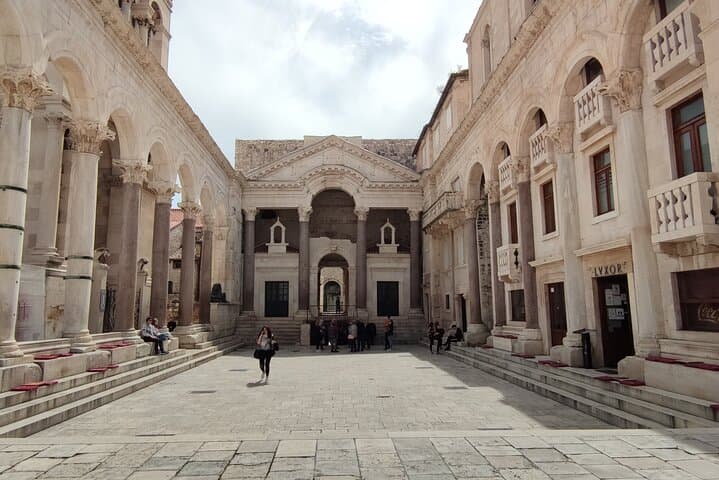
This two-hour walking tour traces the bones of Diocletian’s Palace—its cellars, Peristyle, Golden Gate and Pjaca—locations that double as ancient architecture and the atmospheric streets of Meereen in Game of Thrones. Built in the late 3rd–early 4th century CE as Emperor Diocletian’s retirement palace, the complex is both a living neighborhood and an archaeological site carved from local limestone and marble, with Roman foundations under medieval facades.
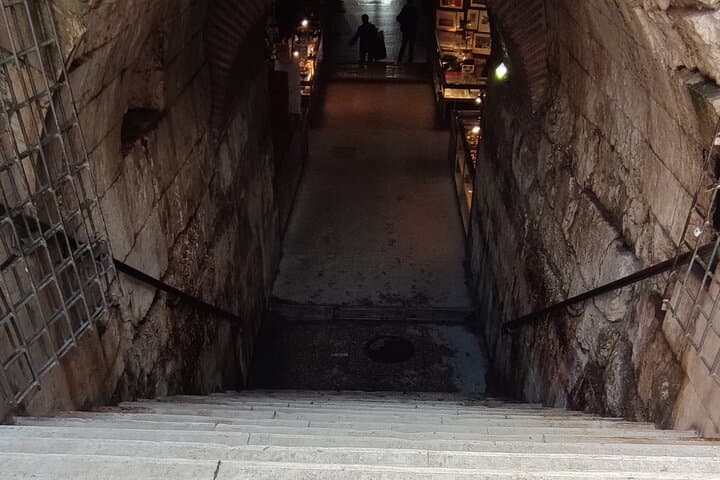
Culturally, Split is pragmatic and vibrant: cafés occupy Roman colonnades, fishermen pull nets at the quay and local guides weave civic history with on-set anecdotes. The palace cellars feel cool and compact—stone corridors where film crews framed scenes—and Peristyle’s columns still host impromptu music and small ceremonies.
Practical guidance: plan for roughly 1–2 miles (1.5–3 km) of slow walking across cobbled surfaces and occasional steps. Comfortable shoes and a light jacket are recommended; the route is flat but uneven. Tours often start at the Brass Gates on the Riva—arrive 10 minutes early to meet your guide.
Timing matters: mornings are quieter for photography; late afternoons have warmer light but more crowds. Respect signage: many interior spaces are protected ruins—no climbing or touching carved stone. Bring water, a charged phone for photos, and curiosity—this is a tour that pairs local history with a cinematic lens.
easy.
2 hours.
Suitable for most ability levels; requires standing and easy walking for 90–120 minutes
The tour lasts about two hours and covers roughly 1.5–3 km (1–2 miles) of easy walking around Diocletian’s Palace and nearby squares.
The itinerary visits public spaces and palace cellars seen from outside; any paid museum entries are typically not included—confirm with the operator beforehand.
Parts of the route are cobbled and include stairs; some areas are stroller-accessible but wheelchair access is limited—contact the provider for details on accessibility options.
Yes—licensed guides identify filming locations and share behind-the-scenes photos while blending historical context with on-set stories.
Diocletian’s Palace was constructed around 305 CE as the retirement residence of Emperor Diocletian; its continuous habitation created a unique urban overlay of Roman, medieval and Venetian architecture.
The palace is a UNESCO World Heritage core area; visitors should avoid touching masonry, stay on marked paths and support licensed guides who follow conservation rules.
Ina Nikolic operates guided outdoor trips and adventures with an emphasis on safety, stewardship, and memorable experiences.

Stand on the Riva at sunrise and the sea breathes against Split’s waterfront while the Brass Gates open onto 1,700 years of history.
Stand on the Riva at sunrise and the sea breathes against Split’s waterfront while the Brass Gates open onto 1,700 years of history.
This two-hour walking tour traces the bones of Diocletian’s Palace—its cellars, Peristyle, Golden Gate and Pjaca—locations that double as ancient architecture and the atmospheric streets of Meereen in Game of Thrones. Built in the late 3rd–early 4th century CE as Emperor Diocletian’s retirement palace, the complex is both a living neighborhood and an archaeological site carved from local limestone and marble, with Roman foundations under medieval facades.
Culturally, Split is pragmatic and vibrant: cafés occupy Roman colonnades, fishermen pull nets at the quay and local guides weave civic history with on-set anecdotes. The palace cellars feel cool and compact—stone corridors where film crews framed scenes—and Peristyle’s columns still host impromptu music and small ceremonies.
Practical guidance: plan for roughly 1–2 miles (1.5–3 km) of slow walking across cobbled surfaces and occasional steps. Comfortable shoes and a light jacket are recommended; the route is flat but uneven. Tours often start at the Brass Gates on the Riva—arrive 10 minutes early to meet your guide.
Timing matters: mornings are quieter for photography; late afternoons have warmer light but more crowds. Respect signage: many interior spaces are protected ruins—no climbing or touching carved stone. Bring water, a charged phone for photos, and curiosity—this is a tour that pairs local history with a cinematic lens.