THE ADVENTURE COLLECTIVE® · Independent discovery and booking for outdoor travel

Climb onto a vintage Tomos and ride the streets of Split the way locals did in the 1980s. This small-group tour blends hands-on moped time with stops at Diocletian’s Palace, Marjan hill and hidden coastal bays.
Climb onto a vintage Tomos and ride the streets of Split the way locals did in the 1980s. This small-group tour blends hands-on moped time with stops at Diocletian’s Palace, Marjan hill and hidden coastal bays.
The engine coughs to life and the Adriatic breeze nudges your jacket as a line of small, yellow Tomos mopeds threads the palm-fringed Riva. Riding these compact Croatian icons, you feel the city’s pace — a mix of sea-smoothed calm and sudden urban pulse — as your guide steers you from Poljud’s stadium lights up into the pine-scented slopes of Marjan.
Verified experiences and guided adventures in the surrounding area.
Operated by Vintage Tomos Tour Split · Split, Split-Dalmatia
The engine coughs to life and the Adriatic breeze nudges your jacket as a line of small, yellow Tomos mopeds threads the palm-fringed Riva. Riding these compact Croatian icons, you feel the city’s pace — a mix of sea-smoothed calm and sudden urban pulse — as your guide steers you from Poljud’s stadium lights up into the pine-scented slopes of Marjan.
Tomos mopeds were woven into everyday life across Dalmatia in the 1980s: postmen, students and grandparents all rode the same stubby machines that locals called “Koze” (goats) for their distinctive sound. The tour pairs that social history with Split’s deeper past — glimpses of Diocletian’s palace substructures, a UNESCO-listed Roman heart; Ivan Meštrović’s gallery, where 20th-century sculpture meets the Mediterranean light; and quieter corners like Kasjuni bay and Vidilica viewpoint.
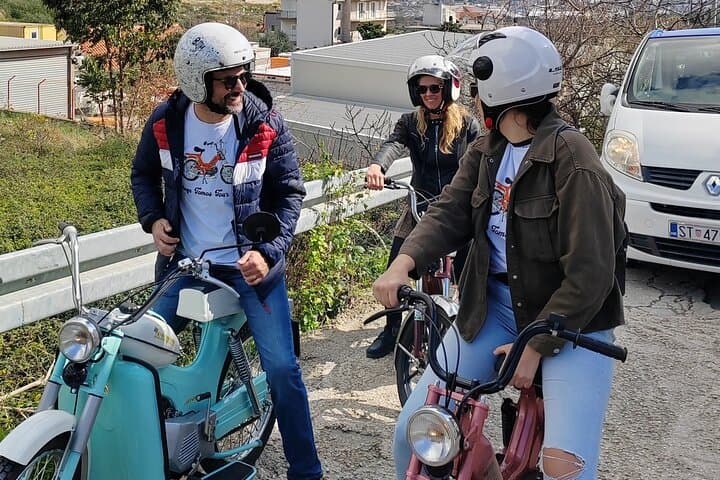
Expect short, manageable bursts of riding on cobbled streets and coastal roads, with frequent stops for photos and local stories. Small groups (max eight) keep the pace relaxed; the operator provides a short moped orientation at Poljud and serves coffee and craft juice at a local kafic.
Practical essentials: bring a valid driving license recognized in Croatia, closed-toe shoes and a lightweight jacket for the hilltop breeze. Morning or late-afternoon departures dodge the midday heat and crowded promenades. Cobblestones and narrow alleys demand attention — ride conservatively, keep hydration handy, and let the guide pick the lines through the old town. This is equal parts urban history lesson and hands-on vintage transport experience, best for travelers who want a low‑impact, high-character way to see Split.
easy.
2–3 hours.
Low to moderate—suitable for most travelers who can balance on a small moped and climb short stair sections during stops.
No—tours include a basic orientation at Poljud stadium and are designed for first-time riders, but you must feel comfortable balancing and braking on a small moped.
Yes—participants should bring a valid driving license recognized in Croatia; rules vary by nationality, so check with the operator before booking.
Groups are capped at eight riders; most tours start near Poljud Stadium where the safety briefing and equipment check take place.
The operator may cancel for heavy rain or unsafe conditions with a full refund if canceled at least 24 hours prior; light rain can often proceed with appropriate gear.
Tomos mopeds became a Balkan staple in the late 20th century; Split’s historic core grew around Diocletian’s 4th-century palace, now a UNESCO World Heritage site.
Marjan Park and local beaches are actively managed—respect trail closures, avoid littering, and stick to marked paths to protect native pine and coastal scrub.
Vintage Tomos Tour Split operates guided outdoor trips and adventures with an emphasis on safety, stewardship, and memorable experiences.
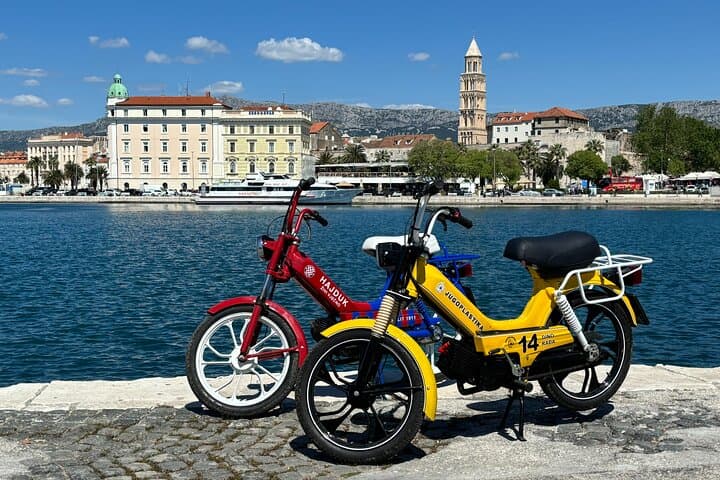

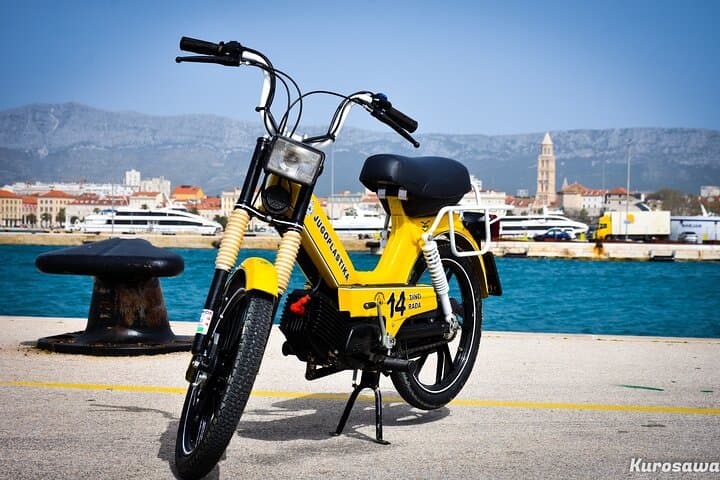
The engine coughs to life and the Adriatic breeze nudges your jacket as a line of small, yellow Tomos mopeds threads the palm-fringed Riva. Riding these compact Croatian icons, you feel the city’s pace — a mix of sea-smoothed calm and sudden urban pulse — as your guide steers you from Poljud’s stadium lights up into the pine-scented slopes of Marjan.
The engine coughs to life and the Adriatic breeze nudges your jacket as a line of small, yellow Tomos mopeds threads the palm-fringed Riva. Riding these compact Croatian icons, you feel the city’s pace — a mix of sea-smoothed calm and sudden urban pulse — as your guide steers you from Poljud’s stadium lights up into the pine-scented slopes of Marjan.
Tomos mopeds were woven into everyday life across Dalmatia in the 1980s: postmen, students and grandparents all rode the same stubby machines that locals called “Koze” (goats) for their distinctive sound. The tour pairs that social history with Split’s deeper past — glimpses of Diocletian’s palace substructures, a UNESCO-listed Roman heart; Ivan Meštrović’s gallery, where 20th-century sculpture meets the Mediterranean light; and quieter corners like Kasjuni bay and Vidilica viewpoint.
Expect short, manageable bursts of riding on cobbled streets and coastal roads, with frequent stops for photos and local stories. Small groups (max eight) keep the pace relaxed; the operator provides a short moped orientation at Poljud and serves coffee and craft juice at a local kafic.
Practical essentials: bring a valid driving license recognized in Croatia, closed-toe shoes and a lightweight jacket for the hilltop breeze. Morning or late-afternoon departures dodge the midday heat and crowded promenades. Cobblestones and narrow alleys demand attention — ride conservatively, keep hydration handy, and let the guide pick the lines through the old town. This is equal parts urban history lesson and hands-on vintage transport experience, best for travelers who want a low‑impact, high-character way to see Split.