THE ADVENTURE COLLECTIVE® · Independent discovery and booking for outdoor travel

A one‑day shuttle from Split that delivers Mostar’s Old Bridge, the hilltop village of Počitelj, and the limestone pools of Kravice Waterfalls. Perfect for travelers who want a packed, scenic day without driving.
A one‑day shuttle from Split that delivers Mostar’s Old Bridge, the hilltop village of Počitelj, and the limestone pools of Kravice Waterfalls. Perfect for travelers who want a packed, scenic day without driving.
You meet the van in Split before dawn and watch the Dalmatian coast shrink behind you as the road cuts inland toward karst hills. By mid-morning the Neretva River appears, green and quick, daring you to follow its current through Mostar’s stone streets. The Old Bridge (Stari Most) arches over the river like an invitation; below, foam and eddies slide into quieter pools that feed the valley.
Verified experiences and guided adventures in the surrounding area.
Operated by TAXI TRANSFERS SERVICES · Mostar, Herzegovina-Neretva Canton
You meet the van in Split before dawn and watch the Dalmatian coast shrink behind you as the road cuts inland toward karst hills. By mid-morning the Neretva River appears, green and quick, daring you to follow its current through Mostar’s stone streets. The Old Bridge (Stari Most) arches over the river like an invitation; below, foam and eddies slide into quieter pools that feed the valley.
This route threads Ottoman and Austro-Hungarian layers of history: Mostar’s 16th‑century bridge rebuilt after wartime destruction, the fortified settlement of Počitelj clinging to its hillside, and the limestone geology that created Kravice’s horseshoe cascade and shallow travertine basins. Local life still orients around the river—cafes on the banks, fishermen mending lines, and villages where Bosnian-Herzegovinian cuisine leans on grilled meats and river trout.
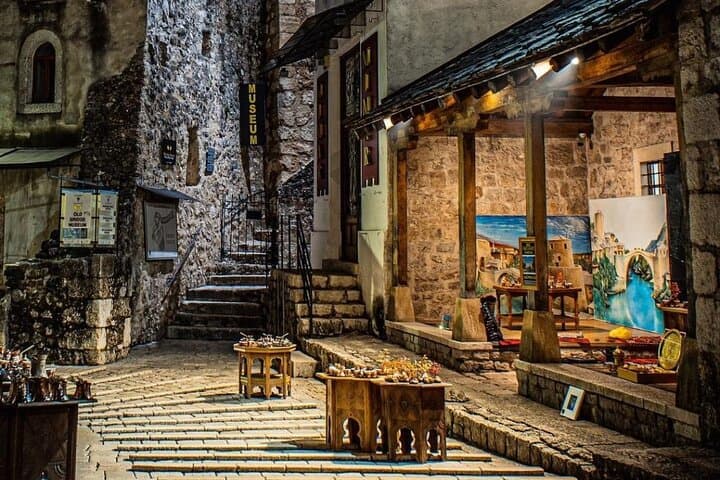
Practically, expect a full day on the road with short, walkable visits: Počitelj’s ramparts (easy climb), Mostar’s Old Bridge area (walking and cobblestones), and a 60–90 minute window at Kravice for photos, swimming, or a riverside snack. Pack swimwear and sturdy sandals for wet limestone, carry ID for the border crossing, and bring cash for small entrance fees and local stalls.
Timing matters: arrive at Kravice early in summer to avoid crowds and mid-day heat; in shoulder seasons the waterfall is quieter and the river moves faster. This is a scenic, low‑technical day that still delivers geology, history, and a vivid river experience.
easy.
10 hours.
Suitable for travelers in normal physical condition; requires short walks on uneven cobbles and a modest uphill in Počitelj.
Yes. The route crosses from Croatia into Bosnia and Herzegovina; bring a valid passport for all nationalities that require one.
Yes—tours typically allow 60–90 minutes at Kravice; swimming depends on weather, water levels, and local regulations.
This tour notes entrance to Kravice is included but check the booking details; small additional fees (parking, optional activities) may apply on site.
Walking is light to moderate: cobbled streets and short stair climbs in Mostar and Počitelj, plus uneven paths at the Kravice pools.
Mostar’s Stari Most was built in the 16th century under Ottoman rule, destroyed in 1993 and reconstructed and reopened in 2004 as a cultural symbol of repair.
Kravice is managed with access fees and rules to protect travertine formations; stick to marked paths, avoid collecting stones, and minimize single-use plastics.
TAXI TRANSFERS SERVICES operates guided outdoor trips and adventures with an emphasis on safety, stewardship, and memorable experiences.
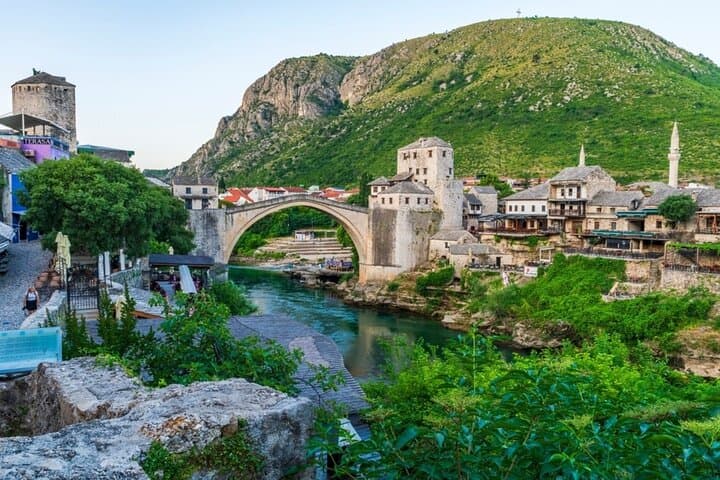
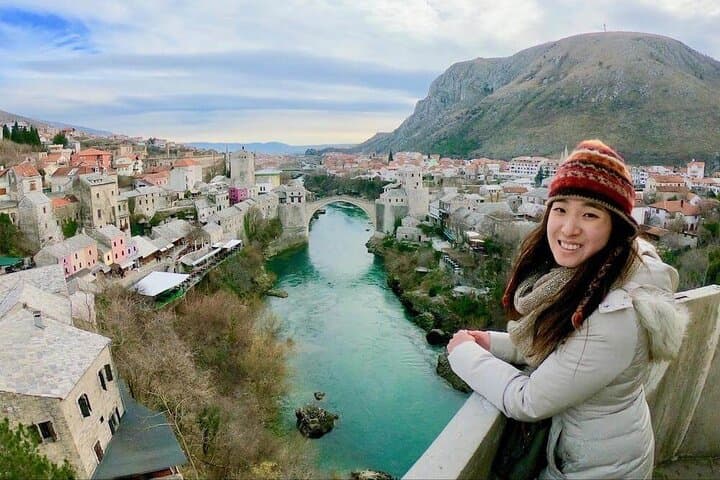
You meet the van in Split before dawn and watch the Dalmatian coast shrink behind you as the road cuts inland toward karst hills. By mid-morning the Neretva River appears, green and quick, daring you to follow its current through Mostar’s stone streets. The Old Bridge (Stari Most) arches over the river like an invitation; below, foam and eddies slide into quieter pools that feed the valley.
You meet the van in Split before dawn and watch the Dalmatian coast shrink behind you as the road cuts inland toward karst hills. By mid-morning the Neretva River appears, green and quick, daring you to follow its current through Mostar’s stone streets. The Old Bridge (Stari Most) arches over the river like an invitation; below, foam and eddies slide into quieter pools that feed the valley.
This route threads Ottoman and Austro-Hungarian layers of history: Mostar’s 16th‑century bridge rebuilt after wartime destruction, the fortified settlement of Počitelj clinging to its hillside, and the limestone geology that created Kravice’s horseshoe cascade and shallow travertine basins. Local life still orients around the river—cafes on the banks, fishermen mending lines, and villages where Bosnian-Herzegovinian cuisine leans on grilled meats and river trout.
Practically, expect a full day on the road with short, walkable visits: Počitelj’s ramparts (easy climb), Mostar’s Old Bridge area (walking and cobblestones), and a 60–90 minute window at Kravice for photos, swimming, or a riverside snack. Pack swimwear and sturdy sandals for wet limestone, carry ID for the border crossing, and bring cash for small entrance fees and local stalls.
Timing matters: arrive at Kravice early in summer to avoid crowds and mid-day heat; in shoulder seasons the waterfall is quieter and the river moves faster. This is a scenic, low‑technical day that still delivers geology, history, and a vivid river experience.