THE ADVENTURE COLLECTIVE® · Independent discovery and booking for outdoor travel

Paddle from Kaiteriteri Beach to the dramatic Split Apple Rock on a three‑hour guided kayak tour. Stable double kayaks and an experienced guide make this an accessible coastal exploration of granite headlands, hidden coves and sheltered beaches.
Paddle from Kaiteriteri Beach to the dramatic Split Apple Rock on a three‑hour guided kayak tour. Stable double kayaks and an experienced guide make this an accessible coastal exploration of granite headlands, hidden coves and sheltered beaches.
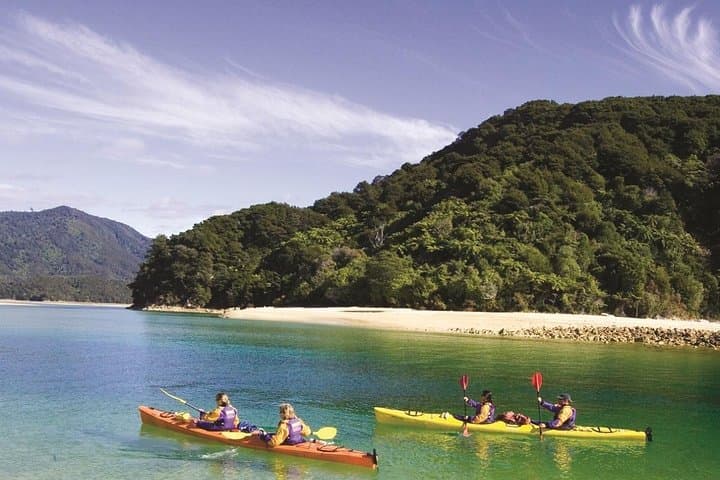
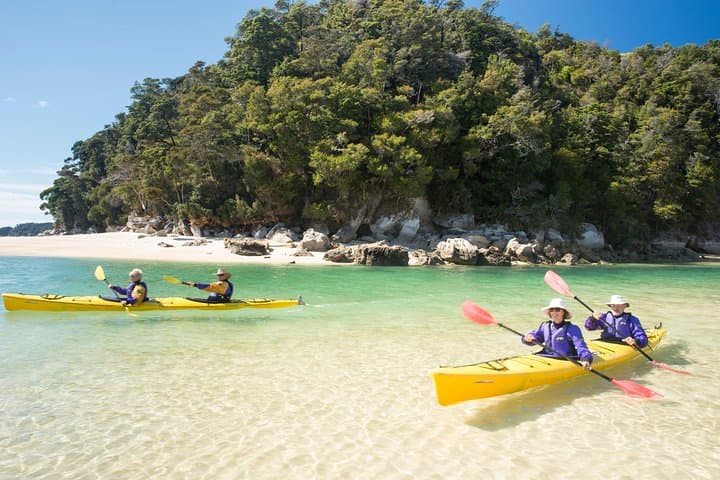
The sea parts around your kayak as you push off the golden sand of Kaiteriteri Beach, guides calling final instructions while the coastline unspools—granite headlands, sheltered coves and a scatter of small beaches.
Verified experiences and guided adventures in the surrounding area.
Operated by Wilsons Abel Tasman National Park Limited · Kaiteriteri, Tasman
The sea parts around your kayak as you push off the golden sand of Kaiteriteri Beach, guides calling final instructions while the coastline unspools—granite headlands, sheltered coves and a scatter of small beaches.
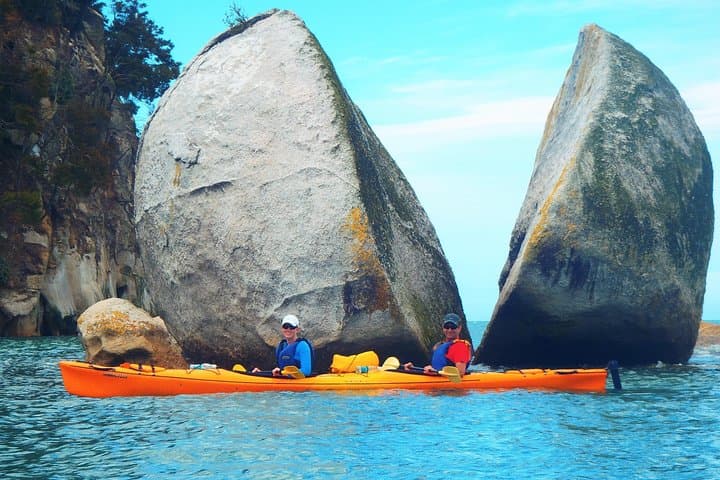
This three‑hour guided paddle threads between sculpted granite outcrops toward Split Apple Rock (Tokangawhā), a large, naturally split boulder perched just offshore. The rock’s clean fissure and the low, rounded headlands are the visible edge of ancient granite carved by wind, waves and time; Māori in the region have long known these shores for their fisheries and coastal routes.
Expect calm, inshore paddling with frequent stops for photos and short beach breaks. The route is largely sheltered by headlands, but tidal flow and wind direction govern how easy the return stroke feels—on a south breeze the ocean can push you playfully, on a northerly it asks for steady rhythm.
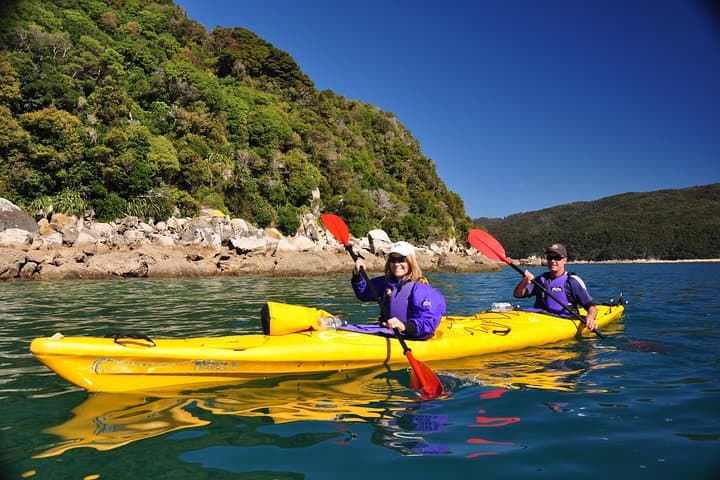
Practical details: guides supply stable double kayaks, spray skirts, buoyancy vests and dry bags; no prior experience required. Plan for roughly 4–6 km total distance and minimal elevation change—this is coastal travel, not a hike. Bring sun protection and a light waterproof layer; water temperatures can be brisk outside peak summer. Mid-morning departures often find smoother water; operators will cancel in poor weather for safety.
This outing suits travelers who want scenic, low‑impact sea time with interpretive local knowledge—an efficient way to reach Split Apple Rock while learning about the geology, coastal ecology and navigation of Tasman Bay.
easy.
3 hours.
Suitable for most fitness levels; requires basic upper‑body endurance for continuous paddling and ability to re‑enter a kayak from shore.
No—guides provide instruction, stable double kayaks and pair solo travelers with a guide or another guest.
The outing is roughly 4–6 km round trip depending on beach stops and the exact route chosen by the guide.
Operators cancel or reschedule in unsafe sea or wind conditions; the tour description notes cancellation for bad weather and insufficient travelers.
Yes—buoyancy vests are supplied and must be worn for the duration of the paddle.
The Kaiteriteri coast and Split Apple Rock sit within the broader rohe used by local Māori for generations, with the shoreline important for fishing and coastal travel.
Operators emphasize low‑impact landings and avoid sensitive habitats; stick to guide instructions to minimize disturbance to wildlife and shore habitats.
Wilsons Abel Tasman National Park Limited operates guided outdoor trips and adventures with an emphasis on safety, stewardship, and memorable experiences.
The sea parts around your kayak as you push off the golden sand of Kaiteriteri Beach, guides calling final instructions while the coastline unspools—granite headlands, sheltered coves and a scatter of small beaches.
The sea parts around your kayak as you push off the golden sand of Kaiteriteri Beach, guides calling final instructions while the coastline unspools—granite headlands, sheltered coves and a scatter of small beaches.
This three‑hour guided paddle threads between sculpted granite outcrops toward Split Apple Rock (Tokangawhā), a large, naturally split boulder perched just offshore. The rock’s clean fissure and the low, rounded headlands are the visible edge of ancient granite carved by wind, waves and time; Māori in the region have long known these shores for their fisheries and coastal routes.
Expect calm, inshore paddling with frequent stops for photos and short beach breaks. The route is largely sheltered by headlands, but tidal flow and wind direction govern how easy the return stroke feels—on a south breeze the ocean can push you playfully, on a northerly it asks for steady rhythm.
Practical details: guides supply stable double kayaks, spray skirts, buoyancy vests and dry bags; no prior experience required. Plan for roughly 4–6 km total distance and minimal elevation change—this is coastal travel, not a hike. Bring sun protection and a light waterproof layer; water temperatures can be brisk outside peak summer. Mid-morning departures often find smoother water; operators will cancel in poor weather for safety.
This outing suits travelers who want scenic, low‑impact sea time with interpretive local knowledge—an efficient way to reach Split Apple Rock while learning about the geology, coastal ecology and navigation of Tasman Bay.