THE ADVENTURE COLLECTIVE® · Independent discovery and booking for outdoor travel

Spend two hours walking Darjeeling’s spiritual circuit—start at the Japanese Buddhist Temple, cross quiet lanes to the Peace Pagoda and finish at Dali Monastery. This guided tour blends local history, Buddhist practice and hill-town life with easy walking and insider stories.
Spend two hours walking Darjeeling’s spiritual circuit—start at the Japanese Buddhist Temple, cross quiet lanes to the Peace Pagoda and finish at Dali Monastery. This guided tour blends local history, Buddhist practice and hill-town life with easy walking and insider stories.
Morning mist lifts off the ridgelines as you step from narrow lanes into a cool, cedar-scented air. The tour begins at the Japanese Buddhist Temple, where prayer flags stir like quiet conversation and footsteps fall easily on stone. The guide leads, pointing out carved eaves and a lane that opens to the Peace Pagoda, its white domes catching slivers of sunlight.
Verified experiences and guided adventures in the surrounding area.
Operated by Yo Tours Goa · Darjeeling, West Bengal
Morning mist lifts off the ridgelines as you step from narrow lanes into a cool, cedar-scented air. The tour begins at the Japanese Buddhist Temple, where prayer flags stir like quiet conversation and footsteps fall easily on stone. The guide leads, pointing out carved eaves and a lane that opens to the Peace Pagoda, its white domes catching slivers of sunlight.
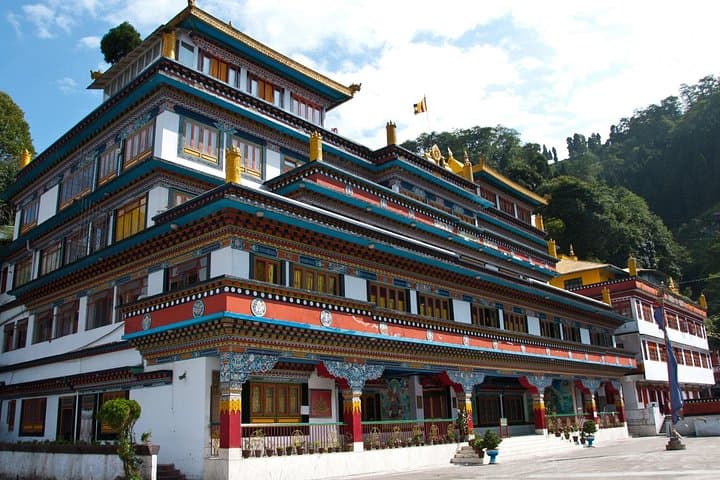
Darjeeling is a colonial-era hill station hewn from the Lesser Himalaya; its slopes are carved by drives and tea gardens where the soil holds volcanic and metamorphic fragments that give the hills their rugged profile. Buddhism and Tibetan culture thread through the town—monasteries, chortens and the Druk Thupten Sangag Choeling (Dali Monastery) reflect waves of migration and spiritual practice alongside the English-era Rajbari mansions and bustling bazaars.
Expect two hours of gentle walking on paved lanes, occasional stone steps and narrow alleys. The pace is conversational—infotainment, as the guide calls it—mixing local lore, temple etiquette and tips for tea estate visits. Bring layers for sudden sun or wind, a refillable water bottle, and small change for local stalls. Early morning light sharpens views of Kanchenjunga on clear days; afternoons mean more traffic and market noise.
Practical notes: the route is accessible for most fitness levels, stroller- and wheelchair-friendly in parts, and suitable for visitors wanting culture and mild outdoor time. Respect shrine protocols, keep to paths to protect fragile vegetation, and carry a mask for crowded market stretches.
easy.
2 hours.
Suitable for most visitors; light walking ability and ability to climb short flights of steps recommended
The guided route runs about two hours at an easy pace—total distance typically 3–4 km depending on detours into lanes.
Yes—it's rated easy with mostly paved paths; some short steps occur but the guide can adjust pace and route for mobility needs.
Guides are trained and speak English and Hindi; advance requests may secure other language support.
No paid admissions are required for the stops listed, but donations are customary at some shrines and monasteries.
Darjeeling grew as a British hill station in the 19th century and later became a center for tea cultivation and Tibetan-Bhutanese cultural exchange, visible in its monasteries and bazaars.
The town’s slopes are ecologically sensitive; stick to marked paths, avoid single-use plastics, and support community-run conservation initiatives where possible.
Yo Tours Goa operates guided outdoor trips and adventures with an emphasis on safety, stewardship, and memorable experiences.
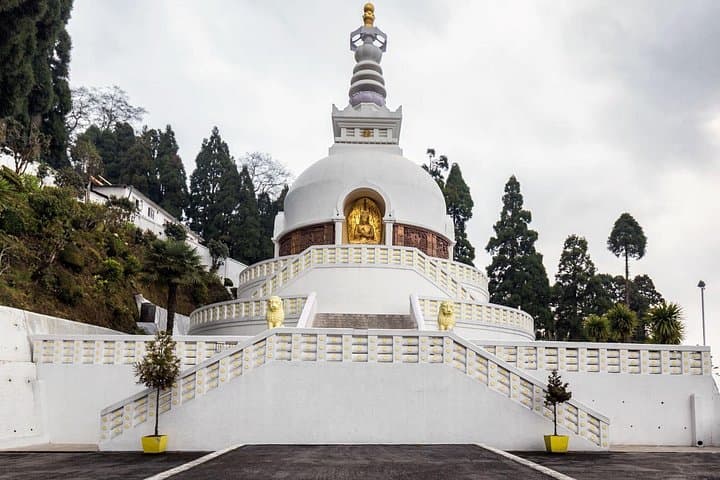
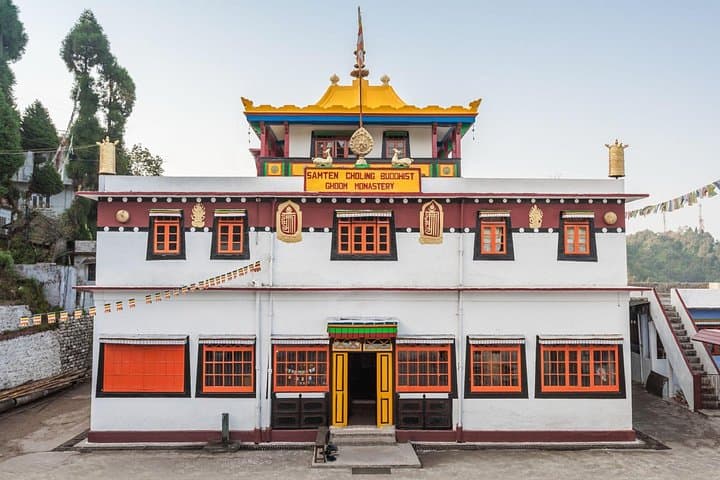
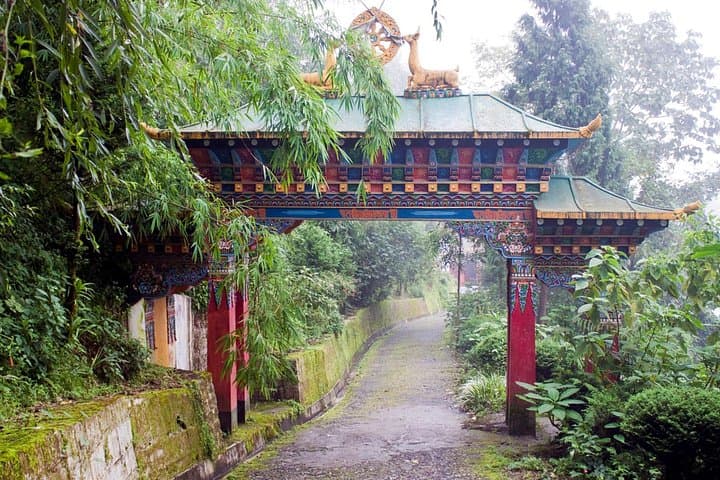
Morning mist lifts off the ridgelines as you step from narrow lanes into a cool, cedar-scented air. The tour begins at the Japanese Buddhist Temple, where prayer flags stir like quiet conversation and footsteps fall easily on stone. The guide leads, pointing out carved eaves and a lane that opens to the Peace Pagoda, its white domes catching slivers of sunlight.
Morning mist lifts off the ridgelines as you step from narrow lanes into a cool, cedar-scented air. The tour begins at the Japanese Buddhist Temple, where prayer flags stir like quiet conversation and footsteps fall easily on stone. The guide leads, pointing out carved eaves and a lane that opens to the Peace Pagoda, its white domes catching slivers of sunlight.
Darjeeling is a colonial-era hill station hewn from the Lesser Himalaya; its slopes are carved by drives and tea gardens where the soil holds volcanic and metamorphic fragments that give the hills their rugged profile. Buddhism and Tibetan culture thread through the town—monasteries, chortens and the Druk Thupten Sangag Choeling (Dali Monastery) reflect waves of migration and spiritual practice alongside the English-era Rajbari mansions and bustling bazaars.
Expect two hours of gentle walking on paved lanes, occasional stone steps and narrow alleys. The pace is conversational—infotainment, as the guide calls it—mixing local lore, temple etiquette and tips for tea estate visits. Bring layers for sudden sun or wind, a refillable water bottle, and small change for local stalls. Early morning light sharpens views of Kanchenjunga on clear days; afternoons mean more traffic and market noise.
Practical notes: the route is accessible for most fitness levels, stroller- and wheelchair-friendly in parts, and suitable for visitors wanting culture and mild outdoor time. Respect shrine protocols, keep to paths to protect fragile vegetation, and carry a mask for crowded market stretches.