THE ADVENTURE COLLECTIVE® · Independent discovery and booking for outdoor travel

Cut across emerald water to the famous limestone towers of Phang Nga Bay, paddle through quiet sea caves, and stand where a James Bond scene was filmed. This full-day speedboat and canoe tour from Phuket blends easy paddling with dramatic coastal scenery.
Cut across emerald water to the famous limestone towers of Phang Nga Bay, paddle through quiet sea caves, and stand where a James Bond scene was filmed. This full-day speedboat and canoe tour from Phuket blends easy paddling with dramatic coastal scenery.
The morning opens on a low, silver sea as the speedboat cuts toward a forest of limestone pillars rising like columns from the water. Salt spray writes a quick, bright line across your face; the karsts loom larger, their sheer faces streaked with shadow and scrub. You step ashore at Khao Phing Kan — the rock that became James Bond’s screen-stage — and the island’s strange silhouette anchors the bay.
Verified experiences and guided adventures in the surrounding area.
Operated by Oh-Hoo · Phuket, Phuket
The morning opens on a low, silver sea as the speedboat cuts toward a forest of limestone pillars rising like columns from the water. Salt spray writes a quick, bright line across your face; the karsts loom larger, their sheer faces streaked with shadow and scrub. You step ashore at Khao Phing Kan — the rock that became James Bond’s screen-stage — and the island’s strange silhouette anchors the bay.
This landscape is young in geological terms: uplifted Permian limestones sculpted over millennia by seawater and rain into towers, caves and mangrove channels. Phang Nga Bay gained global recognition after the 1974 film The Man With The Golden Gun, and it now sits within Ao Phang Nga National Park, an area managed for both conservation and tourism.
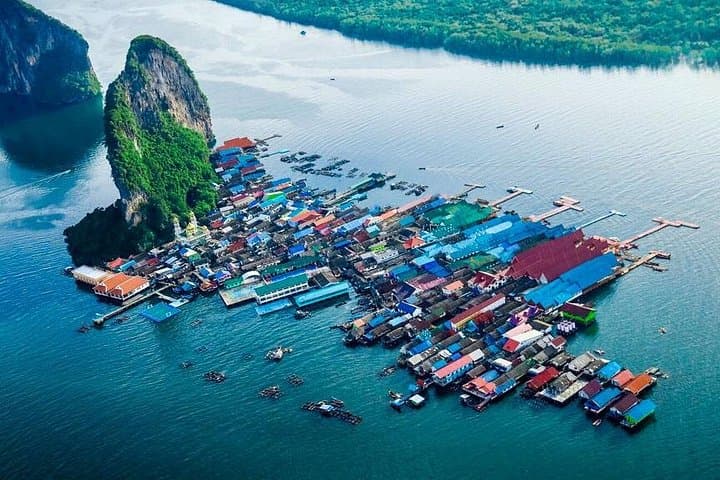
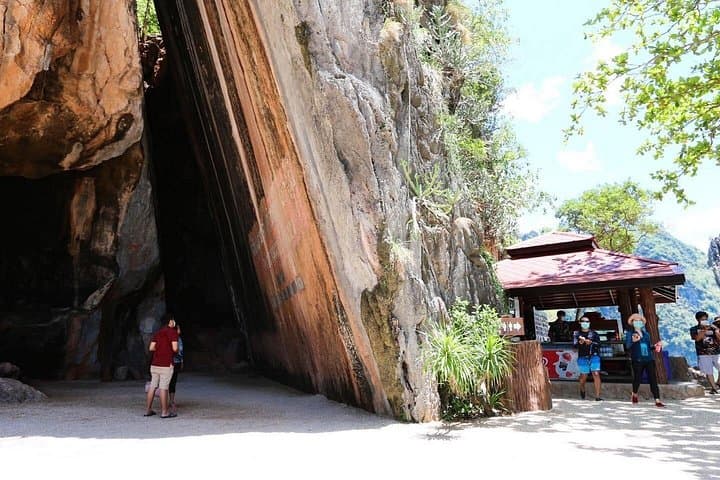
Culture here is maritime: floating villages, Muslim fishing communities and longtail-boat pilots whose livelihoods are tied to the tides. On a guided canoe you’ll slip into narrow sea-cave halls where light threads through holes in the roof, and glide past mangrove roots that seem to reach for your paddle.
Practical guidance: expect a full-day outing (roughly seven hours including transfers). Wear quick-dry clothing, reef-safe sunscreen and secure footwear; bring a dry bag for cameras. Sea conditions can change — mornings are calmer — and guides will brief basic paddling techniques before entering caves. Respect posted signs, avoid climbing fragile rock faces, and carry drinking water; operators generally include lunch, life jackets and hotel pickup from Phuket. This is a straightforward but sensory-rich day on the water — dynamic, tactile and surprisingly quiet between the karsts.
moderate.
7 hours.
Suitable for most fitness levels; basic paddling stamina and ability to climb small laddered landings recommended
The full excursion is about seven hours (420 minutes), including round-trip hotel transfers within designated Phuket zones.
No — guides provide basic instruction and life jackets; however, you should be comfortable sitting in a low canoe and paddling for short stretches.
Yes — the itinerary usually includes a swim stop, but follow guides’ instructions and avoid coral areas; depth and currents vary by spot.
Children are typically allowed (child fares apply, often ages 4–11), but operators may restrict very young children for safety and minimum-group requirements.
Phang Nga Bay rose to international fame after the 1974 James Bond film; the area is now part of Ao Phang Nga National Park, protected for its karst islands and marine habitats.
Tourism pressures require operators to limit impacts — use reef-safe sunscreen, avoid touching rock faces or corals, and follow guide instructions to protect fragile habitats.
Oh-Hoo operates guided outdoor trips and adventures with an emphasis on safety, stewardship, and memorable experiences.
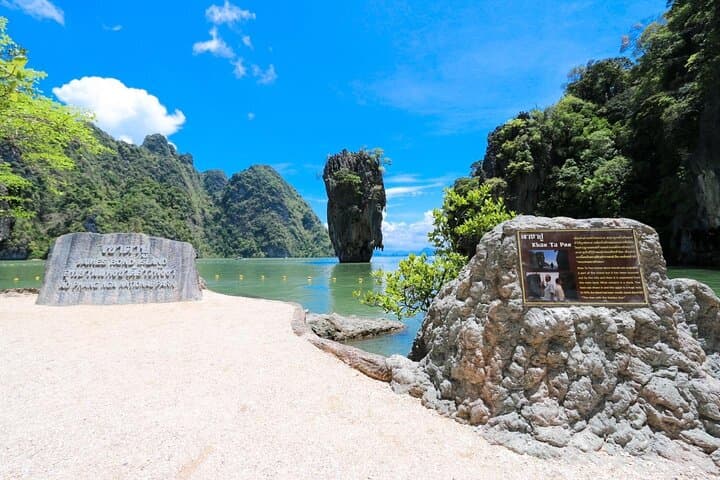
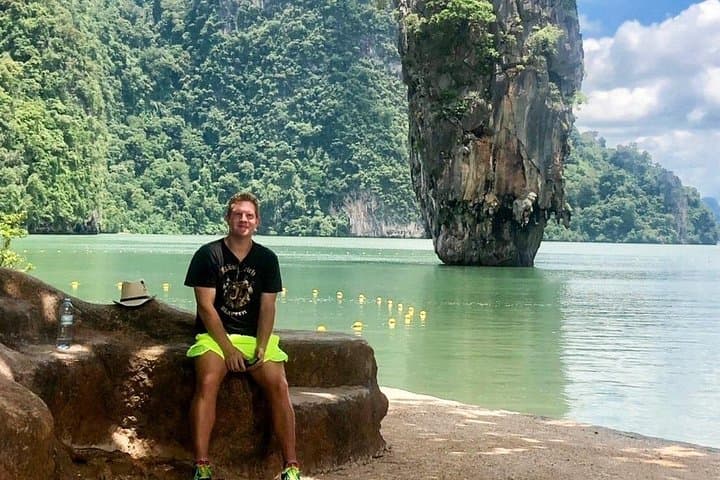
The morning opens on a low, silver sea as the speedboat cuts toward a forest of limestone pillars rising like columns from the water. Salt spray writes a quick, bright line across your face; the karsts loom larger, their sheer faces streaked with shadow and scrub. You step ashore at Khao Phing Kan — the rock that became James Bond’s screen-stage — and the island’s strange silhouette anchors the bay.
The morning opens on a low, silver sea as the speedboat cuts toward a forest of limestone pillars rising like columns from the water. Salt spray writes a quick, bright line across your face; the karsts loom larger, their sheer faces streaked with shadow and scrub. You step ashore at Khao Phing Kan — the rock that became James Bond’s screen-stage — and the island’s strange silhouette anchors the bay.
This landscape is young in geological terms: uplifted Permian limestones sculpted over millennia by seawater and rain into towers, caves and mangrove channels. Phang Nga Bay gained global recognition after the 1974 film The Man With The Golden Gun, and it now sits within Ao Phang Nga National Park, an area managed for both conservation and tourism.
Culture here is maritime: floating villages, Muslim fishing communities and longtail-boat pilots whose livelihoods are tied to the tides. On a guided canoe you’ll slip into narrow sea-cave halls where light threads through holes in the roof, and glide past mangrove roots that seem to reach for your paddle.
Practical guidance: expect a full-day outing (roughly seven hours including transfers). Wear quick-dry clothing, reef-safe sunscreen and secure footwear; bring a dry bag for cameras. Sea conditions can change — mornings are calmer — and guides will brief basic paddling techniques before entering caves. Respect posted signs, avoid climbing fragile rock faces, and carry drinking water; operators generally include lunch, life jackets and hotel pickup from Phuket. This is a straightforward but sensory-rich day on the water — dynamic, tactile and surprisingly quiet between the karsts.