THE ADVENTURE COLLECTIVE® · Independent discovery and booking for outdoor travel

Four days of Himalayan panoramas and living heritage: an early-morning mountain flight to view Everest, sunrise above Nagarkot, and guided visits to Bhaktapur, Changu Narayan and Kathmandu’s major stupas and squares. Book with weather buffers and come ready for cobbled alleys and cold sunrises.
Four days of Himalayan panoramas and living heritage: an early-morning mountain flight to view Everest, sunrise above Nagarkot, and guided visits to Bhaktapur, Changu Narayan and Kathmandu’s major stupas and squares. Book with weather buffers and come ready for cobbled alleys and cold sunrises.
You lift off Kathmandu before dawn and the city’s jumble of temples and rooftops falls away; outside the small plane, the Himalaya assemble like a moving wall of ice and rock. Mt. Everest and its neighboring giants cut a jagged horizon while below you the Kathmandu Valley sits in a patchwork of brick towns and terraced fields.
Verified experiences and guided adventures in the surrounding area.
Operated by EncountersNepal.com · Kathmandu, Bagmati Province
You lift off Kathmandu before dawn and the city’s jumble of temples and rooftops falls away; outside the small plane, the Himalaya assemble like a moving wall of ice and rock. Mt. Everest and its neighboring giants cut a jagged horizon while below you the Kathmandu Valley sits in a patchwork of brick towns and terraced fields.
This four-day loop pairs a scenic mountain flight with classic valley sights: sunrise at Nagarkot (2,175 m), the 5th–12th century Changu Narayan temple, and the living medieval streets of Bhaktapur. Geologically the valley is a river basin ringed by uplifted schist and gneiss; the mountain flight reveals the same tectonic drama on a grand scale as the Indian plate pushes under Asia.
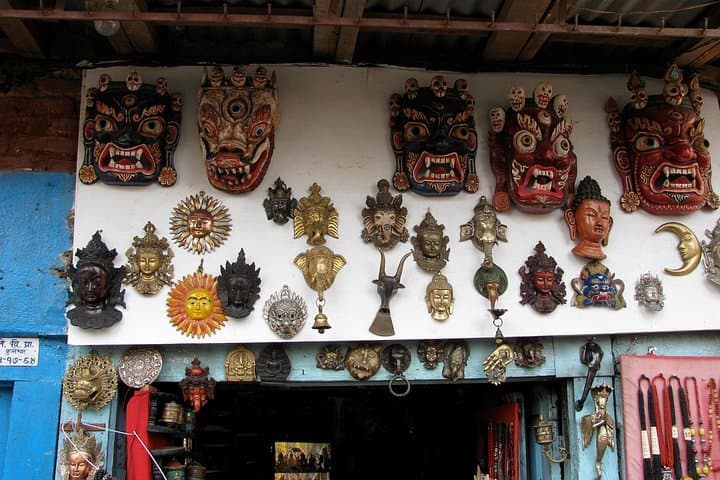
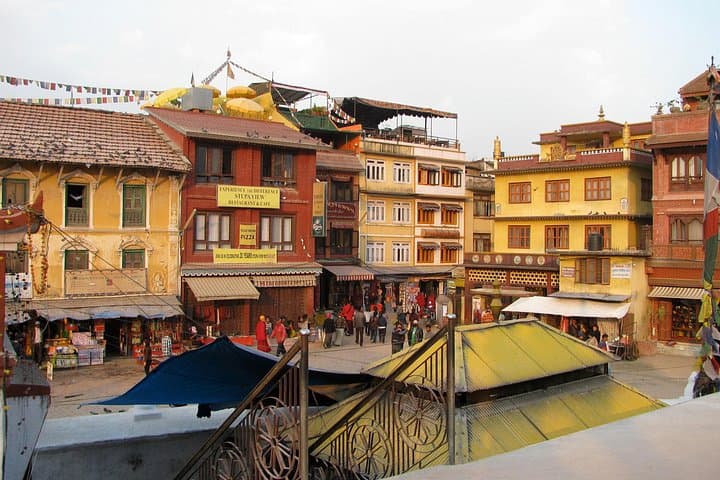
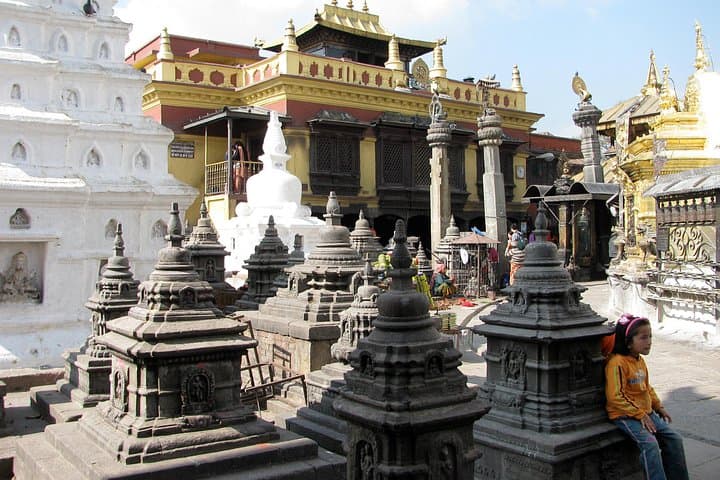
Culturally the tour concentrates on Newar art, pagoda architecture and Hindu-Buddhist rituals visible at Pashupatinath, Boudhanath and Swayambhunath. Expect market life, wood-carved windows and incense smoke in temple courtyards—this is heritage that remained active, not a museum.
Practically: the mountain flight is weather-dependent so schedule buffer days and book morning departures for the clearest views. Nagarkot’s sunrise is cold—pack warm layers and arrive before first light. Walks around Bhaktapur and Patan are on cobblestone and narrow alleys; comfortable walking shoes and a small daypack suffice. Carry Nepalese rupees for small purchases and a photocopy of your passport for entry processes. If you’re sensitive to altitude, move slowly the first day and avoid alcohol before the Nagarkot morning.
This itinerary balances dramatic aerial panoramas with on-the-ground culture, making it a compact introduction to the valley’s history and Himalayan scale.
easy.
4 days.
Suitable for travelers in general good health who can walk on uneven cobblestone streets and manage short stairs; no strenuous fitness required.
Most nationalities can obtain a tourist visa on arrival at Kathmandu; check current embassy rules before travel and carry passport information when booking.
Flights depend on morning visibility and may be delayed or cancelled for weather or weight restrictions; booking early in your trip gives flexibility to reschedule.
Nagarkot (2,175 m) is moderate altitude; most visitors experience no serious effects but should hydrate, move slowly and avoid heavy exertion the first day.
Local guides typically speak English and Nepali; confirm language preferences at booking if you require another language.
Kathmandu Valley contains multiple UNESCO sites reflecting centuries of Newar craftsmanship and the historical fusion of Hindu and Buddhist traditions.
Tourism concentrates pressure on fragile historic sites and water supplies; carry out waste, avoid plastic where possible and follow local guidance at temples.
EncountersNepal.com operates guided outdoor trips and adventures with an emphasis on safety, stewardship, and memorable experiences.
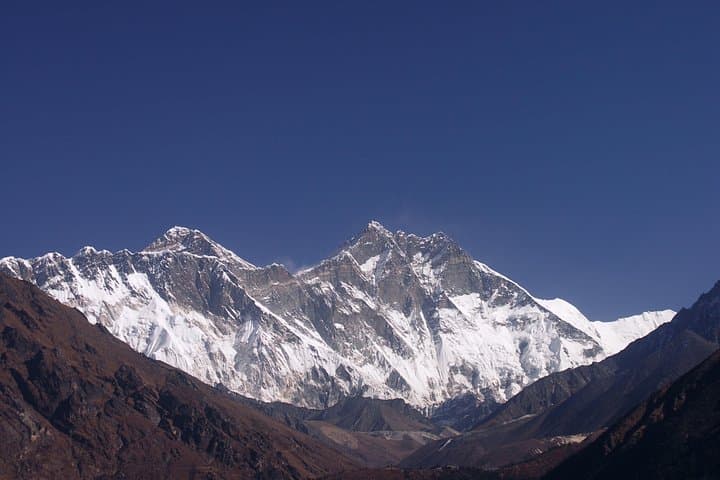
You lift off Kathmandu before dawn and the city’s jumble of temples and rooftops falls away; outside the small plane, the Himalaya assemble like a moving wall of ice and rock. Mt. Everest and its neighboring giants cut a jagged horizon while below you the Kathmandu Valley sits in a patchwork of brick towns and terraced fields.
You lift off Kathmandu before dawn and the city’s jumble of temples and rooftops falls away; outside the small plane, the Himalaya assemble like a moving wall of ice and rock. Mt. Everest and its neighboring giants cut a jagged horizon while below you the Kathmandu Valley sits in a patchwork of brick towns and terraced fields.
This four-day loop pairs a scenic mountain flight with classic valley sights: sunrise at Nagarkot (2,175 m), the 5th–12th century Changu Narayan temple, and the living medieval streets of Bhaktapur. Geologically the valley is a river basin ringed by uplifted schist and gneiss; the mountain flight reveals the same tectonic drama on a grand scale as the Indian plate pushes under Asia.
Culturally the tour concentrates on Newar art, pagoda architecture and Hindu-Buddhist rituals visible at Pashupatinath, Boudhanath and Swayambhunath. Expect market life, wood-carved windows and incense smoke in temple courtyards—this is heritage that remained active, not a museum.
Practically: the mountain flight is weather-dependent so schedule buffer days and book morning departures for the clearest views. Nagarkot’s sunrise is cold—pack warm layers and arrive before first light. Walks around Bhaktapur and Patan are on cobblestone and narrow alleys; comfortable walking shoes and a small daypack suffice. Carry Nepalese rupees for small purchases and a photocopy of your passport for entry processes. If you’re sensitive to altitude, move slowly the first day and avoid alcohol before the Nagarkot morning.
This itinerary balances dramatic aerial panoramas with on-the-ground culture, making it a compact introduction to the valley’s history and Himalayan scale.