THE ADVENTURE COLLECTIVE® · Independent discovery and booking for outdoor travel

Pair panoramic city views from the Space Needle with the vibrant, tactile installations at Chihuly Garden and Glass. This combined ticket is a practical, sensory-packed way to experience Seattle’s skyline and one of its most original art spaces.
Pair panoramic city views from the Space Needle with the vibrant, tactile installations at Chihuly Garden and Glass. This combined ticket is a practical, sensory-packed way to experience Seattle’s skyline and one of its most original art spaces.
You step out of the elevator and the city opens like a map: concrete fingers, the sweep of Elliott Bay, the ragged teeth of the Olympic Mountains beyond. From the Space Needle's new outdoor deck the wind has an opinion about everything below, batting at your jacket, angling the scent of sea salt and coffee toward you. Beneath your feet the Loupe—the world’s first revolving glass floor—offers an unnerving vertigo and a neat, honest view of how small the city is from 520 feet up.
Verified experiences and guided adventures in the surrounding area.
Operated by Space Needle · Seattle, Washington
You step out of the elevator and the city opens like a map: concrete fingers, the sweep of Elliott Bay, the ragged teeth of the Olympic Mountains beyond. From the Space Needle's new outdoor deck the wind has an opinion about everything below, batting at your jacket, angling the scent of sea salt and coffee toward you. Beneath your feet the Loupe—the world’s first revolving glass floor—offers an unnerving vertigo and a neat, honest view of how small the city is from 520 feet up.
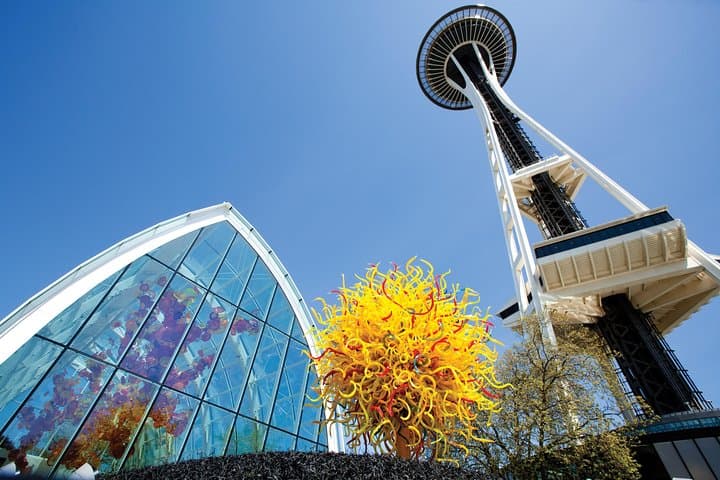
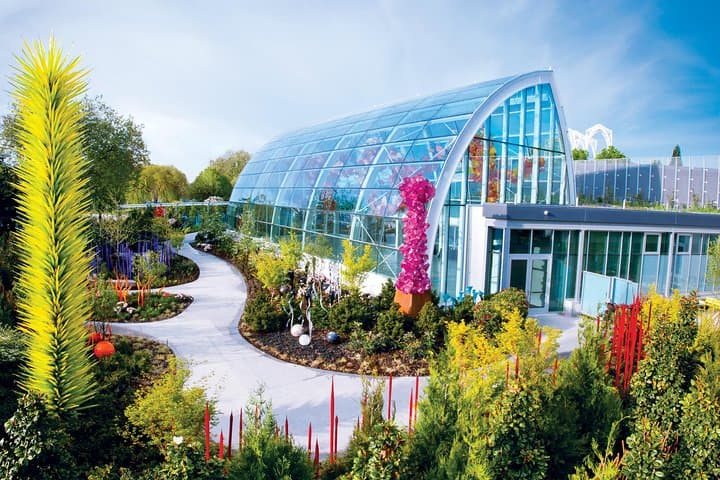
Across a plaza the Chihuly Garden and Glass responds in color. Dale Chihuly’s blown-glass installations take over the greenhouse and galleries, where loops of glass twist like frozen flames and chandeliers bloom with impossible color. The two attractions sit in a conversation between structure and craft: one built to climb higher, one engineered to hold light and hue.
Seattle’s Center area developed around the 1962 World’s Fair; the Space Needle itself is a product of midcentury optimism and engineering exuberance. Geologically, the Needle stands on glacially scoured basalt and compacted fill—this corner of the city was carved by ice and sea, a hard landscape smoothed and then urbanized. The Chihuly’s Glasshouse recalls greenhouse traditions while staging modern experimental art—its installations both reference and resist the natural forms of Pacific Northwest flora.
Both sites are wheelchair accessible and welcome service animals. Visitors often pair a roughly 90-minute observation-deck slot with 90 minutes inside Chihuly, using the museum visit as a buffer while waiting for a timed elevator entry. The combination ticket includes audio tours and complimentary digital photos—useful for documenting panoramic cityscapes and intricate glasswork alike.
Timing matters: clear days in late morning and mid-afternoon give mountain visibility without crowds, while golden-hour light enriches blown-glass color and the city skyline. Expect security screening and short lines for timed entries; treat tickets like cash and have each traveler’s ID ready when redeeming your mobile voucher at the Space Needle.
Practical tips: wear stable shoes for the Loupe and for walking the surrounding lawn and museum pathways; pack a light, windproof layer—the deck can be significantly cooler than ground level. If rain threatens, check closure lists and consider booking earlier or later in the day when visibility tends to improve. For photographers, the outdoor benches—Skyrisers—and the Glasshouse interior provide distinct compositional choices: foreground urban geometry versus saturated glass detail.
Whether you come for altitude or color, the combo offers two complementary perspectives on Seattle: a city viewed from above and an artist’s close study of light. Both reward a measured pace—linger at the rail, then slow down inside the galleries and let the glass change with each step.
easy.
2–3 hours.
Suitable for most fitness levels; involves standing, short walks, and elevator access to decks
Yes—vouchers must be redeemed at the Space Needle ticket desk to receive timed entry for both attractions.
Allocate about 90 minutes for the Space Needle observation experience and about 90 minutes for Chihuly Garden and Glass—total roughly three hours.
Yes—both the Space Needle and Chihuly Garden and Glass provide wheelchair-accessible routes and services; contact venues for specific assistance needs.
You can tour Chihuly first, but you still need to redeem your voucher at the Space Needle to be scheduled for a space-needle entry time.
Service animals are permitted; other pets are not typically allowed inside the attractions.
Clouds and rain can obscure mountain and water views; check closure lists and consider rescheduling if clear views are essential—refunds follow Viator’s cancellation policy if made 24+ hours in advance.
Both attractions trace to Seattle’s post-World’s Fair development: the Space Needle was built for the 1962 Century 21 Exposition, while Chihuly Garden and Glass opened in 2012 to showcase contemporary glass art.
Both venues emphasize low-impact operations; visitors are encouraged to use public transit and to avoid single-use plastics in the campus plaza.
Space Needle operates guided outdoor trips and adventures with an emphasis on safety, stewardship, and memorable experiences.
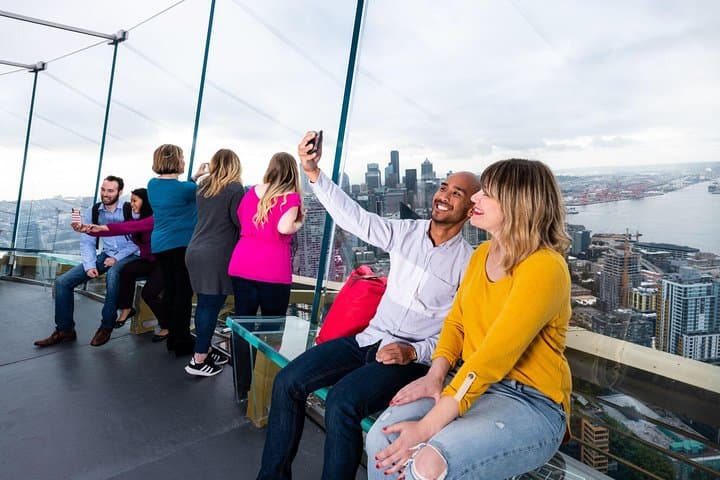
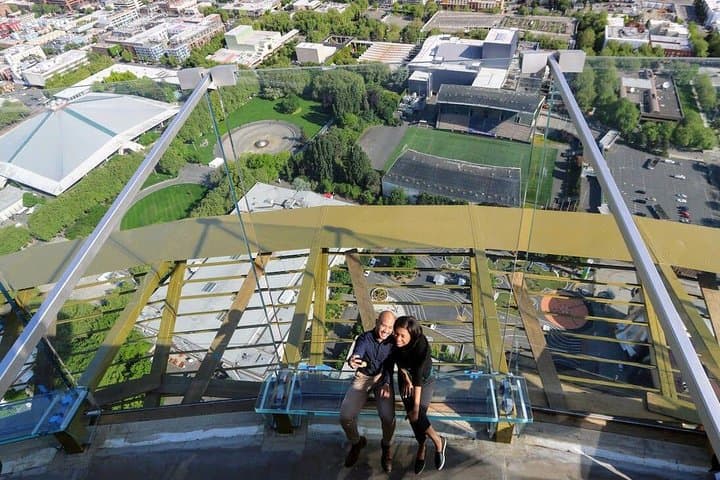
You step out of the elevator and the city opens like a map: concrete fingers, the sweep of Elliott Bay, the ragged teeth of the Olympic Mountains beyond. From the Space Needle's new outdoor deck the wind has an opinion about everything below, batting at your jacket, angling the scent of sea salt and coffee toward you. Beneath your feet the Loupe—the world’s first revolving glass floor—offers an unnerving vertigo and a neat, honest view of how small the city is from 520 feet up.
You step out of the elevator and the city opens like a map: concrete fingers, the sweep of Elliott Bay, the ragged teeth of the Olympic Mountains beyond. From the Space Needle's new outdoor deck the wind has an opinion about everything below, batting at your jacket, angling the scent of sea salt and coffee toward you. Beneath your feet the Loupe—the world’s first revolving glass floor—offers an unnerving vertigo and a neat, honest view of how small the city is from 520 feet up.
Across a plaza the Chihuly Garden and Glass responds in color. Dale Chihuly’s blown-glass installations take over the greenhouse and galleries, where loops of glass twist like frozen flames and chandeliers bloom with impossible color. The two attractions sit in a conversation between structure and craft: one built to climb higher, one engineered to hold light and hue.
Seattle’s Center area developed around the 1962 World’s Fair; the Space Needle itself is a product of midcentury optimism and engineering exuberance. Geologically, the Needle stands on glacially scoured basalt and compacted fill—this corner of the city was carved by ice and sea, a hard landscape smoothed and then urbanized. The Chihuly’s Glasshouse recalls greenhouse traditions while staging modern experimental art—its installations both reference and resist the natural forms of Pacific Northwest flora.
Both sites are wheelchair accessible and welcome service animals. Visitors often pair a roughly 90-minute observation-deck slot with 90 minutes inside Chihuly, using the museum visit as a buffer while waiting for a timed elevator entry. The combination ticket includes audio tours and complimentary digital photos—useful for documenting panoramic cityscapes and intricate glasswork alike.
Timing matters: clear days in late morning and mid-afternoon give mountain visibility without crowds, while golden-hour light enriches blown-glass color and the city skyline. Expect security screening and short lines for timed entries; treat tickets like cash and have each traveler’s ID ready when redeeming your mobile voucher at the Space Needle.
Practical tips: wear stable shoes for the Loupe and for walking the surrounding lawn and museum pathways; pack a light, windproof layer—the deck can be significantly cooler than ground level. If rain threatens, check closure lists and consider booking earlier or later in the day when visibility tends to improve. For photographers, the outdoor benches—Skyrisers—and the Glasshouse interior provide distinct compositional choices: foreground urban geometry versus saturated glass detail.
Whether you come for altitude or color, the combo offers two complementary perspectives on Seattle: a city viewed from above and an artist’s close study of light. Both reward a measured pace—linger at the rail, then slow down inside the galleries and let the glass change with each step.