THE ADVENTURE COLLECTIVE® · Independent discovery and booking for outdoor travel

A six‑day private route through Georgia’s Soviet-era landmarks from Tbilisi to Enguri Dam. Expect industrial panoramas, abandoned sanatoria, cable‑car towns and short, well‑marked walks with a driver included.
A six‑day private route through Georgia’s Soviet-era landmarks from Tbilisi to Enguri Dam. Expect industrial panoramas, abandoned sanatoria, cable‑car towns and short, well‑marked walks with a driver included.
Morning light breaks over Tbilisi’s concrete blocks and curved Soviet facades as your ride pulls away from the city, the driver navigating highways that stitch capital to periphery. The journey becomes a study in contrasts: industrial chimneys and chairlifts, decaying spa pavilions and one of the Caucasus’ largest hydroelectric works.
Verified experiences and guided adventures in the surrounding area.
Operated by Travelist Georgia · Tbilisi, Tbilisi
Morning light breaks over Tbilisi’s concrete blocks and curved Soviet facades as your ride pulls away from the city, the driver navigating highways that stitch capital to periphery. The journey becomes a study in contrasts: industrial chimneys and chairlifts, decaying spa pavilions and one of the Caucasus’ largest hydroelectric works.
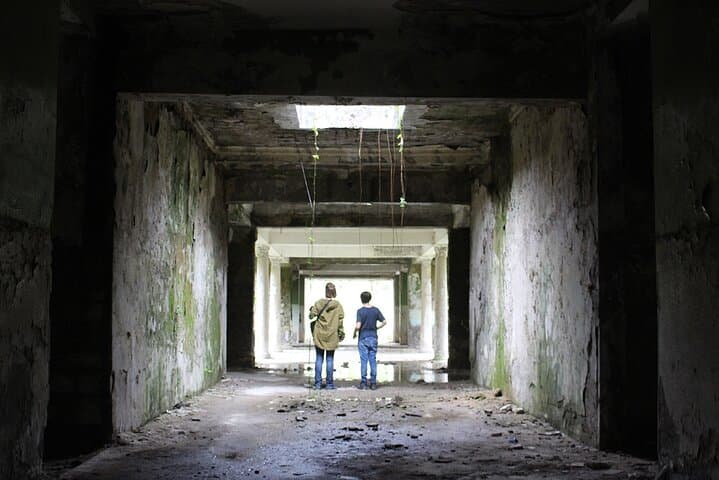
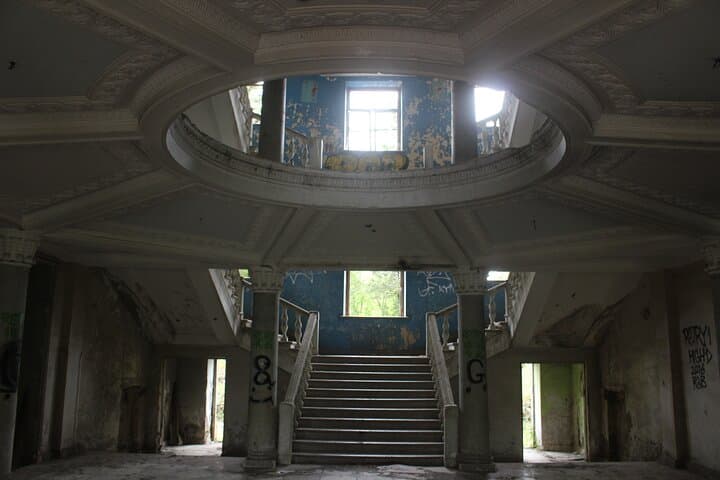
This six‑day private route follows the arc of Georgia’s Soviet-era infrastructure and social engineering. In Gori you visit the Stalin museum and the town’s grid of pragmatic blocks; Chiatura reveals an extraordinary network of aerial cable cars built for miners; Tskaltubo’s grand sanatoriums show the scale of mid‑20th‑century health care ideology; and the Enguri dam demonstrates Soviet hydropower ambition with its high concrete arch and reservoir cut into mountain geology.
Culture here is lived and visible—workers’ murals, repurposed interiors, and locals who still steady the daily rhythm. Geologically, the route skirts the Lesser Caucasus foothills and river valleys where engineers anchored massive concrete against seasonal runoff.
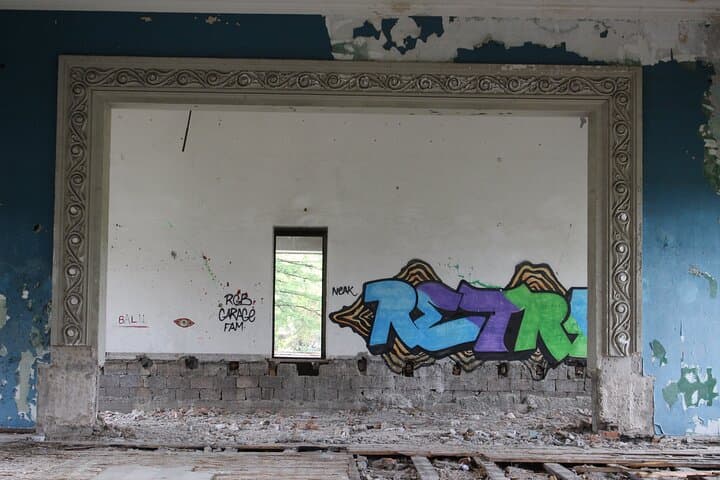
Practical notes: expect long drives with several short, well‑marked walks and urban explorations rather than multi‑day alpine treks. The driver is included; a professional guide is optional and can be added for deeper historical context. Carry cash for remote sites, bring sturdy shoes for uneven floors in abandoned buildings, and plan mornings for the best light and smaller crowds.
Timing: late spring to early autumn gives the most reliable roads and accessible interiors. Respect fragile interiors—many sites are deteriorating and require careful navigation.
moderate.
6 days.
Suitable for travelers in reasonable health who can handle several short hikes, staircases, and long vehicle transfers.
A driver is included for transfers and logistics; a professional guide is not included but can be arranged on request for historical context.
Expect several short, well‑marked walks and stair climbs inside museums and abandoned buildings rather than long mountain hikes.
Accommodations include stays in a Tskaltubo spa resort and comparable local hotels; rooms vary as many properties are converted Soviet-era buildings.
Some activities (like horse riding in certain itineraries) can be swapped for car transfers on request—confirm preferences during booking.
This corridor showcases Soviet industrial, health and energy projects—mining towns, state sanatoria and megaprojects like Enguri reflect mid‑20th‑century planning.
Many sites are in fragile condition; travel lightly, avoid touching unstable structures and support local conservation or restoration efforts when possible.
Travelist Georgia operates guided outdoor trips and adventures with an emphasis on safety, stewardship, and memorable experiences.
Morning light breaks over Tbilisi’s concrete blocks and curved Soviet facades as your ride pulls away from the city, the driver navigating highways that stitch capital to periphery. The journey becomes a study in contrasts: industrial chimneys and chairlifts, decaying spa pavilions and one of the Caucasus’ largest hydroelectric works.
Morning light breaks over Tbilisi’s concrete blocks and curved Soviet facades as your ride pulls away from the city, the driver navigating highways that stitch capital to periphery. The journey becomes a study in contrasts: industrial chimneys and chairlifts, decaying spa pavilions and one of the Caucasus’ largest hydroelectric works.
This six‑day private route follows the arc of Georgia’s Soviet-era infrastructure and social engineering. In Gori you visit the Stalin museum and the town’s grid of pragmatic blocks; Chiatura reveals an extraordinary network of aerial cable cars built for miners; Tskaltubo’s grand sanatoriums show the scale of mid‑20th‑century health care ideology; and the Enguri dam demonstrates Soviet hydropower ambition with its high concrete arch and reservoir cut into mountain geology.
Culture here is lived and visible—workers’ murals, repurposed interiors, and locals who still steady the daily rhythm. Geologically, the route skirts the Lesser Caucasus foothills and river valleys where engineers anchored massive concrete against seasonal runoff.
Practical notes: expect long drives with several short, well‑marked walks and urban explorations rather than multi‑day alpine treks. The driver is included; a professional guide is optional and can be added for deeper historical context. Carry cash for remote sites, bring sturdy shoes for uneven floors in abandoned buildings, and plan mornings for the best light and smaller crowds.
Timing: late spring to early autumn gives the most reliable roads and accessible interiors. Respect fragile interiors—many sites are deteriorating and require careful navigation.