THE ADVENTURE COLLECTIVE® · Independent discovery and booking for outdoor travel

A 4-day route through Wadi Rum, Petra, the Dead Sea and Aqaba that pairs desert 4x4s and Bedouin camp nights with UNESCO history and floating in hypersaline waters. Practical notes on border timing, gear and pacing for a compact Jordanian circuit.
A 4-day route through Wadi Rum, Petra, the Dead Sea and Aqaba that pairs desert 4x4s and Bedouin camp nights with UNESCO history and floating in hypersaline waters. Practical notes on border timing, gear and pacing for a compact Jordanian circuit.
Dawn breaks over a red desert and the jeep’s engine hums as the driver threads a line of off-road tracks toward jagged sandstone. In Wadi Rum the wind sketches new patterns across dunes and the mountains seem to lean close, daring you to climb. Later the Siq narrows and light slants through its walls, revealing Petra’s carved Treasury like a secret finally delivered.
Verified experiences and guided adventures in the surrounding area.
Operated by Jordan Horizon Tours · Wadi Rum Village, Aqaba Governorate
Dawn breaks over a red desert and the jeep’s engine hums as the driver threads a line of off-road tracks toward jagged sandstone. In Wadi Rum the wind sketches new patterns across dunes and the mountains seem to lean close, daring you to climb. Later the Siq narrows and light slants through its walls, revealing Petra’s carved Treasury like a secret finally delivered.
Southern Jordan stitches together geology, Nabatean history and Bedouin culture. Wadi Rum’s Jurassic sandstones and wind-polished arches formed over millions of years; Petra is the result of Nabatean ingenuity—chiseled façades, water channels and tombs that controlled trade routes—and the Dead Sea’s hyper-saline pull is a geological boundary between the Jordan Rift and the desert highlands. Bedouin hospitality is a living thread: evenings at a camp center on shared tea, music and stories under vast stars.
Practical guidance: the itinerary is active but accessible—expect short hikes, canyon walking through the Siq and a 4x4 jeep tour across soft sand. Border-crossing logistics require passports and daylight scheduling; the Eilat-Jordan crossing closes in the evening. Footwear should handle loose sand and rocky steps; sun protection and a reusable water bottle are non-negotiable. Plan to pace your sightseeing—Petra’s highlights take about 2–3 hours with key climbs if you add the Monastery. For Wadi Rum, choose a day jeep tour and an overnight camp to appreciate the sky.
Timing your trip for spring or fall reduces heat stress; winter mornings can be cold at camp. Respect local customs, carry cash for optional camel rides and tips, and leave no trace—these landscapes endure when visitors tread lightly.
moderate.
4 days.
Moderate fitness—able to walk on uneven terrain for several hours and manage short climbs and desert footing without assistance
Many nationalities receive a visa on arrival when staying more than two nights; check current Jordanian entry rules and have passport details ready.
Expect 2–4 hours of walking to see the primary sites (Siq, Treasury, Street of Facades, Royal Tombs); adding the Monastery requires more steps and time.
Yes—4x4 jeep tours are family-friendly but bumpy; young children should be secured and expect sand and dust.
Avoid entering the Dead Sea with open wounds—high salinity can cause severe stinging and infection risk.
The route links Nabatean Petra—an ancient trade and hydraulic engineering hub—with millennia of Bedouin life in Wadi Rum and strategic coastal trade via Aqaba.
Visitors should avoid collecting rock or artifacts, stick to established tracks in Wadi Rum and Petra, and limit plastic waste to protect fragile desert and marine ecosystems.
Jordan Horizon Tours operates guided outdoor trips and adventures with an emphasis on safety, stewardship, and memorable experiences.
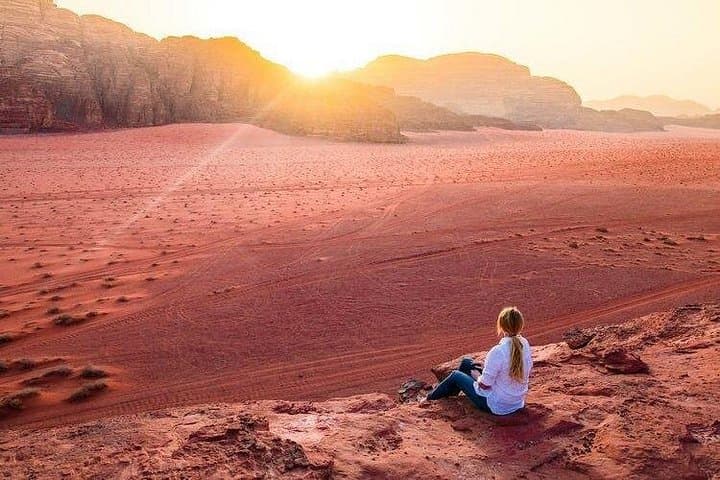

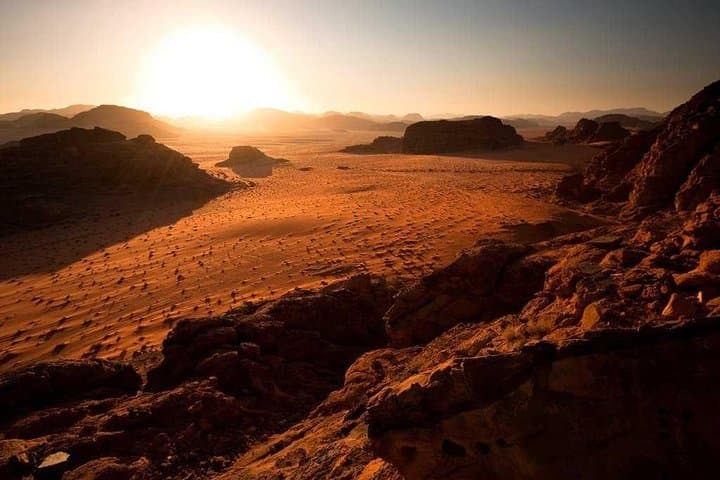
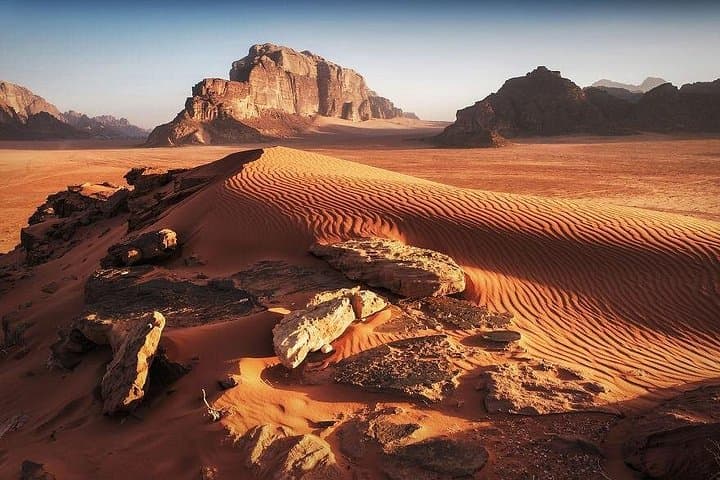
Dawn breaks over a red desert and the jeep’s engine hums as the driver threads a line of off-road tracks toward jagged sandstone. In Wadi Rum the wind sketches new patterns across dunes and the mountains seem to lean close, daring you to climb. Later the Siq narrows and light slants through its walls, revealing Petra’s carved Treasury like a secret finally delivered.
Dawn breaks over a red desert and the jeep’s engine hums as the driver threads a line of off-road tracks toward jagged sandstone. In Wadi Rum the wind sketches new patterns across dunes and the mountains seem to lean close, daring you to climb. Later the Siq narrows and light slants through its walls, revealing Petra’s carved Treasury like a secret finally delivered.
Southern Jordan stitches together geology, Nabatean history and Bedouin culture. Wadi Rum’s Jurassic sandstones and wind-polished arches formed over millions of years; Petra is the result of Nabatean ingenuity—chiseled façades, water channels and tombs that controlled trade routes—and the Dead Sea’s hyper-saline pull is a geological boundary between the Jordan Rift and the desert highlands. Bedouin hospitality is a living thread: evenings at a camp center on shared tea, music and stories under vast stars.
Practical guidance: the itinerary is active but accessible—expect short hikes, canyon walking through the Siq and a 4x4 jeep tour across soft sand. Border-crossing logistics require passports and daylight scheduling; the Eilat-Jordan crossing closes in the evening. Footwear should handle loose sand and rocky steps; sun protection and a reusable water bottle are non-negotiable. Plan to pace your sightseeing—Petra’s highlights take about 2–3 hours with key climbs if you add the Monastery. For Wadi Rum, choose a day jeep tour and an overnight camp to appreciate the sky.
Timing your trip for spring or fall reduces heat stress; winter mornings can be cold at camp. Respect local customs, carry cash for optional camel rides and tips, and leave no trace—these landscapes endure when visitors tread lightly.