THE ADVENTURE COLLECTIVE® · Independent discovery and booking for outdoor travel

Explore southern Cappadocia in a single, well-paced day: descend into Kaymakli Underground City, stand in the ochre glow of Red Valley, visit old Çavuşin, and try your hand at Avanos pottery. This guided circuit pairs geology, history, and hands-on culture with practical logistics for a full-day outing.
Explore southern Cappadocia in a single, well-paced day: descend into Kaymakli Underground City, stand in the ochre glow of Red Valley, visit old Çavuşin, and try your hand at Avanos pottery. This guided circuit pairs geology, history, and hands-on culture with practical logistics for a full-day outing.
You arrive before the cars clear, when the soft rock of Cappadocia holds its first cool light. Chimneys and cones stand like weathered sculptures, and the valley floors exhale dust that smells faintly of iron and thyme. On a full-day southern circuit, the landscape feels deliberate—shaped by eruption, water, and patient wind.
Verified experiences and guided adventures in the surrounding area.
You arrive before the cars clear, when the soft rock of Cappadocia holds its first cool light. Chimneys and cones stand like weathered sculptures, and the valley floors exhale dust that smells faintly of iron and thyme. On a full-day southern circuit, the landscape feels deliberate—shaped by eruption, water, and patient wind.
Geology here reads like a slow-motion drama: millions of years of volcanic tuff compacted and then eroded into ridges and caves. Human history has moved into that story; Kaymakli Underground City is an engineered response to danger and climate, with chambers carved to shelter families and store harvests. Nearby Avanos carries a different craft legacy—pottery spun from Red River clay for millennia.
Expect a curated route: hotel pickup in Göreme or Ürgüp, a descent through Kaymakli’s narrow, stepped passages, a stop in the abandoned stone houses of Çavuşin, a short hike or viewpoint at Red Valley where the rock seems to glow, and a hands-on pottery demo in Avanos. Walks are moderate—staircases, uneven floors, short inclines—interspersed with guided history and geology notes.
Practical guide: bring sturdy shoes for uneven surfaces and many stairs, sun protection for exposed viewpoints, and at least 1–1.5 liters of water. Morning light is best for photography; late afternoon cools rapidly in shoulder seasons. The underground city is cool but cramped—those with mobility limits should plan accordingly. Respect the fragile tuff: stay on marked paths, and leave pottery-making to the village artisans you visit.
This day tour packs geology, living craft, and centuries of human adaptation into eight hours—an efficient, sensory way to read Cappadocia’s landscape and stories.
moderate.
8 hours.
Moderate fitness; comfortable walking on uneven terrain and negotiating stairs for several short segments.
Yes—pickup and drop-off are included for hotels in Göreme and Ürgüp; confirm pickup time when you book.
The site involves steep, narrow staircases and low ceilings; it’s cool but requires mobility and comfort with confined spaces.
Most studios allow you to purchase or ship fired pieces; small un-fired items may need to be left for kiln firing and collection.
Older children who can manage stairs and confined spaces will enjoy it; keep younger kids supervised in tight underground passages.
Kaymakli and other underground cities were expanded over centuries—used by local populations, including early Christians, to shelter and store food during periods of unrest.
Cappadocia’s soft tuff is vulnerable to erosion and wear; stick to marked trails, avoid touching delicate rock faces, and support local conservation-minded guides and workshops.
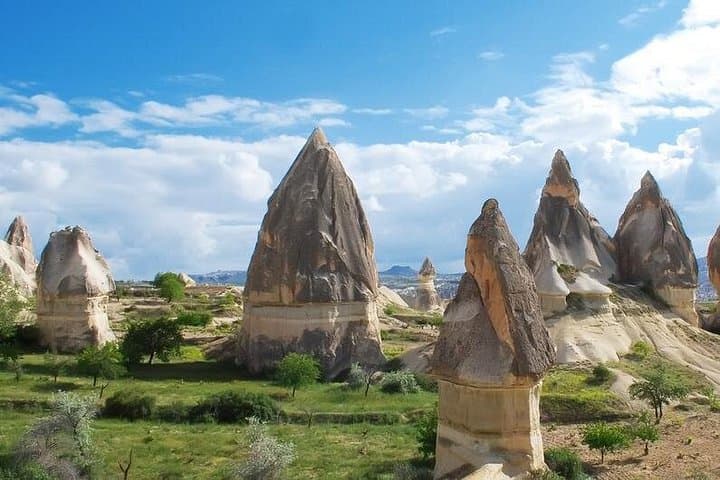
You arrive before the cars clear, when the soft rock of Cappadocia holds its first cool light. Chimneys and cones stand like weathered sculptures, and the valley floors exhale dust that smells faintly of iron and thyme. On a full-day southern circuit, the landscape feels deliberate—shaped by eruption, water, and patient wind.
You arrive before the cars clear, when the soft rock of Cappadocia holds its first cool light. Chimneys and cones stand like weathered sculptures, and the valley floors exhale dust that smells faintly of iron and thyme. On a full-day southern circuit, the landscape feels deliberate—shaped by eruption, water, and patient wind.
Geology here reads like a slow-motion drama: millions of years of volcanic tuff compacted and then eroded into ridges and caves. Human history has moved into that story; Kaymakli Underground City is an engineered response to danger and climate, with chambers carved to shelter families and store harvests. Nearby Avanos carries a different craft legacy—pottery spun from Red River clay for millennia.
Expect a curated route: hotel pickup in Göreme or Ürgüp, a descent through Kaymakli’s narrow, stepped passages, a stop in the abandoned stone houses of Çavuşin, a short hike or viewpoint at Red Valley where the rock seems to glow, and a hands-on pottery demo in Avanos. Walks are moderate—staircases, uneven floors, short inclines—interspersed with guided history and geology notes.
Practical guide: bring sturdy shoes for uneven surfaces and many stairs, sun protection for exposed viewpoints, and at least 1–1.5 liters of water. Morning light is best for photography; late afternoon cools rapidly in shoulder seasons. The underground city is cool but cramped—those with mobility limits should plan accordingly. Respect the fragile tuff: stay on marked paths, and leave pottery-making to the village artisans you visit.
This day tour packs geology, living craft, and centuries of human adaptation into eight hours—an efficient, sensory way to read Cappadocia’s landscape and stories.