THE ADVENTURE COLLECTIVE® · Independent discovery and booking for outdoor travel

A brisk 10-minute helicopter hop from Hoffnungsthal delivers sweeping views of Jacob’s Creek tank farm, Lyndoch, Cockatoo Valley and the Whispering Wall. Quick, accessible, and weather-dependent, this flight is a concentrated Barossa primer from the air.
A brisk 10-minute helicopter hop from Hoffnungsthal delivers sweeping views of Jacob’s Creek tank farm, Lyndoch, Cockatoo Valley and the Whispering Wall. Quick, accessible, and weather-dependent, this flight is a concentrated Barossa primer from the air.
You lift off from Hoffnungsthal Valley and the valley exhales beneath you: vineyards tighten into rows, silvery rivers of vine leaves glint, and the tank farm at Jacob’s Creek becomes an industrial constellation. The helicopter banks gently south over Rowland Flat, traces the southern edge of the Barossa, skims Lyndoch and Cockatoo Valley, then crosses the rippled surface of the Barossa Reservoir to pass the Whispering Wall — a concrete curve that makes a private conversation travel like a dare.
Verified experiences and guided adventures in the surrounding area.
Operated by Barossa Helicopters · Rowland Flat, South Australia
You lift off from Hoffnungsthal Valley and the valley exhales beneath you: vineyards tighten into rows, silvery rivers of vine leaves glint, and the tank farm at Jacob’s Creek becomes an industrial constellation. The helicopter banks gently south over Rowland Flat, traces the southern edge of the Barossa, skims Lyndoch and Cockatoo Valley, then crosses the rippled surface of the Barossa Reservoir to pass the Whispering Wall — a concrete curve that makes a private conversation travel like a dare.
The Barossa is a region shaped by geology and people: ancient Cambrian soils and folded sandstones feed vines first planted by German settlers in the 1840s. Those settlers turned the hills into a working cultural landscape; today wineries and century-old cellars sit alongside the reservoir infrastructure and grain paddocks. From the air you read the agricultural history in terraces and irrigation channels; the Whispering Wall hints at 20th-century engineering that controls water for both town and vine.
Practical guidance: the flight is ten minutes; weight limits are strictly enforced (max 130 kg per passenger, combined limits apply), and children must be at least 100 cm tall. Flights are weather-dependent — wind and low cloud close the option. Wear windproof layers and firm shoes, bring a camera with a wrist strap, and charge your phone for aerial photos. Arrive 20–30 minutes early for briefing and boarding. The ride is brief but delivers a concentrated sense of place: the Barossa doesn’t just look mapped; it feels worked, alive, and ready to be explored on the ground after you land.
easy.
10 minutes.
Suitable for nearly all fitness levels; no strenuous activity required
The scheduled flight time is 10 minutes from takeoff to landing; allow extra time for check-in and briefing.
Yes — maximum individual weight is 130 kg, combined weight limits apply, and children must be at least 100 cm tall to fly.
Flights are canceled for unsuitable weather; you’ll be offered a refund if canceled at least 24 hours prior or rebooking if possible.
The departure site is wheelchair accessible for ground areas, but boarding assistance varies — contact the operator in advance to confirm arrangements.
The Barossa was settled by German immigrants in the 1840s who established small-scale vineyards and cellar traditions that still define the region’s culture.
Flights have a small noise footprint but stay clear of low-altitude passes over sensitive habitats; support local producers and leave gates as you find them to reduce agricultural impact.
Barossa Helicopters operates guided outdoor trips and adventures with an emphasis on safety, stewardship, and memorable experiences.
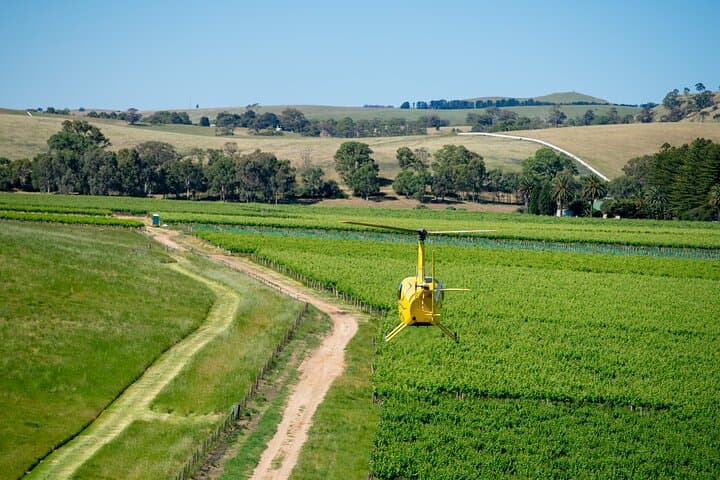
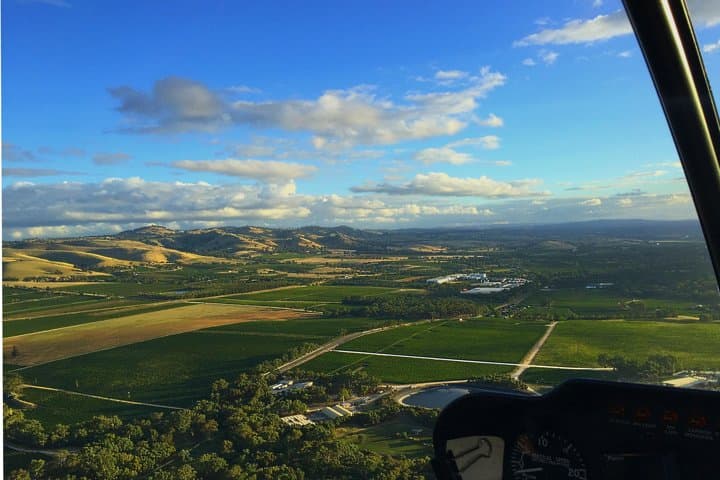
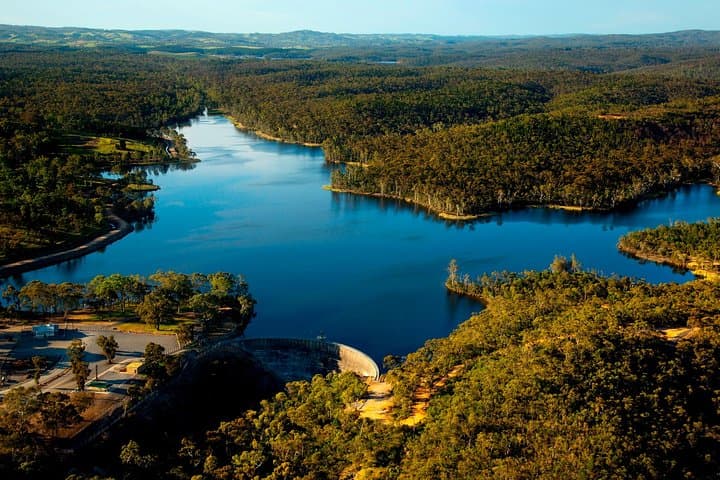
You lift off from Hoffnungsthal Valley and the valley exhales beneath you: vineyards tighten into rows, silvery rivers of vine leaves glint, and the tank farm at Jacob’s Creek becomes an industrial constellation. The helicopter banks gently south over Rowland Flat, traces the southern edge of the Barossa, skims Lyndoch and Cockatoo Valley, then crosses the rippled surface of the Barossa Reservoir to pass the Whispering Wall — a concrete curve that makes a private conversation travel like a dare.
You lift off from Hoffnungsthal Valley and the valley exhales beneath you: vineyards tighten into rows, silvery rivers of vine leaves glint, and the tank farm at Jacob’s Creek becomes an industrial constellation. The helicopter banks gently south over Rowland Flat, traces the southern edge of the Barossa, skims Lyndoch and Cockatoo Valley, then crosses the rippled surface of the Barossa Reservoir to pass the Whispering Wall — a concrete curve that makes a private conversation travel like a dare.
The Barossa is a region shaped by geology and people: ancient Cambrian soils and folded sandstones feed vines first planted by German settlers in the 1840s. Those settlers turned the hills into a working cultural landscape; today wineries and century-old cellars sit alongside the reservoir infrastructure and grain paddocks. From the air you read the agricultural history in terraces and irrigation channels; the Whispering Wall hints at 20th-century engineering that controls water for both town and vine.
Practical guidance: the flight is ten minutes; weight limits are strictly enforced (max 130 kg per passenger, combined limits apply), and children must be at least 100 cm tall. Flights are weather-dependent — wind and low cloud close the option. Wear windproof layers and firm shoes, bring a camera with a wrist strap, and charge your phone for aerial photos. Arrive 20–30 minutes early for briefing and boarding. The ride is brief but delivers a concentrated sense of place: the Barossa doesn’t just look mapped; it feels worked, alive, and ready to be explored on the ground after you land.