THE ADVENTURE COLLECTIVE® · Independent discovery and booking for outdoor travel

Explore South St. Augustine by lantern on a short, guided night walk through America’s oldest streets. Learn the city’s colonial, military, and Victorian histories while navigating coquina stone alleys and dim cobbles.
Explore South St. Augustine by lantern on a short, guided night walk through America’s oldest streets. Learn the city’s colonial, military, and Victorian histories while navigating coquina stone alleys and dim cobbles.
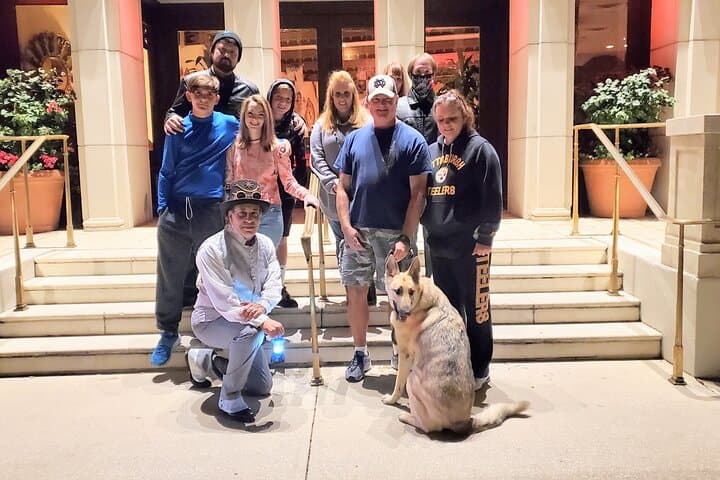
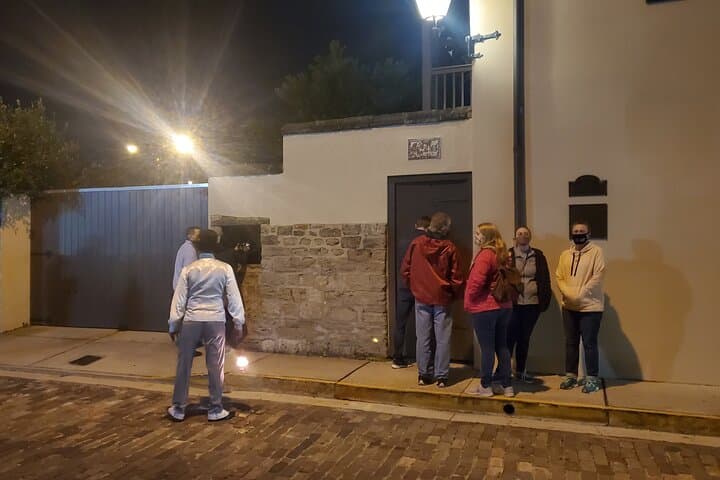
A lantern-wielding guide stands at the corner of Casa Monica, the amber light cutting across cobblestone and Spanish moss. The group moves out onto Cordova Street and the city breathes history — rough coquina walls, low doorways, and alleyways that push secrets into the night.
Verified experiences and guided adventures in the surrounding area.
Operated by Early Haunts · St. Augustine, Florida
A lantern-wielding guide stands at the corner of Casa Monica, the amber light cutting across cobblestone and Spanish moss. The group moves out onto Cordova Street and the city breathes history — rough coquina walls, low doorways, and alleyways that push secrets into the night.
St. Augustine was founded in 1565 and the Southside streets reflect layered epochs: First Spanish homes, 18th‑ and 19th‑century masonry, and Victorian storefronts reworked by later developers. The walk traces Aviles Street — officially the nation’s oldest — and pauses at structures built from coquina, a local shellstone that hardens with age and tells of coastal geology and colonial defense.
Culturally, the tour moves between fact and folklore. Guides draw on archival records of the Spanish Military Hospital and the Old City Jail, while pointing out how Franklin-era fortunes and Henry Flagler’s railroad reshaped the town. The city’s built fabric is the main actor; it creaks and leans, reminding visitors that preservation is ongoing work.
Practical guidance: expect 60–70 minutes on uneven, often dim streets with several short stops. Wear sturdy, flat-soled shoes and bring a small light and water. Photography is welcome, but note some operators collect images; be ready to show your ticket on arrival. The route is short — under a mile — but surfaces demand attention: watch steps, mind low thresholds, and move at the group’s pace. This walk is a compact mix of urban history, coastal geology, and a touch of the uncanny suited to curious night walkers.
easy.
60–70 minutes.
Suitable for most fitness levels; requires ability to stand and walk short distances on uneven pavement
The tour focuses on documented history and local folklore; actual apparitions are extremely rare and not promised.
The operator lists wheelchair accessibility, but some historic surfaces and thresholds may be uneven—contact the provider ahead to confirm accommodations.
Expect 60–70 minutes and less than a mile of walking, with multiple short stops at historic sites.
Infants and small children can join (strollers/prams are accommodated); content includes stories of past tragedies so consider age-appropriateness.
Founded in 1565, St. Augustine is the oldest continuously occupied European settlement in the continental U.S.; many Southside streets retain colonial-era layouts and coquina construction.
Treat historic fabric with care—avoid touching or climbing on coquina walls, follow established paths, and support local preservation-minded businesses.
Early Haunts operates guided outdoor trips and adventures with an emphasis on safety, stewardship, and memorable experiences.
A lantern-wielding guide stands at the corner of Casa Monica, the amber light cutting across cobblestone and Spanish moss. The group moves out onto Cordova Street and the city breathes history — rough coquina walls, low doorways, and alleyways that push secrets into the night.
A lantern-wielding guide stands at the corner of Casa Monica, the amber light cutting across cobblestone and Spanish moss. The group moves out onto Cordova Street and the city breathes history — rough coquina walls, low doorways, and alleyways that push secrets into the night.
St. Augustine was founded in 1565 and the Southside streets reflect layered epochs: First Spanish homes, 18th‑ and 19th‑century masonry, and Victorian storefronts reworked by later developers. The walk traces Aviles Street — officially the nation’s oldest — and pauses at structures built from coquina, a local shellstone that hardens with age and tells of coastal geology and colonial defense.
Culturally, the tour moves between fact and folklore. Guides draw on archival records of the Spanish Military Hospital and the Old City Jail, while pointing out how Franklin-era fortunes and Henry Flagler’s railroad reshaped the town. The city’s built fabric is the main actor; it creaks and leans, reminding visitors that preservation is ongoing work.
Practical guidance: expect 60–70 minutes on uneven, often dim streets with several short stops. Wear sturdy, flat-soled shoes and bring a small light and water. Photography is welcome, but note some operators collect images; be ready to show your ticket on arrival. The route is short — under a mile — but surfaces demand attention: watch steps, mind low thresholds, and move at the group’s pace. This walk is a compact mix of urban history, coastal geology, and a touch of the uncanny suited to curious night walkers.