THE ADVENTURE COLLECTIVE® · Independent discovery and booking for outdoor travel

Seven days across South Korea moves from temple courtyards to tea plantations and coastal observatories. This guided circuit combines short hikes, UNESCO sites, and hands-on cultural experiences for a compact introduction to the country’s history and landscapes.
Seven days across South Korea moves from temple courtyards to tea plantations and coastal observatories. This guided circuit combines short hikes, UNESCO sites, and hands-on cultural experiences for a compact introduction to the country’s history and landscapes.
A low winter sun cuts across the Han River as a coach eases out of Seoul, and within hours urban glass gives way to rice terraces, cathedral-like temple halls, and the serrated ridges of Mt. Seorak. The itinerary moves like a map come alive—ancient tombs, seaside observatories, green tea slopes—and each stop asks for a different pace: reverent, curious, or simply hungry.
Verified experiences and guided adventures in the surrounding area.
Operated by Bamba Travel · Seoul, Seoul
A low winter sun cuts across the Han River as a coach eases out of Seoul, and within hours urban glass gives way to rice terraces, cathedral-like temple halls, and the serrated ridges of Mt. Seorak. The itinerary moves like a map come alive—ancient tombs, seaside observatories, green tea slopes—and each stop asks for a different pace: reverent, curious, or simply hungry.
Travelers will thread through Korea’s layered past: the Baekje mountain castles around Gongju, Gyeongju’s Silla-era tumuli, and Andong’s living Hahoe village where Confucian lineages still mark the streets. Geology is part of the show—granite tors and coastal archipelagos around Yeosu give way to Suncheon’s tidal reedbeds, a working estuarine ecosystem that hosts migrant shorebirds.
Culture comes through communal kitchens and craft: papermaking at Hanji Park, hanok architecture in Jeonju, and temple tea ceremonies that punctuate long travel days. Nature isn’t passive—seaward currents shape harbor islands, and mountain gullies dare you into short hikes on Mt. Seorak’s well-maintained trails.
Practical guidance: expect moderate daily activity with several short walks and one or two gentle hikes; be ready to transfer by coach for long stretches. Pack layered clothing, comfortable walking shoes, a small daypack for visits, and a reusable water bottle—meals are provided but local snacks and market tastings are highlights. Timing matters: coastal light is best at dawn or late afternoon; museums and UNESCO sites are busiest mid-day. The trip is a compact primer on South Korea’s natural and cultural highlights—structured, informative, and paced to leave room for discovery.
moderate.
7 days (6 nights).
Suitable for travelers in good general health who can handle several short walks (30–90 minutes) and stairs; no sustained technical fitness required.
Most breakfasts, seven lunches and six dinners are included—specialty meals highlight regional dishes but expect occasional free evenings to explore independently.
The tour is mainly coach-based with short walks in towns, temple precincts, and a few light hikes such as at Mt. Seorak’s Jujeongol—nothing technical or prolonged.
The tour is rated easy-to-moderate; however, some sites have stairs, uneven paths, and limited accessibility—contact the operator about specific mobility needs before booking.
Yes—an English-speaking guide accompanies the tour and handles logistics, cultural explanations, and site admissions.
The route traces key political centers from Korea’s early kingdoms—Baekje in Gongju and Silla in Gyeongju—showing how regional capitals shaped art, burial customs, and temple architecture.
Suncheonman’s wetlands are protected for migratory birds, and visitors are asked to stay on boardwalks and avoid disturbing reedbeds; UNESCO sites manage visitor flow to protect fragile tomb structures.
Bamba Travel operates guided outdoor trips and adventures with an emphasis on safety, stewardship, and memorable experiences.

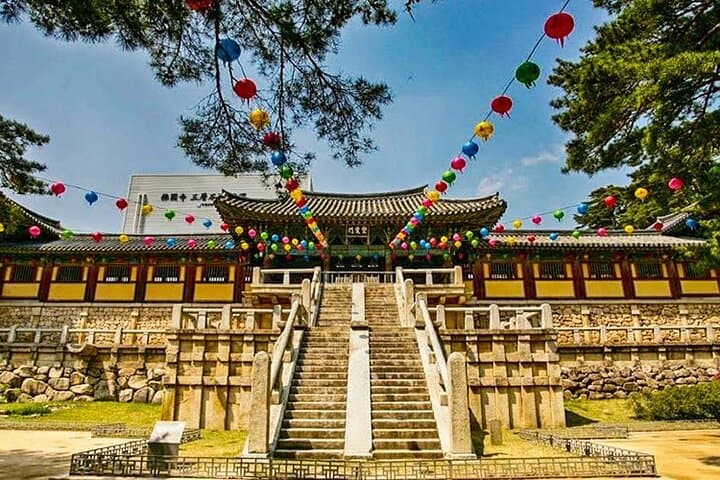


A low winter sun cuts across the Han River as a coach eases out of Seoul, and within hours urban glass gives way to rice terraces, cathedral-like temple halls, and the serrated ridges of Mt. Seorak. The itinerary moves like a map come alive—ancient tombs, seaside observatories, green tea slopes—and each stop asks for a different pace: reverent, curious, or simply hungry.
A low winter sun cuts across the Han River as a coach eases out of Seoul, and within hours urban glass gives way to rice terraces, cathedral-like temple halls, and the serrated ridges of Mt. Seorak. The itinerary moves like a map come alive—ancient tombs, seaside observatories, green tea slopes—and each stop asks for a different pace: reverent, curious, or simply hungry.
Travelers will thread through Korea’s layered past: the Baekje mountain castles around Gongju, Gyeongju’s Silla-era tumuli, and Andong’s living Hahoe village where Confucian lineages still mark the streets. Geology is part of the show—granite tors and coastal archipelagos around Yeosu give way to Suncheon’s tidal reedbeds, a working estuarine ecosystem that hosts migrant shorebirds.
Culture comes through communal kitchens and craft: papermaking at Hanji Park, hanok architecture in Jeonju, and temple tea ceremonies that punctuate long travel days. Nature isn’t passive—seaward currents shape harbor islands, and mountain gullies dare you into short hikes on Mt. Seorak’s well-maintained trails.
Practical guidance: expect moderate daily activity with several short walks and one or two gentle hikes; be ready to transfer by coach for long stretches. Pack layered clothing, comfortable walking shoes, a small daypack for visits, and a reusable water bottle—meals are provided but local snacks and market tastings are highlights. Timing matters: coastal light is best at dawn or late afternoon; museums and UNESCO sites are busiest mid-day. The trip is a compact primer on South Korea’s natural and cultural highlights—structured, informative, and paced to leave room for discovery.