THE ADVENTURE COLLECTIVE® · Independent discovery and booking for outdoor travel

Short boat runs from Galle open access to wrecks, rock pinnacles, caves and reef gardens along Sri Lanka’s south coast. This two-hour fun-dive offering matches certified divers to sites by experience and daily conditions.
Short boat runs from Galle open access to wrecks, rock pinnacles, caves and reef gardens along Sri Lanka’s south coast. This two-hour fun-dive offering matches certified divers to sites by experience and daily conditions.
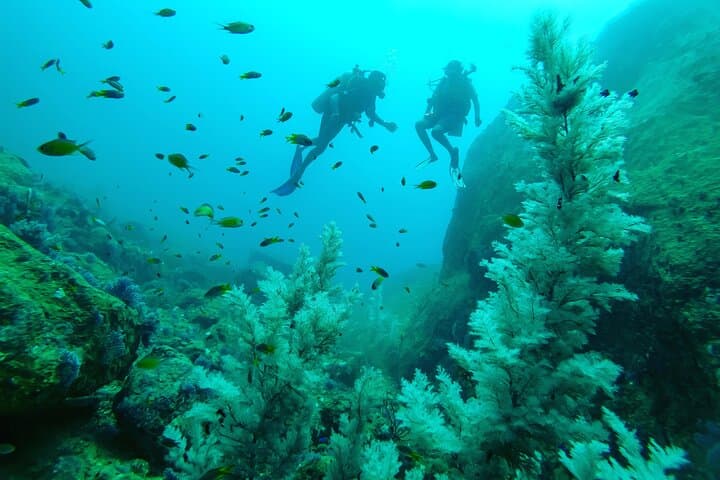
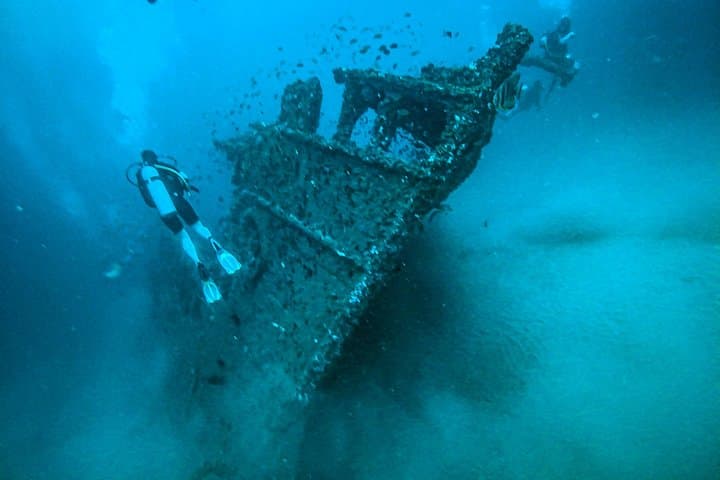
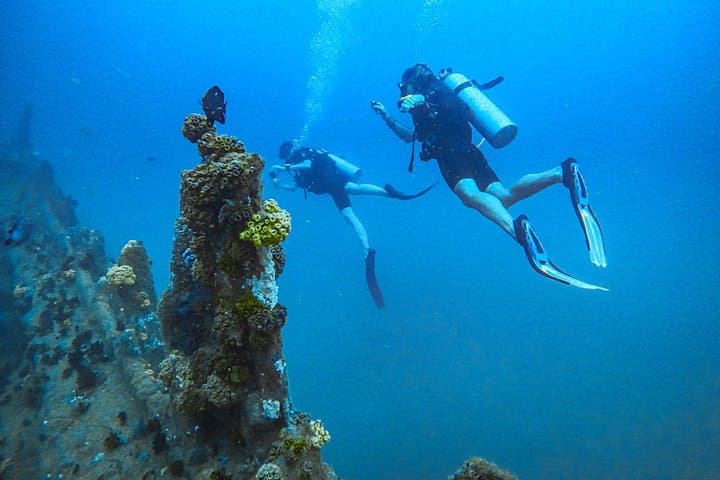
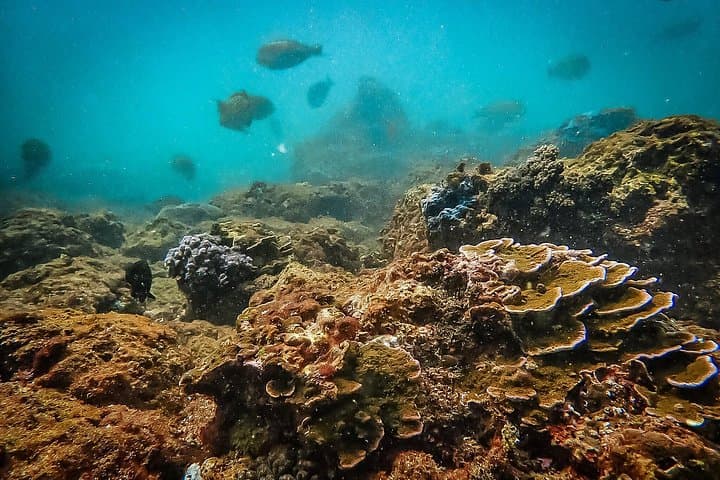
The boat slips free of Galle's harbor and the sea immediately takes the lead: a warm swell that rocks the deck, a breeze that wipes salt across your face, and the distant line of palm-fringed headland sliding aft. Below, the water goes from teal to deep blue; this is where coral gardens, pinnacles and a handful of accessible wrecks wait for certified divers.
Verified experiences and guided adventures in the surrounding area.
Operated by Sun Diving SriLanka · Galle, Southern Province
The boat slips free of Galle's harbor and the sea immediately takes the lead: a warm swell that rocks the deck, a breeze that wipes salt across your face, and the distant line of palm-fringed headland sliding aft. Below, the water goes from teal to deep blue; this is where coral gardens, pinnacles and a handful of accessible wrecks wait for certified divers.
The south coast of Sri Lanka is a working maritime corridor with layered history — Dutch and British colonial trade routes, fishing communities that read the tides like a calendar, and shipwrecks left by time and weather. Geologically the shelf drops quickly in places, forming rocky pinnacles and caves carved by currents; reef flats sit shallower near Unawatuna and Mirissa where sunlight reaches the corals.
Locals in Galle balance heritage (the 17th-century fort is a short ride away) with a modern dive culture: small operators, skippers who know each reef, and a focus on low-impact visits. Expect sites chosen by certification level and daily conditions — reef dives for relaxed profiles, pinnacles for profile and drift, wrecks for curious eyes.
Practically: trips run about two hours on the water (one to two dives), equipment hire is commonly included, and boats supply bottled water. Visibility often ranges 8–20 meters; currents can be lively so thorough pre-dive briefings matter. Bring your certification card, logbook, reef-safe sunscreen, and a jacket for the crossing. Dive early for calmer seas and cooler light; respect corals, anchor only where permitted, and follow local briefings — the ocean here will test your buoyancy and reward steady, attentive diving.
moderate.
2 hours.
Moderate fitness: comfortable swimming ability, able to manage 30–60 minute dives and surface swims
Yes — these are for certified divers only; operators will check your certification and recent dive history.
Use of SCUBA equipment is typically included, but bring personal items (mask, fins) if you prefer your own gear.
Visibility commonly ranges 8–20 meters; dive sites vary from shallow reef gardens (5–18m) to deeper wrecks and pinnacles (20–30m) depending on conditions.
Not recommended for pregnant travelers or those with significant heart problems; operators may request weight and medical info during booking.
Galle’s coast has long been a trade and shipping route; many dive sites formed where reefs met maritime traffic, creating accessible wrecks and rich fishing grounds.
Coral bleaching and fishing pressure affect reefs; choose operators that practice no-anchoring on reefs, brief low-impact behavior, and support local reef restoration where available.
Sun Diving SriLanka operates guided outdoor trips and adventures with an emphasis on safety, stewardship, and memorable experiences.
The boat slips free of Galle's harbor and the sea immediately takes the lead: a warm swell that rocks the deck, a breeze that wipes salt across your face, and the distant line of palm-fringed headland sliding aft. Below, the water goes from teal to deep blue; this is where coral gardens, pinnacles and a handful of accessible wrecks wait for certified divers.
The boat slips free of Galle's harbor and the sea immediately takes the lead: a warm swell that rocks the deck, a breeze that wipes salt across your face, and the distant line of palm-fringed headland sliding aft. Below, the water goes from teal to deep blue; this is where coral gardens, pinnacles and a handful of accessible wrecks wait for certified divers.
The south coast of Sri Lanka is a working maritime corridor with layered history — Dutch and British colonial trade routes, fishing communities that read the tides like a calendar, and shipwrecks left by time and weather. Geologically the shelf drops quickly in places, forming rocky pinnacles and caves carved by currents; reef flats sit shallower near Unawatuna and Mirissa where sunlight reaches the corals.
Locals in Galle balance heritage (the 17th-century fort is a short ride away) with a modern dive culture: small operators, skippers who know each reef, and a focus on low-impact visits. Expect sites chosen by certification level and daily conditions — reef dives for relaxed profiles, pinnacles for profile and drift, wrecks for curious eyes.
Practically: trips run about two hours on the water (one to two dives), equipment hire is commonly included, and boats supply bottled water. Visibility often ranges 8–20 meters; currents can be lively so thorough pre-dive briefings matter. Bring your certification card, logbook, reef-safe sunscreen, and a jacket for the crossing. Dive early for calmer seas and cooler light; respect corals, anchor only where permitted, and follow local briefings — the ocean here will test your buoyancy and reward steady, attentive diving.