THE ADVENTURE COLLECTIVE® · Independent discovery and booking for outdoor travel

Drive Iceland’s dramatic South Coast in a 4x4, visit Seljalandsfoss and Skógafoss, stroll Reynisfjara’s black sand, then enter the otherworldly Katla ice cave with crampons and a guide. This full-day tour blends short coastal walks with a technical glacier approach.
Drive Iceland’s dramatic South Coast in a 4x4, visit Seljalandsfoss and Skógafoss, stroll Reynisfjara’s black sand, then enter the otherworldly Katla ice cave with crampons and a guide. This full-day tour blends short coastal walks with a technical glacier approach.
A low light spreads over the ring road as the 4x4 eases out of Reykjavík, tires crunching over black sand and pumice. Within an hour the Atlantic wind sharpens your field of view: Seljalandsfoss appears as a curtain of white you can walk behind, then Skógafoss thunders into a spray so fine it paints rainbows across the mist.
Verified experiences and guided adventures in the surrounding area.
Operated by Gravel Travel · Vík, Suðurland
A low light spreads over the ring road as the 4x4 eases out of Reykjavík, tires crunching over black sand and pumice. Within an hour the Atlantic wind sharpens your field of view: Seljalandsfoss appears as a curtain of white you can walk behind, then Skógafoss thunders into a spray so fine it paints rainbows across the mist.
This route follows volcanic seams and glacial tills carved during the last Ice Age. The South Coast’s cliffs and basalt columns at Reynisfjara record violent lava flows arrested by cold sea, while Katla and Mýrdalsjökull—both volcanic and glacial—remind visitors how fire and ice shape Iceland’s culture and risk calculus. Local fishing villages like Vík have lived with sudden eruptions and shifting coasts for centuries; sagas and modern monitoring coexist here.
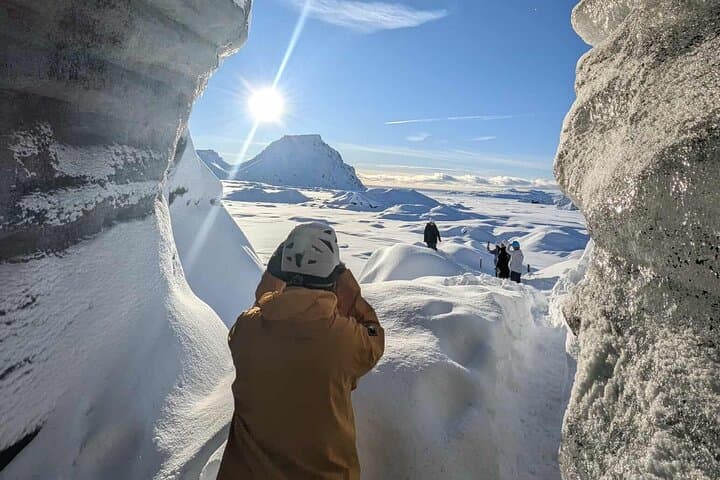
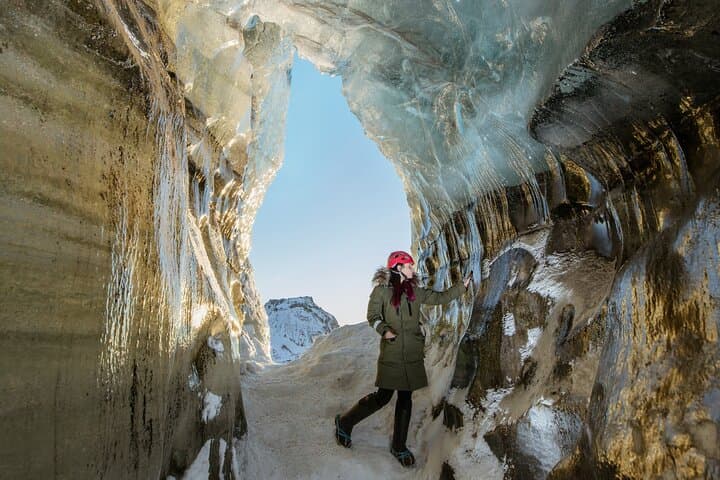
Practicalities are straightforward: expect an 11–12 hour day with long drives on Route 1, multiple short walks (10–30 minutes) at waterfalls and the beach, and a guided glacier approach onto ice. The Katla ice cave visit includes fitted crampons and helmets—walking on uneven blue and black ice with a guide for 45–90 minutes inside the glacier is the technical core of the day. Wear waterproof outer layers, sturdy boots, and warm base layers; wind and spray can drop temperatures rapidly.
Plan for changing weather, modest hiking fitness, and a camera that handles glare and low light. Guides provide safety briefings; follow them closely. The payoff is a sequence of raw coastal vistas and a silent, sculpted ice room that feels both ancient and immediate.
moderate.
11–12 hours.
Good general fitness for multiple short walks, stairs and a guided glacier approach; comfortable on uneven ground.
The guided glacier approach and ice cave visit typically takes 45–90 minutes on the ice; total time at the cave site is usually around 2–3 hours including gearing and transfers.
Children with good stamina can join, but the glacier portion requires stable footing and basic mobility; the tour is not recommended for those with serious back or heart conditions or pregnancy.
Operators monitor conditions closely; tours may be cancelled or re-routed for safety, and cancellations usually qualify for a full refund if made in advance per policy.
No—guides supply all necessary glacier equipment including crampons, helmets and safety gear; you should bring appropriate clothing and boots.
The South Coast has long been shaped by volcanic eruptions and glacial floods; Katla’s periodic eruptions are recorded in Icelandic sagas and have influenced settlement patterns.
Glaciers are rapidly changing due to climate warming—stay on established paths, avoid removing ice or rocks, and choose guided tours that follow strict safety and environmental protocols.
Gravel Travel operates guided outdoor trips and adventures with an emphasis on safety, stewardship, and memorable experiences.
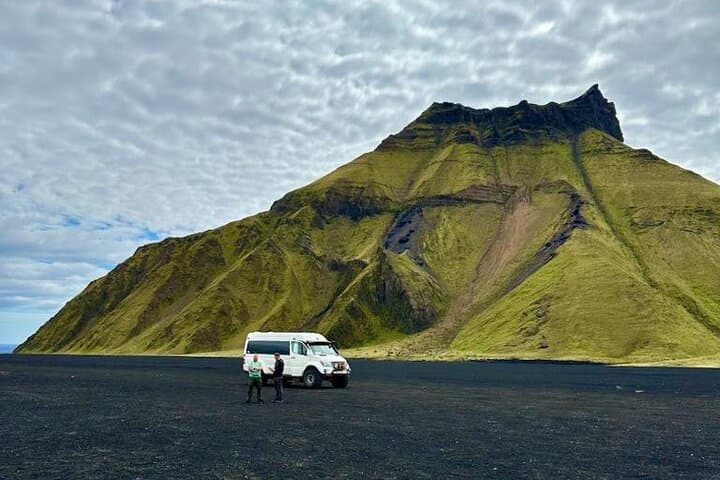
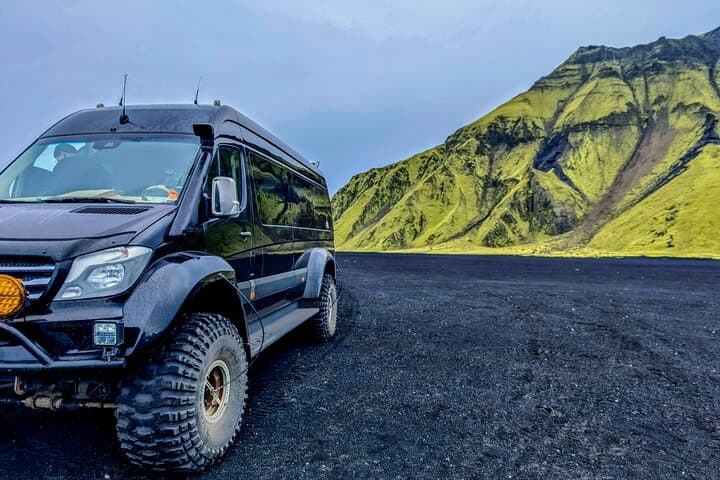
A low light spreads over the ring road as the 4x4 eases out of Reykjavík, tires crunching over black sand and pumice. Within an hour the Atlantic wind sharpens your field of view: Seljalandsfoss appears as a curtain of white you can walk behind, then Skógafoss thunders into a spray so fine it paints rainbows across the mist.
A low light spreads over the ring road as the 4x4 eases out of Reykjavík, tires crunching over black sand and pumice. Within an hour the Atlantic wind sharpens your field of view: Seljalandsfoss appears as a curtain of white you can walk behind, then Skógafoss thunders into a spray so fine it paints rainbows across the mist.
This route follows volcanic seams and glacial tills carved during the last Ice Age. The South Coast’s cliffs and basalt columns at Reynisfjara record violent lava flows arrested by cold sea, while Katla and Mýrdalsjökull—both volcanic and glacial—remind visitors how fire and ice shape Iceland’s culture and risk calculus. Local fishing villages like Vík have lived with sudden eruptions and shifting coasts for centuries; sagas and modern monitoring coexist here.
Practicalities are straightforward: expect an 11–12 hour day with long drives on Route 1, multiple short walks (10–30 minutes) at waterfalls and the beach, and a guided glacier approach onto ice. The Katla ice cave visit includes fitted crampons and helmets—walking on uneven blue and black ice with a guide for 45–90 minutes inside the glacier is the technical core of the day. Wear waterproof outer layers, sturdy boots, and warm base layers; wind and spray can drop temperatures rapidly.
Plan for changing weather, modest hiking fitness, and a camera that handles glare and low light. Guides provide safety briefings; follow them closely. The payoff is a sequence of raw coastal vistas and a silent, sculpted ice room that feels both ancient and immediate.