THE ADVENTURE COLLECTIVE® · Independent discovery and booking for outdoor travel

A full-day tour from Reykjavík that threads waterfall mist, black sand beaches and glacier ice into one compact loop along Iceland’s south coast. Expect short walks, dramatic photo stops and fast-changing weather — a practical, unforgettable sampler of the country’s wild southern edge.
A full-day tour from Reykjavík that threads waterfall mist, black sand beaches and glacier ice into one compact loop along Iceland’s south coast. Expect short walks, dramatic photo stops and fast-changing weather — a practical, unforgettable sampler of the country’s wild southern edge.
A low rumble of falling water meets cold spray as the coach eases into the car park at Skógafoss. Mist lifts in bands, rainbows form and dissolve, and the cliff face drops a clean 60 meters into a moss-streaked bowl — an instant baptism on Iceland’s south coast.
Verified experiences and guided adventures in the surrounding area.
Operated by Reykjavik Excursions · Skógar, Southern Region
A low rumble of falling water meets cold spray as the coach eases into the car park at Skógafoss. Mist lifts in bands, rainbows form and dissolve, and the cliff face drops a clean 60 meters into a moss-streaked bowl — an instant baptism on Iceland’s south coast.
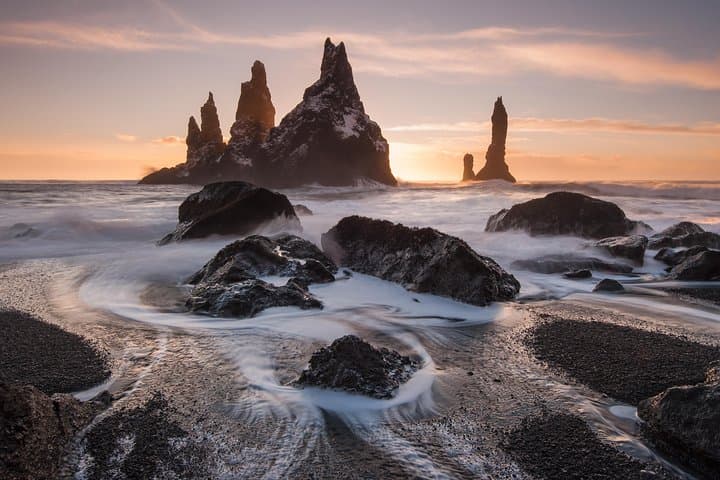
The route unfolds like a geological primer: black sand beaches born of cooled basalt and glacial silt at Reynisfjara, towering columnar basalt and the sea-carved Reynisdrangar stacks, then the raw, blue ice of Sólheimajökull — a glacier tongue reclaimed day by day by melt. Seljalandsfoss closes the circuit: a waterfall fed from Eyjafjallajökull where you can walk behind the curtain of water for an unusual perspective.
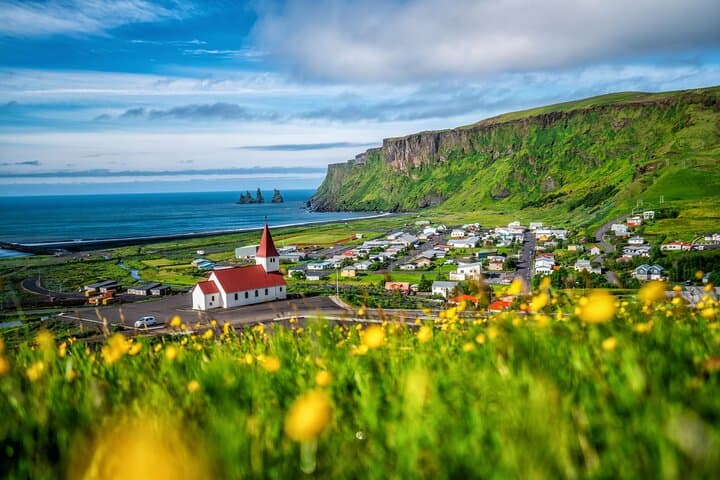
This coastline records volcanic temperament and glacial memory. Fishing villages like Vík grew here where the sea and land contest one another; folklore still explains the jagged stacks offshore. The area’s modern story includes the 2010 eruption that reshaped travel and deepened respect for Iceland’s active systems.
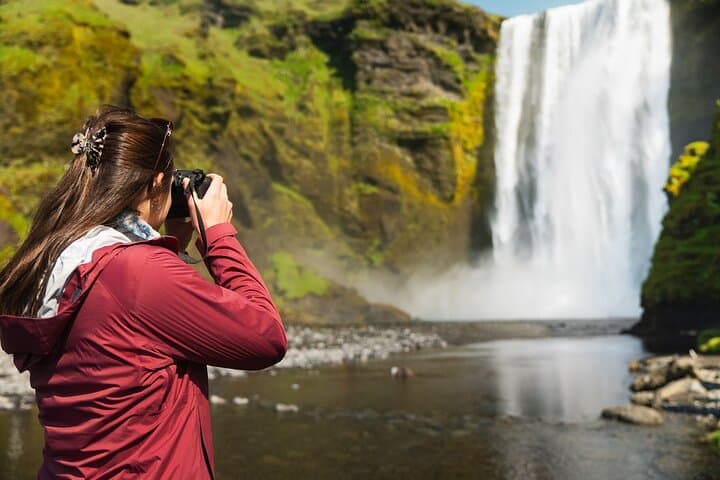
Practicalities: expect a full day (about 10 hours) with short walks at each stop — mostly flat paths, some wet and slippery sections, minimal elevation change beyond stairs at Skógafoss. Weather changes fast; waterproof layers and sturdy, waterproof boots are essential. Respect signage at Reynisfjara — sneaker waves are dangerous — and maintain distance from glacier fronts unless on a guided glacier walk. Bring a camera with weather protection, plan for long daylight in summer and limited light in winter, and allow time at each site for photography and quiet watching.
easy.
10 hours.
Suitable for average fitness — most stops require short, flat walks with occasional stairs
Yes — there’s a path behind the waterfall, but it’s wet and slippery; wear waterproof clothing and use caution on the rocks.
You can approach the glacier edge and a small pro-glacial lake independently, but venturing onto the ice requires a guided tour with crampons and an ice axe for safety.
Typical stops are 20–40 minutes: Skógafoss and Seljalandsfoss ~30 minutes each, Reynisfjara ~40 minutes, and Sólheimajökull ~40 minutes, allowing for photos and short walks.
Yes — most tours meet at or near the BSI Bus Terminal in Reykjavík and often offer hotel or bus stop pickups; confirm your pickup point when booking.
The south coast’s landscape reflects repeated volcanic events, including the 2010 Eyjafjallajökull eruption that impacted air travel and local communities.
Erosion and visitor pressure threaten fragile lava fields and dunes — stick to marked trails, avoid taking black sand, and follow local guidelines.
Reykjavik Excursions operates guided outdoor trips and adventures with an emphasis on safety, stewardship, and memorable experiences.
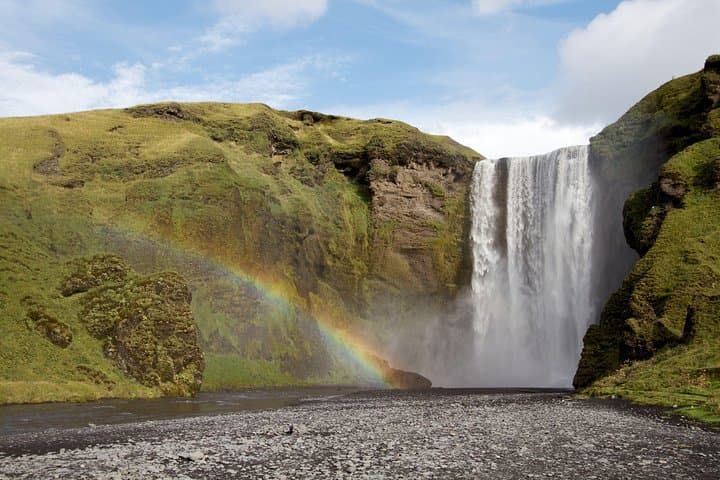
A low rumble of falling water meets cold spray as the coach eases into the car park at Skógafoss. Mist lifts in bands, rainbows form and dissolve, and the cliff face drops a clean 60 meters into a moss-streaked bowl — an instant baptism on Iceland’s south coast.
A low rumble of falling water meets cold spray as the coach eases into the car park at Skógafoss. Mist lifts in bands, rainbows form and dissolve, and the cliff face drops a clean 60 meters into a moss-streaked bowl — an instant baptism on Iceland’s south coast.
The route unfolds like a geological primer: black sand beaches born of cooled basalt and glacial silt at Reynisfjara, towering columnar basalt and the sea-carved Reynisdrangar stacks, then the raw, blue ice of Sólheimajökull — a glacier tongue reclaimed day by day by melt. Seljalandsfoss closes the circuit: a waterfall fed from Eyjafjallajökull where you can walk behind the curtain of water for an unusual perspective.
This coastline records volcanic temperament and glacial memory. Fishing villages like Vík grew here where the sea and land contest one another; folklore still explains the jagged stacks offshore. The area’s modern story includes the 2010 eruption that reshaped travel and deepened respect for Iceland’s active systems.
Practicalities: expect a full day (about 10 hours) with short walks at each stop — mostly flat paths, some wet and slippery sections, minimal elevation change beyond stairs at Skógafoss. Weather changes fast; waterproof layers and sturdy, waterproof boots are essential. Respect signage at Reynisfjara — sneaker waves are dangerous — and maintain distance from glacier fronts unless on a guided glacier walk. Bring a camera with weather protection, plan for long daylight in summer and limited light in winter, and allow time at each site for photography and quiet watching.