THE ADVENTURE COLLECTIVE® · Independent discovery and booking for outdoor travel

Activate South Africa data in minutes with a prepaid 30-day eSIM—ideal for travelers who want instant connectivity without a physical SIM. Learn how installation, coverage patterns, and daily data resets work so you can plan routes and conserve high-speed allowance.
Activate South Africa data in minutes with a prepaid 30-day eSIM—ideal for travelers who want instant connectivity without a physical SIM. Learn how installation, coverage patterns, and daily data resets work so you can plan routes and conserve high-speed allowance.
You step off the plane into Johannesburg’s hum — the airport announcements fade and your phone searches for a local signal. Within minutes a QR code scan brings a South African carrier onto your screen: maps load, messages send, and the country’s coastlines and savannas start to open up on your itinerary.
Verified experiences and guided adventures in the surrounding area.
Operated by Frewie · Johannesburg, Gauteng
You step off the plane into Johannesburg’s hum — the airport announcements fade and your phone searches for a local signal. Within minutes a QR code scan brings a South African carrier onto your screen: maps load, messages send, and the country’s coastlines and savannas start to open up on your itinerary.
Mobile connectivity in South Africa grew quickly with the liberalization of telecoms in the 1990s and the expansion of 3G/4G through major operators like Vodacom and MTN. Geographically the networks link dense urban corridors first — Gauteng, the coast around Cape Town and Durban — while more remote game reserves rely on sparser coverage. Culturally, data keeps travel moving here: ride-hailing, mobile payments, and wildlife guides all lean on reliable cellular service.
This prepaid eSIM is data-only, installs via QR code, and becomes active on installation; high-speed allowances vary by plan and daily plans reset every 24 hours before dropping to a messaging-speed cap (~128 kbps). Most modern, unlocked eSIM-capable phones support it, and mobile hotspot is allowed for sharing with companions.
Practical guidance: confirm device compatibility before purchase, install only when ready to begin the plan, and carry a power bank — heavy use drains batteries fast when streaming maps or route guidance. Expect 4G LTE in cities and occasional 5G where available; rural game areas may have weak coverage. Treat the eSIM as a tool for efficient travel: download offline maps where coverage fades, toggle background data to conserve high-speed allocation, and contact supplier support promptly if activation stalls. With the right prep, the eSIM keeps the trip connected without swapping physical SIMs.
easy.
Minutes to activate; plan valid up to 30 days.
No physical fitness required; suitable for all travelers
Yes—the eSIM connects to major South African networks and works nationwide, though actual signal strength varies by region and is strongest in urban centers.
No—this product is data-only and does not include voice or SMS services; use VOIP apps over data for calls.
Start using the eSIM within one month of purchase; activation begins the moment you install it, so delay installation until you’re ready to start the plan.
Yes—mobile hotspot is supported, but hotspot use will draw on your high-speed data allowance and may reduce speeds faster.
South Africa’s mobile market expanded rapidly after the 1990s telecom reforms, with widespread adoption of prepaid plans and later eSIM technology to serve international travelers.
Using an eSIM reduces plastic waste from physical SIM cards; travelers should also avoid excessive streaming in sensitive reserves to reduce data strain and support local networks.
Frewie operates guided outdoor trips and adventures with an emphasis on safety, stewardship, and memorable experiences.

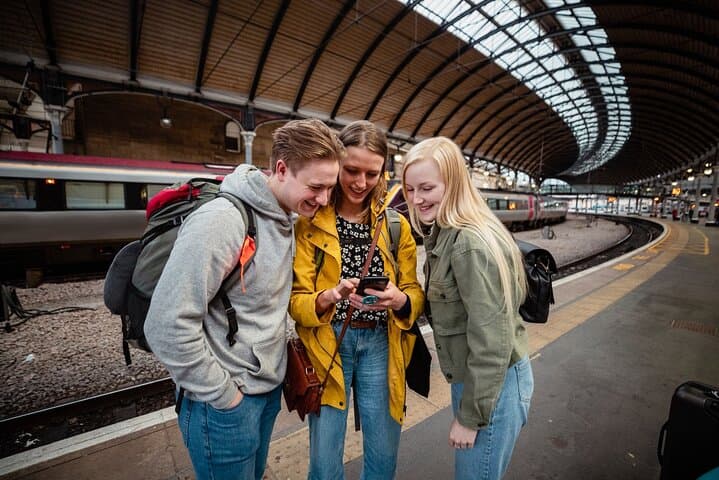


You step off the plane into Johannesburg’s hum — the airport announcements fade and your phone searches for a local signal. Within minutes a QR code scan brings a South African carrier onto your screen: maps load, messages send, and the country’s coastlines and savannas start to open up on your itinerary.
You step off the plane into Johannesburg’s hum — the airport announcements fade and your phone searches for a local signal. Within minutes a QR code scan brings a South African carrier onto your screen: maps load, messages send, and the country’s coastlines and savannas start to open up on your itinerary.
Mobile connectivity in South Africa grew quickly with the liberalization of telecoms in the 1990s and the expansion of 3G/4G through major operators like Vodacom and MTN. Geographically the networks link dense urban corridors first — Gauteng, the coast around Cape Town and Durban — while more remote game reserves rely on sparser coverage. Culturally, data keeps travel moving here: ride-hailing, mobile payments, and wildlife guides all lean on reliable cellular service.
This prepaid eSIM is data-only, installs via QR code, and becomes active on installation; high-speed allowances vary by plan and daily plans reset every 24 hours before dropping to a messaging-speed cap (~128 kbps). Most modern, unlocked eSIM-capable phones support it, and mobile hotspot is allowed for sharing with companions.
Practical guidance: confirm device compatibility before purchase, install only when ready to begin the plan, and carry a power bank — heavy use drains batteries fast when streaming maps or route guidance. Expect 4G LTE in cities and occasional 5G where available; rural game areas may have weak coverage. Treat the eSIM as a tool for efficient travel: download offline maps where coverage fades, toggle background data to conserve high-speed allocation, and contact supplier support promptly if activation stalls. With the right prep, the eSIM keeps the trip connected without swapping physical SIMs.