THE ADVENTURE COLLECTIVE® · Independent discovery and booking for outdoor travel

Learn to hand-roll tagliatelle and stuff ravioli in an 1800s family villa overlooking the sea, then taste regional olive oil and wines chosen by a sommelier. This three-hour, hands-on class combines technique with local context and a garden lunch under lemon trees.
Learn to hand-roll tagliatelle and stuff ravioli in an 1800s family villa overlooking the sea, then taste regional olive oil and wines chosen by a sommelier. This three-hour, hands-on class combines technique with local context and a garden lunch under lemon trees.
You arrive under the lemon trees: sun slices between broad leaves, the sea murmurs beyond a low wall, and an 1800 villa opens its shutters to the scent of olive oil and citrus. The lesson begins at a wooden table covered with flour, where a local chef guides your hands through rolling tagliatelle and folding ravioli while a sommelier describes the wine you’ll pair with each bite.
Verified experiences and guided adventures in the surrounding area.
Operated by Casa Fiorita Cook & Wine Sorrento · Sorrento, Campania
You arrive under the lemon trees: sun slices between broad leaves, the sea murmurs beyond a low wall, and an 1800 villa opens its shutters to the scent of olive oil and citrus. The lesson begins at a wooden table covered with flour, where a local chef guides your hands through rolling tagliatelle and folding ravioli while a sommelier describes the wine you’ll pair with each bite.
Sorrento’s coastline sits on limestone cliffs carved by the Tyrrhenian, and its terraces have been farmed for centuries. That mix of geology and culture explains the region’s citrus orchards and the olive groves that frame the villa garden. In this class you’ll taste caciocavallo cheese, bruschetta made with the villa’s own oil, and tiramisù paired with a sweet red—small lessons in local foodways that reflect a long tradition of coastal trade and agrarian craft.
Practical matters matter: the session runs three hours, and everything is hands-on — expect to knead, stuff, and plate. Tell the host about allergies (the operator flags gluten) and arrive 10–15 minutes early to settle in. The setting is informal but bring comfortable shoes and a camera; dress for a shady outdoor garden during summer and a cool terrace in spring or fall.
At the end you leave with recipes and a certificate, plus the kind of tasting notes that turn a vacation meal into a recipe you’ll cook at home. This is a sensory primer on Sorrento: food anchored in place, explained by people who live it.
easy.
3 hours.
Suitable for all fitness levels—mostly standing and light manual work (kneading, rolling).
Yes—many dishes are vegetarian-friendly (ricotta-and-spinach ravioli, bruschetta), but inform the host at booking for any specific needs.
No—this experience centers on fresh pasta and is not recommended for people with a gluten allergy; notify the host if you have concerns.
The class is typically led in English and Italian; confirm ahead of time if you require another language or special assistance.
No—meeting point is at Casa Fiorita, Via Pantano 9 in Sorrento; public transport and local taxis are available nearby.
The villa dates to around 1800 and sits in a landscape shaped by coastal limestone terraces; Sorrento’s food culture grew from citrus and olive cultivation tied to historic maritime trade.
The host emphasizes local produce and olive-oil tasting from estate trees—respect property, minimize single-use plastics, and compost scraps when offered.
Casa Fiorita Cook & Wine Sorrento operates guided outdoor trips and adventures with an emphasis on safety, stewardship, and memorable experiences.
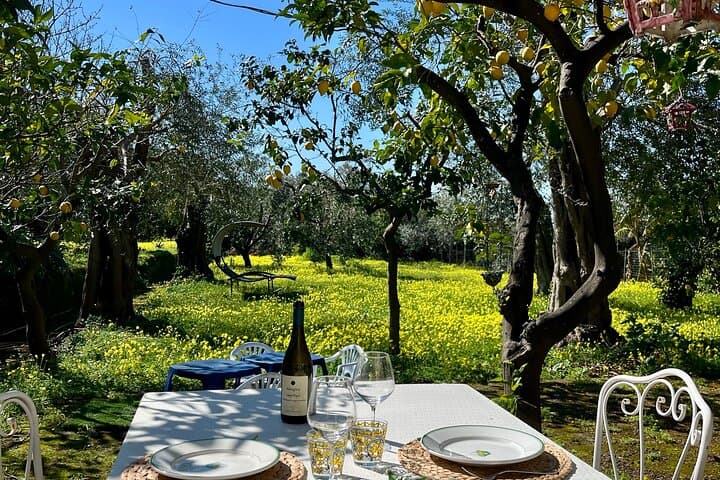
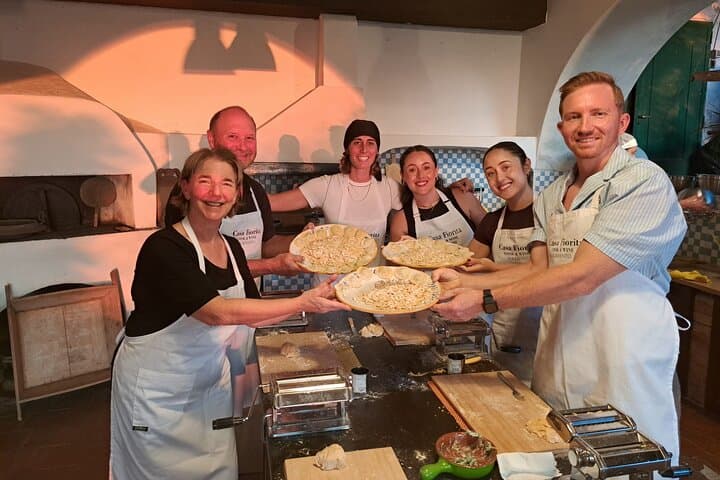
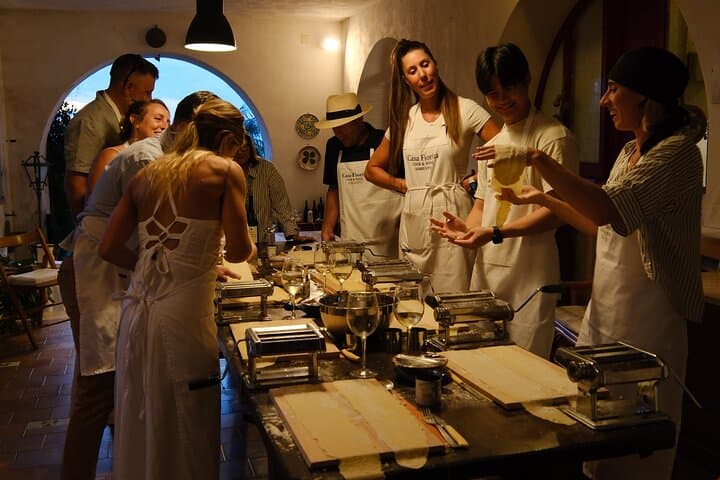
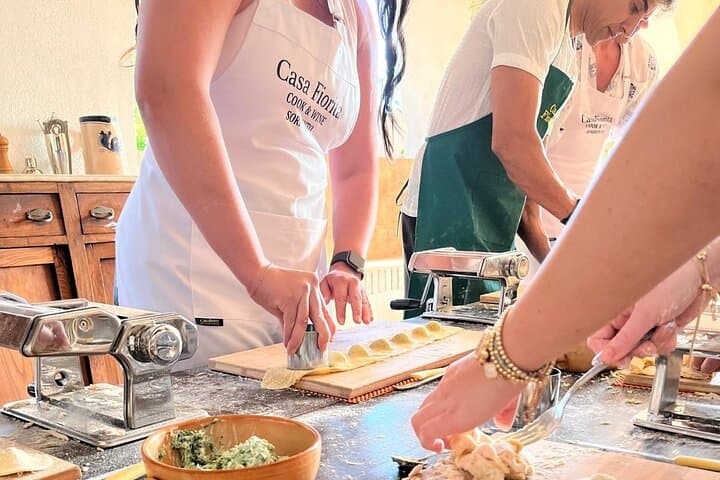
You arrive under the lemon trees: sun slices between broad leaves, the sea murmurs beyond a low wall, and an 1800 villa opens its shutters to the scent of olive oil and citrus. The lesson begins at a wooden table covered with flour, where a local chef guides your hands through rolling tagliatelle and folding ravioli while a sommelier describes the wine you’ll pair with each bite.
You arrive under the lemon trees: sun slices between broad leaves, the sea murmurs beyond a low wall, and an 1800 villa opens its shutters to the scent of olive oil and citrus. The lesson begins at a wooden table covered with flour, where a local chef guides your hands through rolling tagliatelle and folding ravioli while a sommelier describes the wine you’ll pair with each bite.
Sorrento’s coastline sits on limestone cliffs carved by the Tyrrhenian, and its terraces have been farmed for centuries. That mix of geology and culture explains the region’s citrus orchards and the olive groves that frame the villa garden. In this class you’ll taste caciocavallo cheese, bruschetta made with the villa’s own oil, and tiramisù paired with a sweet red—small lessons in local foodways that reflect a long tradition of coastal trade and agrarian craft.
Practical matters matter: the session runs three hours, and everything is hands-on — expect to knead, stuff, and plate. Tell the host about allergies (the operator flags gluten) and arrive 10–15 minutes early to settle in. The setting is informal but bring comfortable shoes and a camera; dress for a shady outdoor garden during summer and a cool terrace in spring or fall.
At the end you leave with recipes and a certificate, plus the kind of tasting notes that turn a vacation meal into a recipe you’ll cook at home. This is a sensory primer on Sorrento: food anchored in place, explained by people who live it.