THE ADVENTURE COLLECTIVE® · Independent discovery and booking for outdoor travel

Discover Sopot on a private two-hour walking tour from the historic train station to Europe’s longest wooden pier. Learn the town’s spa-era history, visit the lighthouse and Sofitel Grand, and enjoy Baltic views with insider local tips.
Discover Sopot on a private two-hour walking tour from the historic train station to Europe’s longest wooden pier. Learn the town’s spa-era history, visit the lighthouse and Sofitel Grand, and enjoy Baltic views with insider local tips.
You step off the train and the salt-laced air pulls you toward the sea. The restored Sopot train station opens like a ceremonial gateway; cobblestones give way to the busy pulse of Bohaterów Monte Cassino — Monciak — where cafés, trampling footsteps and street artists create a human tide that flows toward the water.
Verified experiences and guided adventures in the surrounding area.
Operated by Opatrip.com Poland · Sopot, Pomeranian Voivodeship
You step off the train and the salt-laced air pulls you toward the sea. The restored Sopot train station opens like a ceremonial gateway; cobblestones give way to the busy pulse of Bohaterów Monte Cassino — Monciak — where cafés, trampling footsteps and street artists create a human tide that flows toward the water.
This two-hour private walk threads together Sopot’s spa-era past and Baltic geology. Founded as a 19th-century health resort, Sopot’s grand hotels and the art nouveau Sofitel Grand recall a time when wooden pavilions and mineral baths drew Europe’s elite. The coastline here is a shallow, sandy shelf formed by post-glacial sediment, which makes the beach broad and the pier — Europe’s longest wooden structure at roughly 500 meters — dramatic at low tide.
Climb the historic lighthouse for wind-bent views of Gdańsk Bay, then walk the pier where gulls quarrel and the Baltic horizon dares you to keep walking. The guide will point out local customs, from pier etiquette to seasonal bathing habits, and the town’s shift from spa retreat to relaxed seaside weekend.
Practical notes: the route is flat but exposed to wind and sudden rain; layers and a windbreaker are wise. Wear comfortable shoes for wooden planks and cobbles, and plan evenings for sunset light or mornings for fewer crowds. The private format lets you pause for photos, coffee stops, or a quick museum peek — an efficient, atmospheric way to read Sopot’s coastline in two hours.
easy.
2 hours.
Suitable for most fitness levels; mostly flat walking with brief standing periods
The wooden pier stretches roughly 500 metres into the Baltic; a full out-and-back walk from the shore takes about 20–30 minutes depending on stops.
Yes; the route is flat and family-friendly, but strollers may be tricky on sections of cobblestone and the pier—ask the guide about alternate paths.
No—this private walking tour highlights exterior viewpoints and history; entry fees to museums or the lighthouse (if controlled) are not included.
Yes—being private, the guide can adjust focus (architecture, photography, food stops) within the two-hour timeframe when arranged in advance.
Sopot grew in the 19th century as a European spa town; its grand hotels and promenade reflect that Belle Époque expansion and seaside leisure culture.
The Baltic coast is sensitive to erosion and litter; stick to marked walkways, avoid trampling dunes and carry out any trash to protect fragile shoreline habitats.
Opatrip.com Poland operates guided outdoor trips and adventures with an emphasis on safety, stewardship, and memorable experiences.

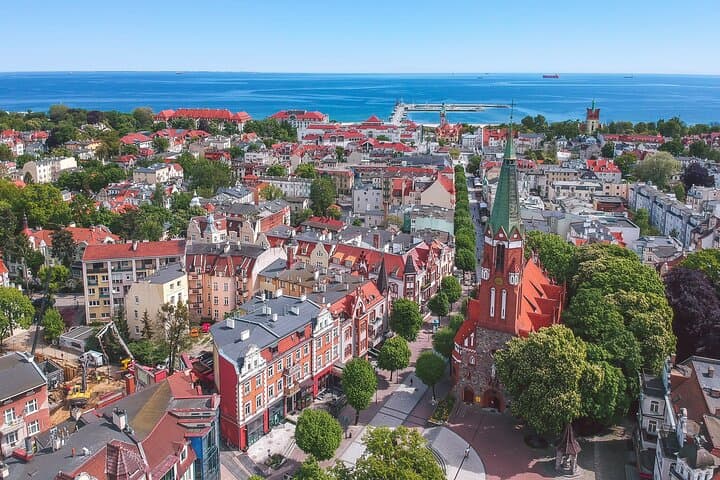

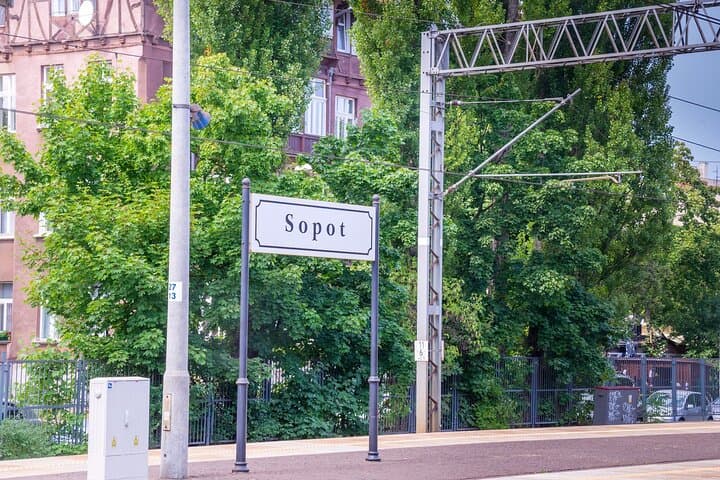
You step off the train and the salt-laced air pulls you toward the sea. The restored Sopot train station opens like a ceremonial gateway; cobblestones give way to the busy pulse of Bohaterów Monte Cassino — Monciak — where cafés, trampling footsteps and street artists create a human tide that flows toward the water.
You step off the train and the salt-laced air pulls you toward the sea. The restored Sopot train station opens like a ceremonial gateway; cobblestones give way to the busy pulse of Bohaterów Monte Cassino — Monciak — where cafés, trampling footsteps and street artists create a human tide that flows toward the water.
This two-hour private walk threads together Sopot’s spa-era past and Baltic geology. Founded as a 19th-century health resort, Sopot’s grand hotels and the art nouveau Sofitel Grand recall a time when wooden pavilions and mineral baths drew Europe’s elite. The coastline here is a shallow, sandy shelf formed by post-glacial sediment, which makes the beach broad and the pier — Europe’s longest wooden structure at roughly 500 meters — dramatic at low tide.
Climb the historic lighthouse for wind-bent views of Gdańsk Bay, then walk the pier where gulls quarrel and the Baltic horizon dares you to keep walking. The guide will point out local customs, from pier etiquette to seasonal bathing habits, and the town’s shift from spa retreat to relaxed seaside weekend.
Practical notes: the route is flat but exposed to wind and sudden rain; layers and a windbreaker are wise. Wear comfortable shoes for wooden planks and cobbles, and plan evenings for sunset light or mornings for fewer crowds. The private format lets you pause for photos, coffee stops, or a quick museum peek — an efficient, atmospheric way to read Sopot’s coastline in two hours.