THE ADVENTURE COLLECTIVE® · Independent discovery and booking for outdoor travel

Walk in the footsteps of emperors on a self-guided audio tour through Rome’s imperial core. Visit the Pantheon, Ponte Sant’Angelo and more while listening to local-historian narration and following GPS-enabled directions.
Walk in the footsteps of emperors on a self-guided audio tour through Rome’s imperial core. Visit the Pantheon, Ponte Sant’Angelo and more while listening to local-historian narration and following GPS-enabled directions.
You step off a narrow cobbled street and the city rearranges itself: a bronze statue glints, church bells cut the air, and the Pantheon’s dome rises like a perfectly placed punctuation mark. This self-guided audio walk threads between the Mausoleum of Augustus, Via del Corso, the Pantheon, Piazza Navona, Ponte Sant’Angelo and Castel Sant’Angelo — about 1.5–2 miles of mostly flat, paved city routes taken at a historian’s pace.
Verified experiences and guided adventures in the surrounding area.
Operated by Vidi Guides · Rome, Lazio
You step off a narrow cobbled street and the city rearranges itself: a bronze statue glints, church bells cut the air, and the Pantheon’s dome rises like a perfectly placed punctuation mark. This self-guided audio walk threads between the Mausoleum of Augustus, Via del Corso, the Pantheon, Piazza Navona, Ponte Sant’Angelo and Castel Sant’Angelo — about 1.5–2 miles of mostly flat, paved city routes taken at a historian’s pace.
The route is a fast lesson in Rome’s political and architectural evolution. You’ll hear how the Republic fractured into imperial rule under Augustus, how emperors built monuments to project power, and how later Baroque artists reshaped imperial spaces for new civic life. Geology and city form show up in travertine facades and the exposed remains of ancient roads that once channeled troops and trade across the peninsula.
Local culture here is granular: outdoor cafes host conversation that’s half-food critique, half-family news. Pigeons and street vendors are as much a part of the scene as the columns and fountains, and the audio places you at Instagram hotspots while nudging you off the busiest footpaths.
Practical guidance: download the tour for offline use, bring a portable battery and water, and wear shoes that handle uneven cobbles. Expect gentle elevation changes, frequent stops for photos and commentary, and no included entry tickets for monuments. Start early to avoid mid-day crowds and heat, and use nearby metro stops or buses to return to your lodging. This is an accessible, low-strain way to walk two millennia of history in under two hours.
easy.
1.5–2 hours.
Minimal — able to walk and stand for up to two hours with short breaks
No entrance tickets are included; the Pantheon has free access but may have queues; Castel Sant’Angelo requires a separate ticket if you wish to go inside.
The tour content and route are designed to be accessible and many surfaces are wheelchair friendly, but some nearby ancient sites have steps—check specific stops before visiting.
Yes — the self-guided audio allows you to pause, rewind and replay sections so you can linger at spots that interest you.
The itinerary runs about 110 minutes and covers roughly 1.5–2 miles (2.5–3.5 km) with frequent stops for narration and photos.
The tour highlights Rome’s shift from Republic to Empire—Augustus established a dynastic model that reshaped urban space and monumental propaganda.
High foot traffic stresses ancient paving and monuments; stick to marked paths, avoid touching fragile stonework, and support local conservation by choosing sustainable vendors.
Vidi Guides operates guided outdoor trips and adventures with an emphasis on safety, stewardship, and memorable experiences.
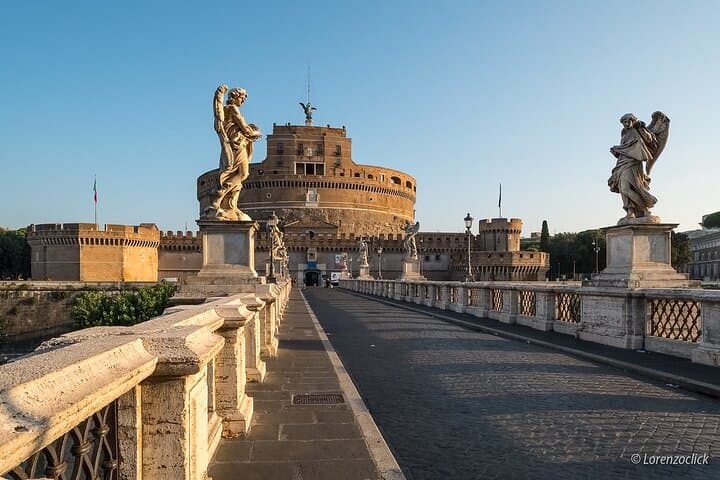


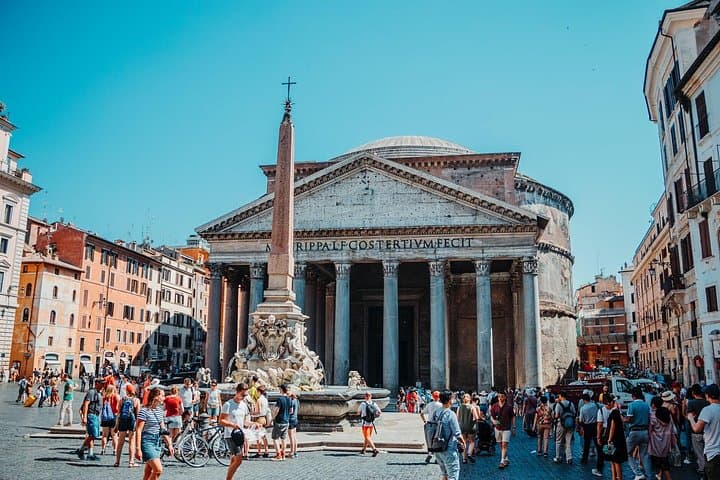
You step off a narrow cobbled street and the city rearranges itself: a bronze statue glints, church bells cut the air, and the Pantheon’s dome rises like a perfectly placed punctuation mark. This self-guided audio walk threads between the Mausoleum of Augustus, Via del Corso, the Pantheon, Piazza Navona, Ponte Sant’Angelo and Castel Sant’Angelo — about 1.5–2 miles of mostly flat, paved city routes taken at a historian’s pace.
You step off a narrow cobbled street and the city rearranges itself: a bronze statue glints, church bells cut the air, and the Pantheon’s dome rises like a perfectly placed punctuation mark. This self-guided audio walk threads between the Mausoleum of Augustus, Via del Corso, the Pantheon, Piazza Navona, Ponte Sant’Angelo and Castel Sant’Angelo — about 1.5–2 miles of mostly flat, paved city routes taken at a historian’s pace.
The route is a fast lesson in Rome’s political and architectural evolution. You’ll hear how the Republic fractured into imperial rule under Augustus, how emperors built monuments to project power, and how later Baroque artists reshaped imperial spaces for new civic life. Geology and city form show up in travertine facades and the exposed remains of ancient roads that once channeled troops and trade across the peninsula.
Local culture here is granular: outdoor cafes host conversation that’s half-food critique, half-family news. Pigeons and street vendors are as much a part of the scene as the columns and fountains, and the audio places you at Instagram hotspots while nudging you off the busiest footpaths.
Practical guidance: download the tour for offline use, bring a portable battery and water, and wear shoes that handle uneven cobbles. Expect gentle elevation changes, frequent stops for photos and commentary, and no included entry tickets for monuments. Start early to avoid mid-day crowds and heat, and use nearby metro stops or buses to return to your lodging. This is an accessible, low-strain way to walk two millennia of history in under two hours.