THE ADVENTURE COLLECTIVE® · Independent discovery and booking for outdoor travel

Travel from Paris to the Somme and Vimy Ridge on a private full‑day tour that visits key World War I memorials, preserved trenches, and museums. Expect an emotionally powerful, mostly on‑foot experience across gentle ridgelines and battlefield sites.
Travel from Paris to the Somme and Vimy Ridge on a private full‑day tour that visits key World War I memorials, preserved trenches, and museums. Expect an emotionally powerful, mostly on‑foot experience across gentle ridgelines and battlefield sites.
The day begins before dawn in Paris: an air-conditioned vehicle hums onto the autoroute while the morning light slides across flat northern fields, and you feel the landscape—quiet, scarred, patient—hold its stories.
Verified experiences and guided adventures in the surrounding area.
Operated by Galaxytour · Vimy, Hauts-de-France
The day begins before dawn in Paris: an air-conditioned vehicle hums onto the autoroute while the morning light slides across flat northern fields, and you feel the landscape—quiet, scarred, patient—hold its stories.
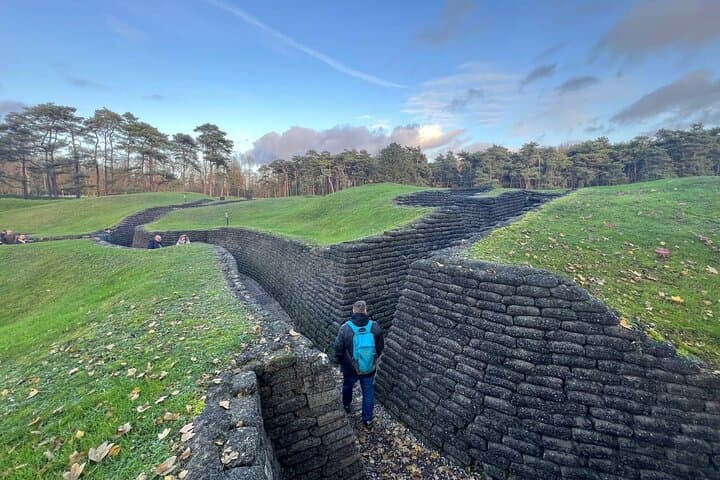
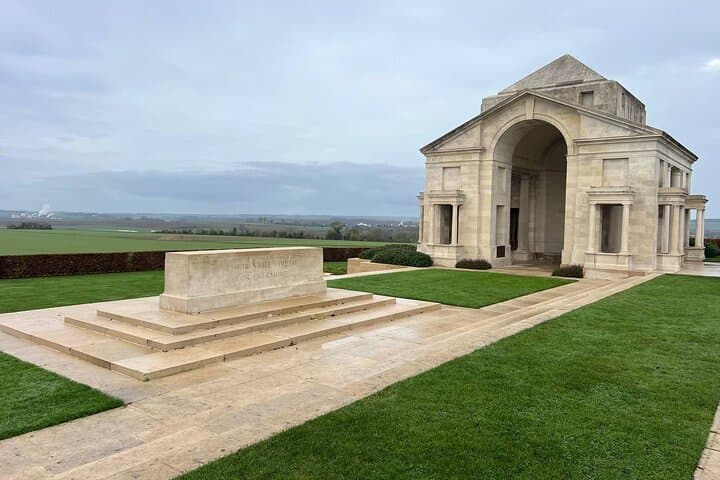
Across the Somme and up to Vimy Ridge, this private full‑day tour threads together the principal memorials of World War I: Villers-Bretonneux Military Cemetery and the Sir John Monash Centre, the cavernous Lochnagar Crater, Thiepval and the Ulster Tower, preserved trenches at Vimy, and the Beaumont-Hamel Newfoundland Memorial. Geology here is simple—gentle chalk ridges and low clay plains—terrain that turned into mud and morass under the boots of 1916–17 and still channels rain into shallow ditches that skirt the memorials.
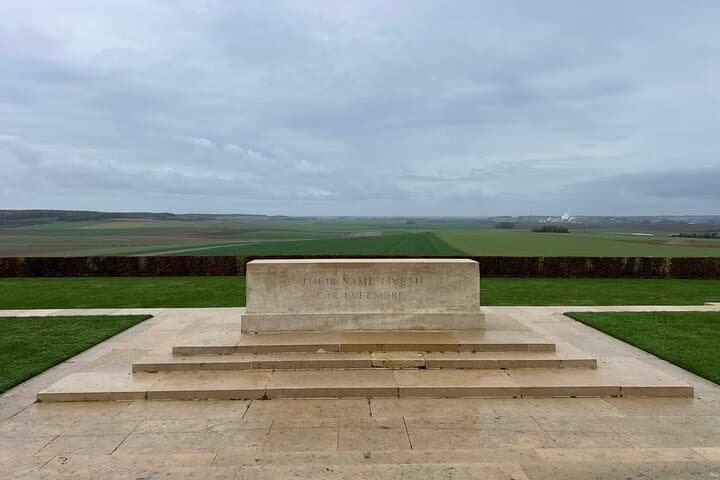
Culturally the route maps allied sacrifice across nations: Australian, Canadian, British, Newfoundland and Ulster stories are marked in stone, names, and plaques. Museums like Musée Somme 1916 and the Sir John Monash Centre use artifacts and immersive displays to place individual voices inside the wider battle narrative.
Practical guidance: expect a 9–12 hour day with several short walks on uneven, often muddy ground; choose sturdy, waterproof shoes and layered clothing. Guided commentary moves between sites—allow 20–60 minutes per stop—and there is time to reflect between monuments. Bring water, sun protection, and sensitivity: these are active memorials where quiet and respect matter.
This itinerary is best for history-minded travelers who want concentrated context and controlled travel logistics—an efficient, solemn immersion into the landscape and stories of the Western Front.
easy.
9–12 hours.
Suitable for most fitness levels but requires the ability to walk short distances (10–30 minutes) on uneven ground multiple times during the day.
The tour runs approximately 9–12 hours and commonly departs early morning from Paris (around 7:30 AM) to maximize daylight at sites.
Yes—there are multiple short walks at memorials and preserved trenches; surfaces are uneven but the walks are generally short and suitable for most people.
Most listed sites include admission; check your booking confirmation for specifics—museums like the Sir John Monash Centre and Musée Somme 1916 are typically part of the itinerary.
This is a private tour and can often be adjusted to prioritize specific memorials or add time at particular sites—contact the operator before your date to request changes.
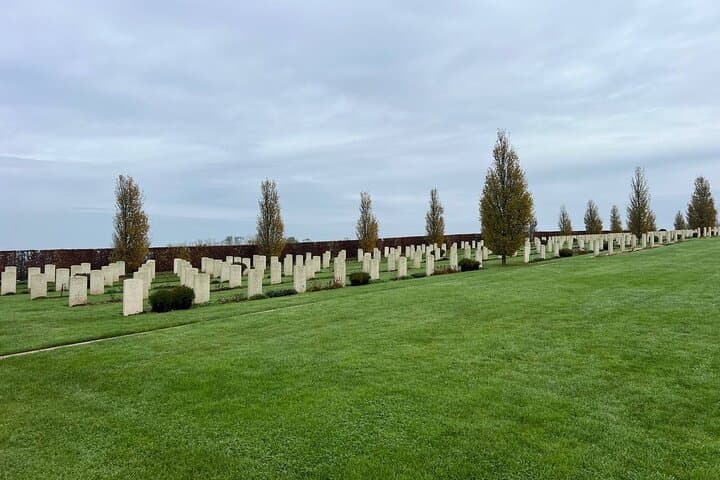
The Somme and Vimy Ridge were pivotal Western Front engagements (1916–1917) that reshaped tactics and national memory; many memorials commemorate soldiers with no known grave.
Sites are maintained by national and Commonwealth trusts; visitors help preservation by keeping to paths and following signage to prevent erosion of fragile trench areas.
Galaxytour operates guided outdoor trips and adventures with an emphasis on safety, stewardship, and memorable experiences.
The day begins before dawn in Paris: an air-conditioned vehicle hums onto the autoroute while the morning light slides across flat northern fields, and you feel the landscape—quiet, scarred, patient—hold its stories.
The day begins before dawn in Paris: an air-conditioned vehicle hums onto the autoroute while the morning light slides across flat northern fields, and you feel the landscape—quiet, scarred, patient—hold its stories.
Across the Somme and up to Vimy Ridge, this private full‑day tour threads together the principal memorials of World War I: Villers-Bretonneux Military Cemetery and the Sir John Monash Centre, the cavernous Lochnagar Crater, Thiepval and the Ulster Tower, preserved trenches at Vimy, and the Beaumont-Hamel Newfoundland Memorial. Geology here is simple—gentle chalk ridges and low clay plains—terrain that turned into mud and morass under the boots of 1916–17 and still channels rain into shallow ditches that skirt the memorials.
Culturally the route maps allied sacrifice across nations: Australian, Canadian, British, Newfoundland and Ulster stories are marked in stone, names, and plaques. Museums like Musée Somme 1916 and the Sir John Monash Centre use artifacts and immersive displays to place individual voices inside the wider battle narrative.
Practical guidance: expect a 9–12 hour day with several short walks on uneven, often muddy ground; choose sturdy, waterproof shoes and layered clothing. Guided commentary moves between sites—allow 20–60 minutes per stop—and there is time to reflect between monuments. Bring water, sun protection, and sensitivity: these are active memorials where quiet and respect matter.
This itinerary is best for history-minded travelers who want concentrated context and controlled travel logistics—an efficient, solemn immersion into the landscape and stories of the Western Front.