THE ADVENTURE COLLECTIVE® · Independent discovery and booking for outdoor travel

Follow Australian footsteps across the Somme on a full‑day, small‑group tour from Arras. Visit preserved trenches, memorials and the Sir John Monash Centre with an Australian guide who contextualizes battles, landscapes and local remembrance.
Follow Australian footsteps across the Somme on a full‑day, small‑group tour from Arras. Visit preserved trenches, memorials and the Sir John Monash Centre with an Australian guide who contextualizes battles, landscapes and local remembrance.
You step off the air‑conditioned minibus into wide northern fields where the horizon is a hard line of hedgerows and war-scarred ridges. Wind moves through stubble and grass; the earth still bears dents and scars where mines once blew and trenches once cut the landscape. The guide—Australian, with a local’s maps and a soldier’s attention to detail—places each stop in human terms: a cemetery’s rows, a crater’s rim, the hollowed trench you can walk through.
Verified experiences and guided adventures in the surrounding area.
Operated by Sacred Ground Tours · Arras, Hauts-de-France
You step off the air‑conditioned minibus into wide northern fields where the horizon is a hard line of hedgerows and war-scarred ridges. Wind moves through stubble and grass; the earth still bears dents and scars where mines once blew and trenches once cut the landscape. The guide—Australian, with a local’s maps and a soldier’s attention to detail—places each stop in human terms: a cemetery’s rows, a crater’s rim, the hollowed trench you can walk through.
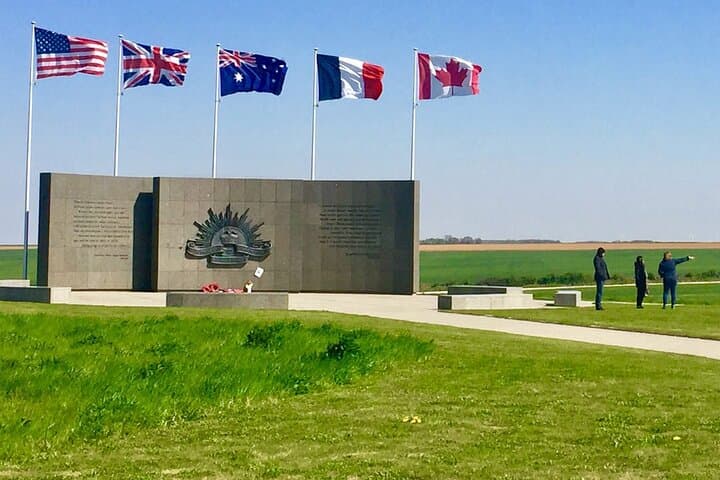
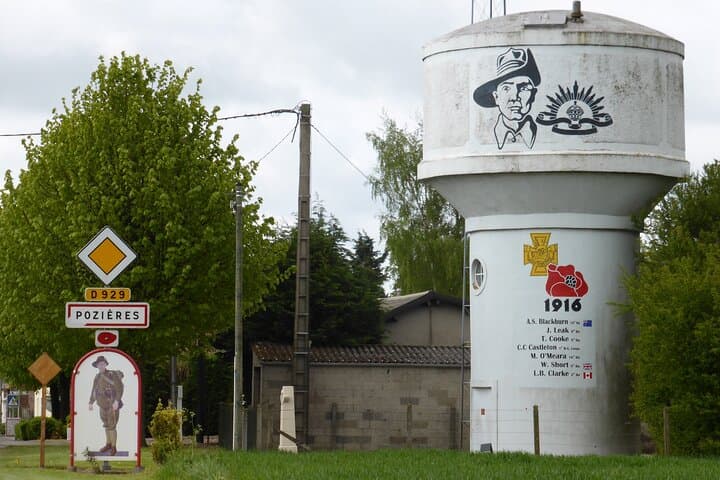
This route threads Villers‑Bretonneux, the Sir John Monash Centre, Pozieres, the Lochnagar crater and Le Hamel—sites central to Australian action on the Western Front. Geologically the Somme is chalk overlain by clay and loam; that mix amplified shelling into churned mud and deep craters that still influence drainage and farming. Culturally the towns you pass, especially Villers‑Bretonneux, keep a visible Australian connection through memorials, school partnerships and annual ceremonies.
Practically: expect an 8–9 hour day with multiple short walks (paved paths and uneven dirt). Small groups (max seven) allow time for quiet reflection at cemeteries and guided context at the Monash Centre. Bring weatherproof layers, sturdy shoes for uneven ground, photo ID and a respectful mindset—these are active memorial sites. Hydrate and plan for variable northern French weather; the tour includes bottled water and entry fees where noted. If you want a focused, historically rigorous, Australian‑framed reading of the Somme that balances battlefield detail with cultural context, this day tour from Arras delivers.
easy.
8–9 hours.
Suitable for most fitness levels; requires ability to walk short distances on uneven ground multiple times in a day.
The guide is Australian and conducts the tour in English; the commentary focuses on Australian perspectives of the Somme.
The tour notes entry fees as included where specified—confirm at booking and bring small cash for any optional admissions.
The tour is rated physically easy, but includes short walks on uneven ground and trench areas; contact the operator about accessibility needs and pickup points.
Full refund if you cancel at least 24 hours before departure; no refund within 24 hours of the tour start.
The Somme was a turning point in 1916; Australian units fought at Pozieres and Pozières Ridge and later helped halt German advances in 1918 under leaders such as General Monash.
Battlefield sites are managed for memorial preservation and agriculture; visitors should stay on paths, avoid metal detecting and support local conservation efforts by following site rules.
Sacred Ground Tours operates guided outdoor trips and adventures with an emphasis on safety, stewardship, and memorable experiences.
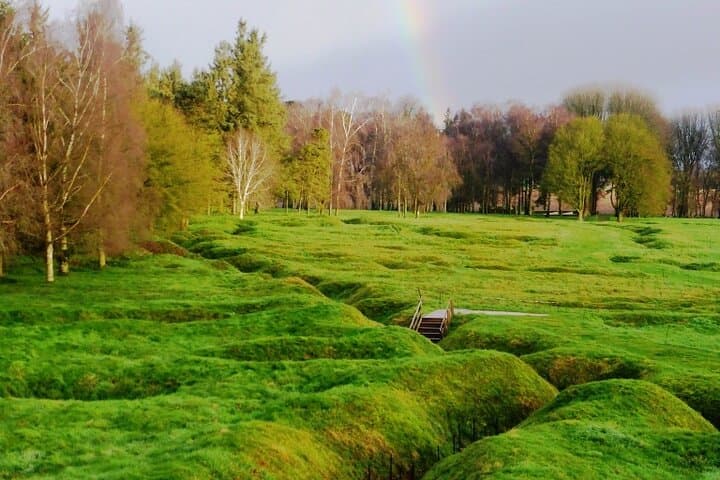
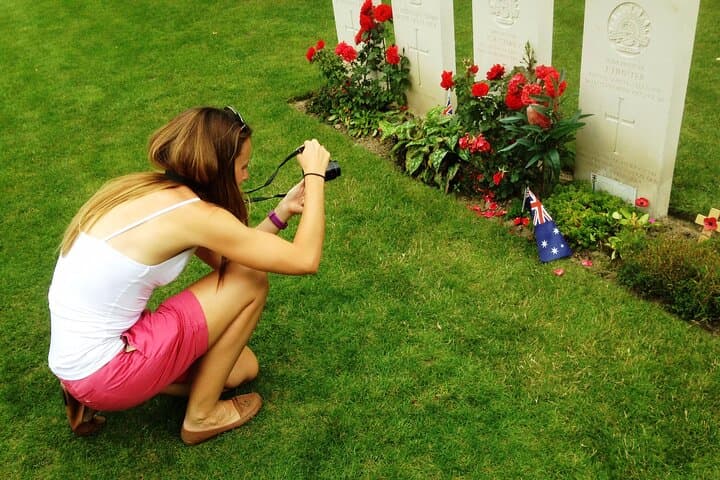
You step off the air‑conditioned minibus into wide northern fields where the horizon is a hard line of hedgerows and war-scarred ridges. Wind moves through stubble and grass; the earth still bears dents and scars where mines once blew and trenches once cut the landscape. The guide—Australian, with a local’s maps and a soldier’s attention to detail—places each stop in human terms: a cemetery’s rows, a crater’s rim, the hollowed trench you can walk through.
You step off the air‑conditioned minibus into wide northern fields where the horizon is a hard line of hedgerows and war-scarred ridges. Wind moves through stubble and grass; the earth still bears dents and scars where mines once blew and trenches once cut the landscape. The guide—Australian, with a local’s maps and a soldier’s attention to detail—places each stop in human terms: a cemetery’s rows, a crater’s rim, the hollowed trench you can walk through.
This route threads Villers‑Bretonneux, the Sir John Monash Centre, Pozieres, the Lochnagar crater and Le Hamel—sites central to Australian action on the Western Front. Geologically the Somme is chalk overlain by clay and loam; that mix amplified shelling into churned mud and deep craters that still influence drainage and farming. Culturally the towns you pass, especially Villers‑Bretonneux, keep a visible Australian connection through memorials, school partnerships and annual ceremonies.
Practically: expect an 8–9 hour day with multiple short walks (paved paths and uneven dirt). Small groups (max seven) allow time for quiet reflection at cemeteries and guided context at the Monash Centre. Bring weatherproof layers, sturdy shoes for uneven ground, photo ID and a respectful mindset—these are active memorial sites. Hydrate and plan for variable northern French weather; the tour includes bottled water and entry fees where noted. If you want a focused, historically rigorous, Australian‑framed reading of the Somme that balances battlefield detail with cultural context, this day tour from Arras delivers.