THE ADVENTURE COLLECTIVE® · Independent discovery and booking for outdoor travel

Turn Siena’s streets into a playground of clues and local stories with a two-hour walking riddle hunt. Solve puzzles through Piazza del Campo and hidden alleys while guides offer hints and historical context.
Turn Siena’s streets into a playground of clues and local stories with a two-hour walking riddle hunt. Solve puzzles through Piazza del Campo and hidden alleys while guides offer hints and historical context.
You step off the bus and the square opens: vast, shell-shaped Piazza del Campo presses warm brick underfoot while medieval rooftops tilt toward the Tuscan sky. The riddle hunt pushes you into narrow alleys, past worn stone portals and through small piazzas where merchants once bartered cloth and salt. Clues nudge you to lift your gaze—balconies, coats of arms and carved dates become the map.
Verified experiences and guided adventures in the surrounding area.
Operated by myTour in Italy · Siena, Tuscany
You step off the bus and the square opens: vast, shell-shaped Piazza del Campo presses warm brick underfoot while medieval rooftops tilt toward the Tuscan sky. The riddle hunt pushes you into narrow alleys, past worn stone portals and through small piazzas where merchants once bartered cloth and salt. Clues nudge you to lift your gaze—balconies, coats of arms and carved dates become the map.
Siena’s streets are a living record of a city-state that peaked in the 13th and 14th centuries. The Palio horse race, the Contrade neighborhoods and the Gothic facades you pass all grew from that intense civic pride. Geology matters here too: the clay-rich soil of the surrounding hills produced the brick and terracotta that color the city, and the narrow lanes funnel breezes in summer and concentrate winter rain.
Culturally the hunt leans on local stories: family-run shops, contrada emblems, and small chapels with quiet frescoes. Guides are on hand to offer hints, but the experience is designed for self-led discovery—teams solve puzzles at their own pace and choose which corners to linger in.
Practical guidance: wear sturdy shoes for cobbles and short staircases, carry a charged phone for clues and photos, and start in the morning to avoid the busiest hours at the Campo. Expect about two hours of moderate walking on uneven surfaces; bring water and a light layer for changing weather.
easy.
2 hours.
Suitable for most fitness levels; involves continuous walking for about two hours on uneven, cobbled streets.
The activity is designed to last about two hours, though teams may finish faster or take longer depending on pace and how often they stop.
No—this is self-paced and team-based, but professional guides are available to provide hints and context if you request assistance.
Yes; puzzles are family-friendly, but parents should supervise on cobbled streets and stairs.
Many central streets include steep slopes and uneven cobbles; full accessibility is limited—contact the operator for specific route accommodations.
Siena was a powerful medieval commune; its factions (Contrade) and the Palio horse race shaped the civic layout you’ll navigate.
Stick to public streets, avoid littering near historic façades, and support local businesses to help sustain the city’s cultural fabric.
myTour in Italy operates guided outdoor trips and adventures with an emphasis on safety, stewardship, and memorable experiences.
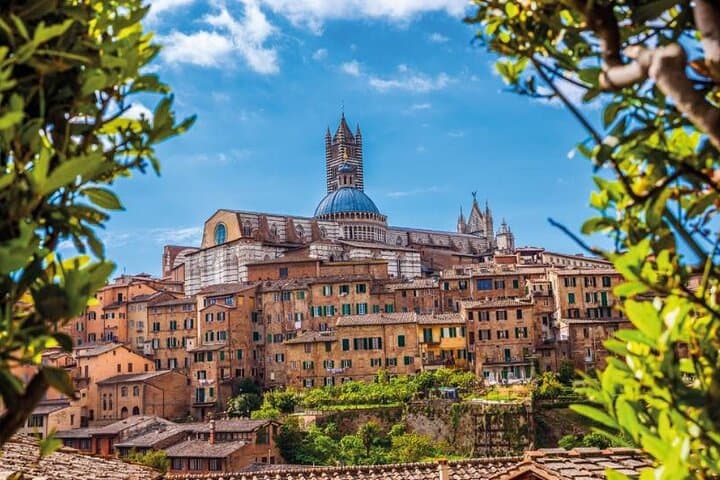
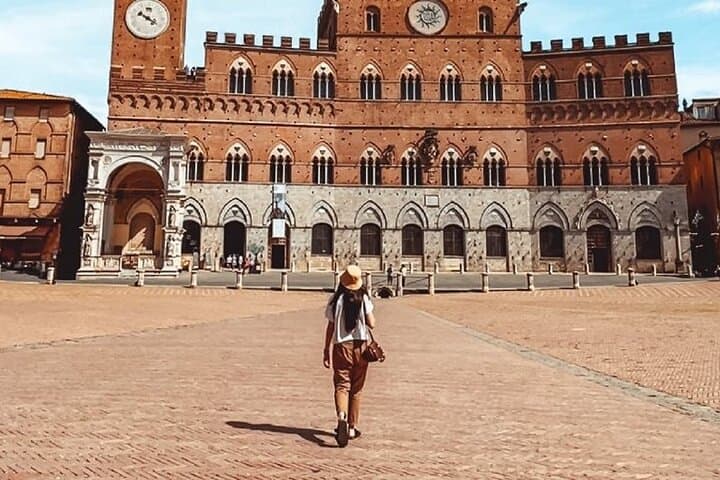
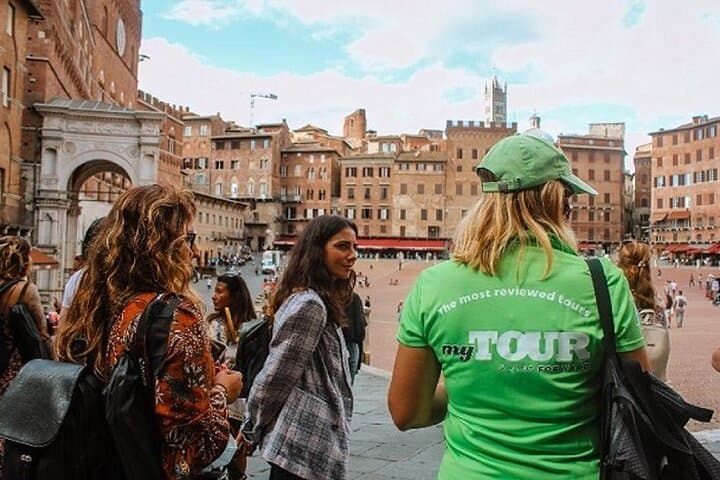
You step off the bus and the square opens: vast, shell-shaped Piazza del Campo presses warm brick underfoot while medieval rooftops tilt toward the Tuscan sky. The riddle hunt pushes you into narrow alleys, past worn stone portals and through small piazzas where merchants once bartered cloth and salt. Clues nudge you to lift your gaze—balconies, coats of arms and carved dates become the map.
You step off the bus and the square opens: vast, shell-shaped Piazza del Campo presses warm brick underfoot while medieval rooftops tilt toward the Tuscan sky. The riddle hunt pushes you into narrow alleys, past worn stone portals and through small piazzas where merchants once bartered cloth and salt. Clues nudge you to lift your gaze—balconies, coats of arms and carved dates become the map.
Siena’s streets are a living record of a city-state that peaked in the 13th and 14th centuries. The Palio horse race, the Contrade neighborhoods and the Gothic facades you pass all grew from that intense civic pride. Geology matters here too: the clay-rich soil of the surrounding hills produced the brick and terracotta that color the city, and the narrow lanes funnel breezes in summer and concentrate winter rain.
Culturally the hunt leans on local stories: family-run shops, contrada emblems, and small chapels with quiet frescoes. Guides are on hand to offer hints, but the experience is designed for self-led discovery—teams solve puzzles at their own pace and choose which corners to linger in.
Practical guidance: wear sturdy shoes for cobbles and short staircases, carry a charged phone for clues and photos, and start in the morning to avoid the busiest hours at the Campo. Expect about two hours of moderate walking on uneven surfaces; bring water and a light layer for changing weather.