THE ADVENTURE COLLECTIVE® · Independent discovery and booking for outdoor travel

Turn Barcelona’s streets into a crime scene: a self‑guided, app‑led Sherlock Holmes game that turns alleys and plazas into clue hubs. Perfect for small groups and families wanting a playful, independent city walk.
Turn Barcelona’s streets into a crime scene: a self‑guided, app‑led Sherlock Holmes game that turns alleys and plazas into clue hubs. Perfect for small groups and families wanting a playful, independent city walk.
You step off a narrow Carrer and into a living puzzle: Barcelona's stones seem to whisper clues as you tap the Loquiz app and start the hunt.
Verified experiences and guided adventures in the surrounding area.
Operated by City Game · Barcelona, Catalonia
You step off a narrow Carrer and into a living puzzle: Barcelona's stones seem to whisper clues as you tap the Loquiz app and start the hunt.
The game threads through compact medieval alleys and wider 19th‑century boulevards, asking players to read façades, interview fictional characters, and photograph scene details to piece together the murder of Balthasar. It uses the city's public fabric as a playing field rather than a guided tour—expect improvisation, shortcuts through plazas, and the occasional diversion for tapas.
Barcelona’s center grew from Roman grid to Gothic Quarter and later the Eixample’s modernist expansion; that layered history is the stage. Granite curbs, wrought‑iron balconies and Civil War scars in small squares give texture to clues, while the Mediterranean climate keeps the streets lively year‑round.
Practical guidance: the experience is self‑paced, roughly two hours for one device and groups of 1–4. You'll need a smartphone, the Loquiz app, and basic walking fitness—routes cover urban pavement, steps and crowds more than elevation. Start in a central neighborhood (Plaça Catalunya or the Gothic Quarter are common launch points), keep mobile data on, and allow time for cafés and traffic pauses.
Accessibility and etiquette matter: the game intentionally avoids historical narration, so pair it with a map or local guidebook if you want deeper context. Respect residents in narrow streets, take waste with you, and pick off‑peak hours to keep the flow smooth. This is an urban scavenger hunt—less about footprints in nature and more about reading the city’s textures and timing your next move.
easy.
1.5–2.5 hours.
Suitable for people with moderate walking ability; expect 2–4 miles of walking over uneven urban surfaces.
One ticket covers a group of 1–4 players using a single device; for larger groups buy additional tickets so each sub‑group has a device.
No—clues and tasks are designed for general sensemaking, but the game does not provide historical context about city monuments or sites.
Yes—the booking requires a date/time but you can begin whenever you like on that date; the experience is self‑paced.
The difficulty is listed as easy and suitable for families, though younger children may need help with reading or some phone tasks.
Barcelona’s center layers Roman street grids, medieval Gothic lanes and Antoni Gaudí’s 19th‑century modernist interventions—those shifts shape the neighborhoods you'll traverse.
High foot traffic in historic districts stresses narrow streets and local residents; keep noise low, use bins, and avoid obstructing sidewalks or doorways.
City Game operates guided outdoor trips and adventures with an emphasis on safety, stewardship, and memorable experiences.
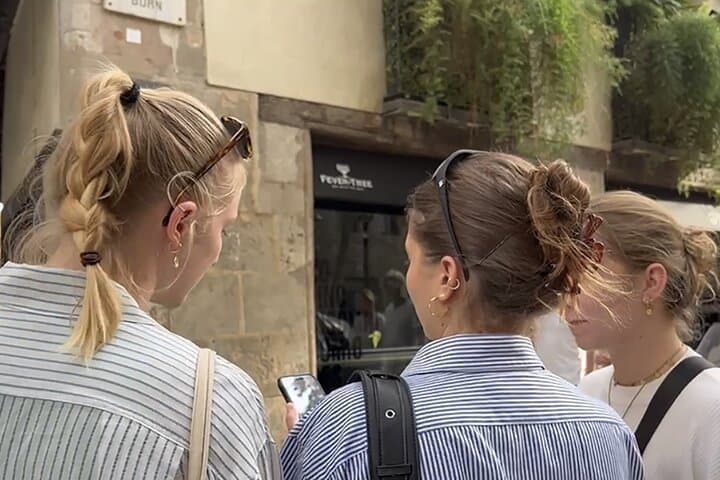
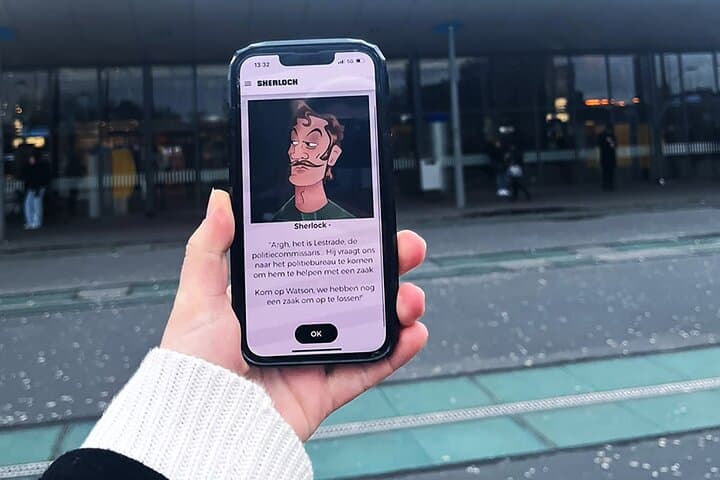
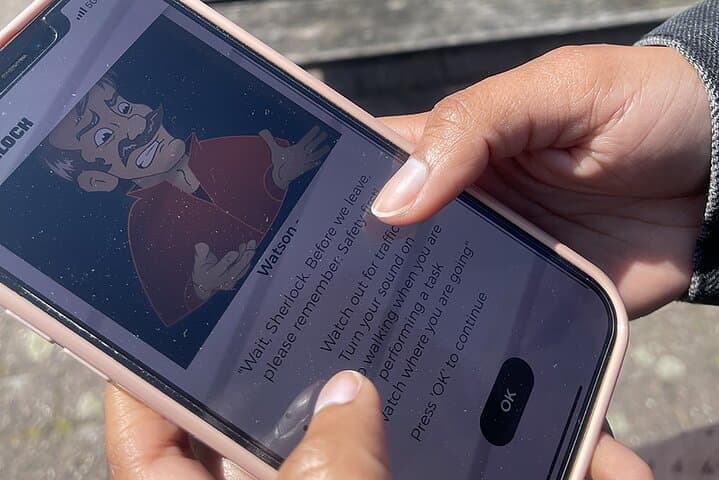
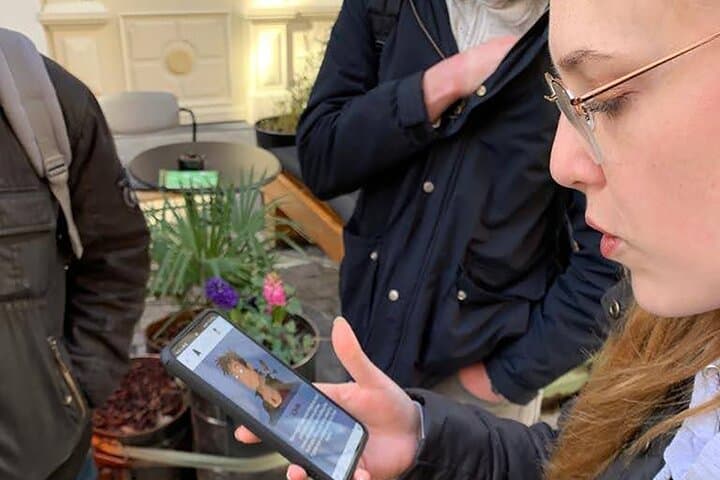
You step off a narrow Carrer and into a living puzzle: Barcelona's stones seem to whisper clues as you tap the Loquiz app and start the hunt.
You step off a narrow Carrer and into a living puzzle: Barcelona's stones seem to whisper clues as you tap the Loquiz app and start the hunt.
The game threads through compact medieval alleys and wider 19th‑century boulevards, asking players to read façades, interview fictional characters, and photograph scene details to piece together the murder of Balthasar. It uses the city's public fabric as a playing field rather than a guided tour—expect improvisation, shortcuts through plazas, and the occasional diversion for tapas.
Barcelona’s center grew from Roman grid to Gothic Quarter and later the Eixample’s modernist expansion; that layered history is the stage. Granite curbs, wrought‑iron balconies and Civil War scars in small squares give texture to clues, while the Mediterranean climate keeps the streets lively year‑round.
Practical guidance: the experience is self‑paced, roughly two hours for one device and groups of 1–4. You'll need a smartphone, the Loquiz app, and basic walking fitness—routes cover urban pavement, steps and crowds more than elevation. Start in a central neighborhood (Plaça Catalunya or the Gothic Quarter are common launch points), keep mobile data on, and allow time for cafés and traffic pauses.
Accessibility and etiquette matter: the game intentionally avoids historical narration, so pair it with a map or local guidebook if you want deeper context. Respect residents in narrow streets, take waste with you, and pick off‑peak hours to keep the flow smooth. This is an urban scavenger hunt—less about footprints in nature and more about reading the city’s textures and timing your next move.