THE ADVENTURE COLLECTIVE® · Independent discovery and booking for outdoor travel

Walk across striking blue ice under professional guidance on Sólheimajökull. This accessible glacier hike from Vík combines hands-on skills, geology lessons, and up-close views of crevasses and moulins in a compact three-hour outing.
Walk across striking blue ice under professional guidance on Sólheimajökull. This accessible glacier hike from Vík combines hands-on skills, geology lessons, and up-close views of crevasses and moulins in a compact three-hour outing.
A low, cold wind pushes across the black sand as the blue face of Sólheimajökull rises ahead—ragged ridges, deep crevasses and glistening moulins that catch the light like wells. Participants clip into harnesses on the moraine, test crampon traction, and follow a guide’s steady rhythm across sullen ice. The landscape feels alive: ice groans, meltwater threads into tunnels, and every step reveals a new shade of blue.
Verified experiences and guided adventures in the surrounding area.
Operated by Guide to Iceland · Vík, Southern Region
A low, cold wind pushes across the black sand as the blue face of Sólheimajökull rises ahead—ragged ridges, deep crevasses and glistening moulins that catch the light like wells. Participants clip into harnesses on the moraine, test crampon traction, and follow a guide’s steady rhythm across sullen ice. The landscape feels alive: ice groans, meltwater threads into tunnels, and every step reveals a new shade of blue.
Geologically it's an outlet glacier of the larger Mýrdalsjökull ice cap, carved by repeated advances and retreats and underlain by volcanic systems tied to Katla. Culturally, the southern coastline here has long been shaped by both sea and ice—farmsteads, folklore about sudden glacial floods (jökulhlaups), and the practical skills of reading weather and snow. Guides on this tour explain ice formation, crevasse mechanics and the visible signs of climate-driven retreat.
Practically, the hike runs about three hours from meeting to finish, with roughly 1–3 km of on-ice travel depending on conditions and minimal elevation change across the glacier surface. Expect uneven, slick terrain: crampons, helmets, and ice axes are supplied and instruction is given for basic movement and self-arrest. Wear sturdy, waterproof boots, layered insulating clothing, and plan for rapidly changing weather—sun can be bright on white ice but storms can roll in quickly. Morning departures reduce wind and crowding; flights and roads into southern Iceland can be affected by weather, so allow extra travel time from Vík or Skógar. This is an accessible but serious outdoor activity—follow guide directions, respect rope lines, and bring a sense of curiosity: the glacier records recent climate history in every crevasse.
moderate.
3 hours.
Suitable for people in average physical condition who can walk on uneven, icy terrain for up to a couple of hours; no prior mountaineering experience required.
No—this is a guided hike designed for varying fitness levels; instructors teach crampon use and basic ice travel techniques on-site.
Minimum age varies by operator; many tours accept teenagers but check booking details for exact age restrictions and required parental consent.
Yes—this trip includes crampons, helmets, harnesses and an ice axe as part of the outfitting supplied by the guide company.
Tours can be canceled or rescheduled for safety if weather or ice conditions are hazardous; the operator typically offers full refunds if canceled 24+ hours before departure.
Sólheimajökull is an outlet of the Mýrdalsjökull ice cap, shaped by repeated glacial advances and frequent volcanic activity from the Katla system beneath.
The glacier is a sensitive indicator of climate change; stick to marked routes, avoid littering, and follow guide instructions to minimize erosion and disturbance.
Guide to Iceland operates guided outdoor trips and adventures with an emphasis on safety, stewardship, and memorable experiences.
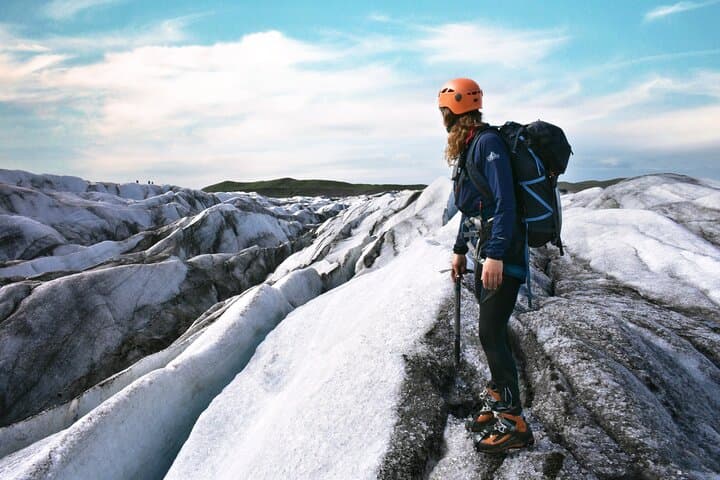
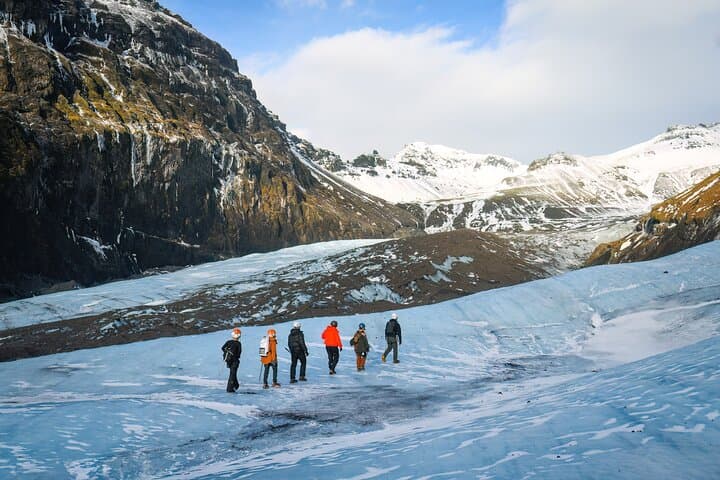
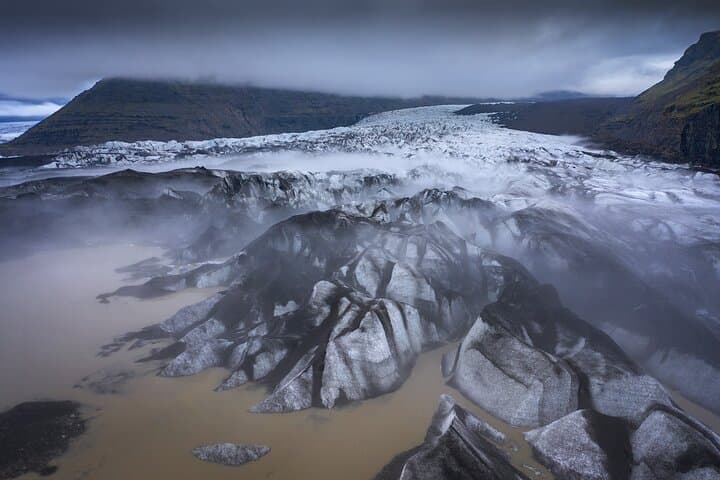
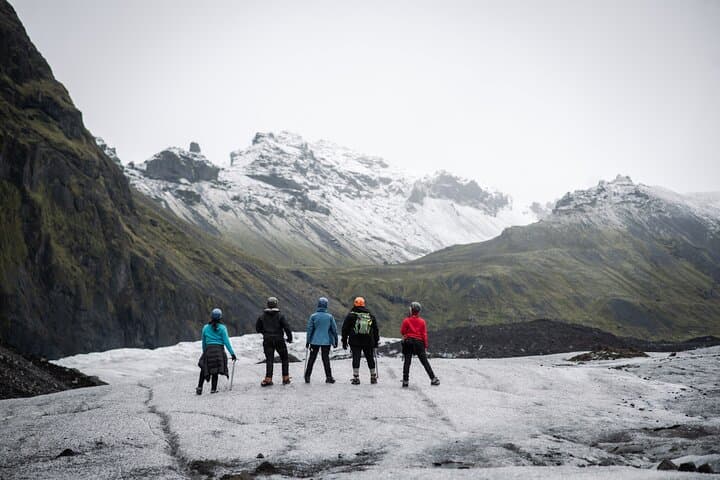
A low, cold wind pushes across the black sand as the blue face of Sólheimajökull rises ahead—ragged ridges, deep crevasses and glistening moulins that catch the light like wells. Participants clip into harnesses on the moraine, test crampon traction, and follow a guide’s steady rhythm across sullen ice. The landscape feels alive: ice groans, meltwater threads into tunnels, and every step reveals a new shade of blue.
A low, cold wind pushes across the black sand as the blue face of Sólheimajökull rises ahead—ragged ridges, deep crevasses and glistening moulins that catch the light like wells. Participants clip into harnesses on the moraine, test crampon traction, and follow a guide’s steady rhythm across sullen ice. The landscape feels alive: ice groans, meltwater threads into tunnels, and every step reveals a new shade of blue.
Geologically it's an outlet glacier of the larger Mýrdalsjökull ice cap, carved by repeated advances and retreats and underlain by volcanic systems tied to Katla. Culturally, the southern coastline here has long been shaped by both sea and ice—farmsteads, folklore about sudden glacial floods (jökulhlaups), and the practical skills of reading weather and snow. Guides on this tour explain ice formation, crevasse mechanics and the visible signs of climate-driven retreat.
Practically, the hike runs about three hours from meeting to finish, with roughly 1–3 km of on-ice travel depending on conditions and minimal elevation change across the glacier surface. Expect uneven, slick terrain: crampons, helmets, and ice axes are supplied and instruction is given for basic movement and self-arrest. Wear sturdy, waterproof boots, layered insulating clothing, and plan for rapidly changing weather—sun can be bright on white ice but storms can roll in quickly. Morning departures reduce wind and crowding; flights and roads into southern Iceland can be affected by weather, so allow extra travel time from Vík or Skógar. This is an accessible but serious outdoor activity—follow guide directions, respect rope lines, and bring a sense of curiosity: the glacier records recent climate history in every crevasse.