THE ADVENTURE COLLECTIVE® · Independent discovery and booking for outdoor travel

A short train from central Oslo takes you to Sognsvann’s pine-lined shore for a two-to-three hour private walk and campfire. Expect easy trails, a hands-on fire demo, and a taste of Norwegian outdoor food traditions.
A short train from central Oslo takes you to Sognsvann’s pine-lined shore for a two-to-three hour private walk and campfire. Expect easy trails, a hands-on fire demo, and a taste of Norwegian outdoor food traditions.
You meet in downtown Oslo, breathe in city air that still carries a faint salt tang, then board a twenty-minute train that shuttles you north to Sognsvann. The lake opens like a quiet mirror; pines lean in close and the path follows the shore in easy, mossy steps. Rain or shine, the guide finds a sheltered clearing where a small fire is built and conversation slides from practical bushcraft to local outdoor customs.
Verified experiences and guided adventures in the surrounding area.
Operated by When in Norway · Oslo, Oslo
You meet in downtown Oslo, breathe in city air that still carries a faint salt tang, then board a twenty-minute train that shuttles you north to Sognsvann. The lake opens like a quiet mirror; pines lean in close and the path follows the shore in easy, mossy steps. Rain or shine, the guide finds a sheltered clearing where a small fire is built and conversation slides from practical bushcraft to local outdoor customs.
Sognsvann sits on the edge of Nordmarka, a post-glacial basin carved by ice and now protected as Oslo’s primary recreational forest. The area’s geology is simple—hard Precambrian bedrock capped by thin soils and bedrock outcrops—so trails are mostly firm but can be rooty and damp after rain. Culturally, the outing is a lesson in friluftsliv: Norwegians’ pragmatic love of the outdoors, from foraging traditions to packing a simple chocolate bar in every backpack.
Practical guidance matters here. The tour runs about three hours including public-transport time and covers roughly 2 km of walking on mixed forest trail. Buy a valid Ruter ticket before departure; services run frequently but trains are punctual. Wear grippy hiking shoes and layers—weather can flip quickly—and bring a reusable bottle and small daypack. The guide provides demonstration firecraft and a simple barbecue; still, check local fire restrictions in dry periods. This private walk is ideal for anyone comfortable on short trails who wants a compact, authentic Norwegian outdoors lesson without the logistics of driving or camping.
easy.
2–3 hours.
Suitable for most adults and older children who can walk 2 km on uneven forest paths; minimal stamina required.
Yes — the tour price does not include public transport; purchase a Ruter ticket via app, machine, or station before boarding.
Yes — recommended minimum age is around 5; children should be comfortable on short uneven trails and supervised near the fire.
The tour typically runs unless extreme conditions occur; guides adapt by finding sheltered spots but confirm specifics when booking.
The guide provides simple barbecue items and a Norwegian chocolate sample; participants should notify the operator of dietary needs in advance.
Sognsvann lies at the southern edge of Nordmarka, a forest increasingly used for recreation since the 19th century and protected to preserve Oslo’s urban-nature access.
Visitors are asked to follow Leave No Trace principles; campfires are permitted only at designated spots and must follow local fire rules to protect sensitive soils and forest understory.
When in Norway operates guided outdoor trips and adventures with an emphasis on safety, stewardship, and memorable experiences.
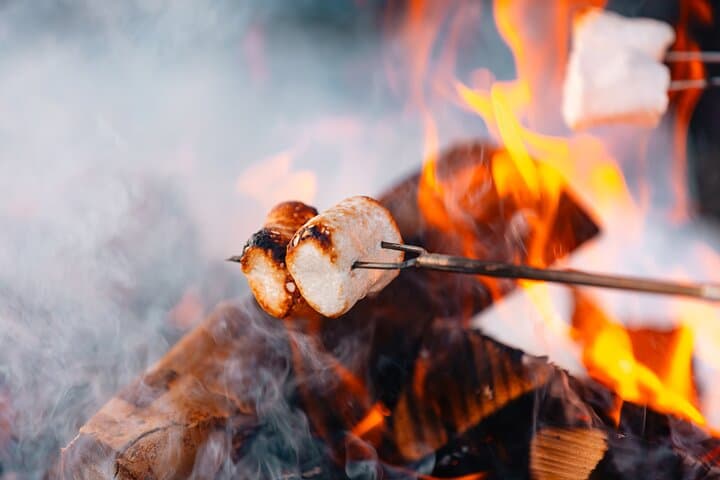

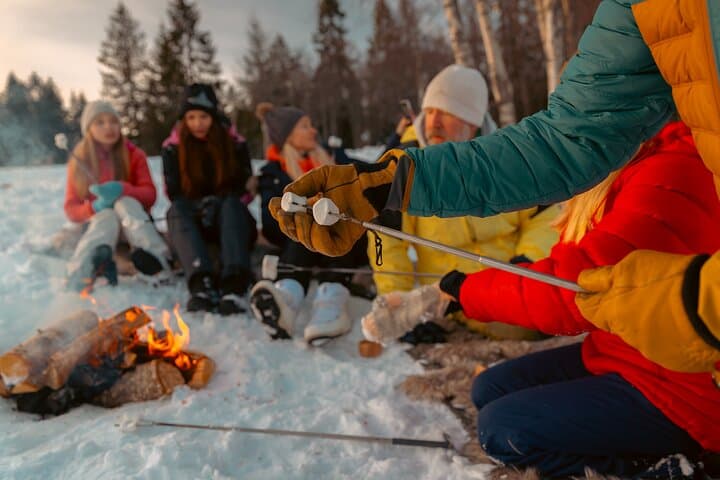

You meet in downtown Oslo, breathe in city air that still carries a faint salt tang, then board a twenty-minute train that shuttles you north to Sognsvann. The lake opens like a quiet mirror; pines lean in close and the path follows the shore in easy, mossy steps. Rain or shine, the guide finds a sheltered clearing where a small fire is built and conversation slides from practical bushcraft to local outdoor customs.
You meet in downtown Oslo, breathe in city air that still carries a faint salt tang, then board a twenty-minute train that shuttles you north to Sognsvann. The lake opens like a quiet mirror; pines lean in close and the path follows the shore in easy, mossy steps. Rain or shine, the guide finds a sheltered clearing where a small fire is built and conversation slides from practical bushcraft to local outdoor customs.
Sognsvann sits on the edge of Nordmarka, a post-glacial basin carved by ice and now protected as Oslo’s primary recreational forest. The area’s geology is simple—hard Precambrian bedrock capped by thin soils and bedrock outcrops—so trails are mostly firm but can be rooty and damp after rain. Culturally, the outing is a lesson in friluftsliv: Norwegians’ pragmatic love of the outdoors, from foraging traditions to packing a simple chocolate bar in every backpack.
Practical guidance matters here. The tour runs about three hours including public-transport time and covers roughly 2 km of walking on mixed forest trail. Buy a valid Ruter ticket before departure; services run frequently but trains are punctual. Wear grippy hiking shoes and layers—weather can flip quickly—and bring a reusable bottle and small daypack. The guide provides demonstration firecraft and a simple barbecue; still, check local fire restrictions in dry periods. This private walk is ideal for anyone comfortable on short trails who wants a compact, authentic Norwegian outdoors lesson without the logistics of driving or camping.