THE ADVENTURE COLLECTIVE® · Independent discovery and booking for outdoor travel

Walk Soest at your own pace with a 90-minute self-guided audio tour in seven languages. Start at St. Pauli Kirche and pass medieval gates, the Rathaus, and St. Patroclus Dom while solving quizzes and uncovering local stories.
Walk Soest at your own pace with a 90-minute self-guided audio tour in seven languages. Start at St. Pauli Kirche and pass medieval gates, the Rathaus, and St. Patroclus Dom while solving quizzes and uncovering local stories.
You step onto cobblestones that remember merchants and processions, phone in hand and a gentle bell from St. Pauli Kirche marking the start. The route threads past soaring spires and timber-framed facades; audio cues and short texts nudge you into courtyard corners and market benches where the city’s details live.
Verified experiences and guided adventures in the surrounding area.
Operated by Ciceru · Soest, North Rhine-Westphalia
You step onto cobblestones that remember merchants and processions, phone in hand and a gentle bell from St. Pauli Kirche marking the start. The route threads past soaring spires and timber-framed facades; audio cues and short texts nudge you into courtyard corners and market benches where the city’s details live.
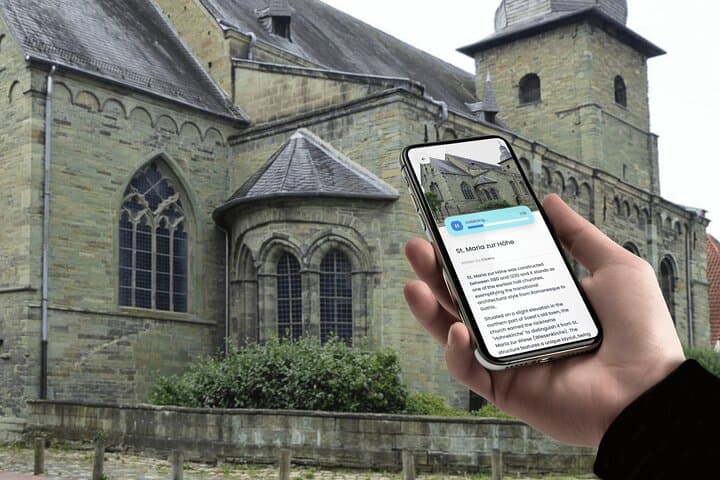
Soest earned its wealth and identity in the medieval period as a regional trading center, and echoes of that era remain in the Rathaus, the Osthofen Gate and the soaring St. Patroclus Dom — a layered Romanesque-Gothic presence that dominates the skyline. The town sits on low rolling ground of Westphalia, its streets shaped more by human craft than dramatic geology, yet small green pockets and the old city wall give the place an urban-edge-of-country feel.
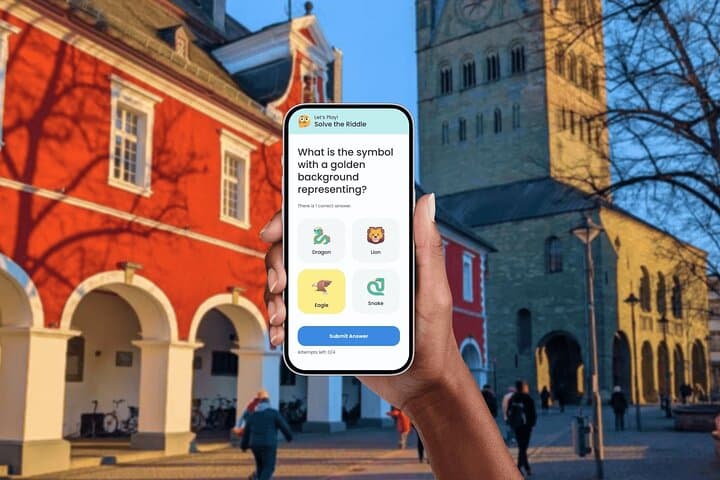
Culturally, Soest is compact and lived-in: markets at the Marktplatz, neighborhood bakeries, and church bells that punctuate the afternoon. The tour’s quizzes and riddles make it family-friendly and turn signposts into small discoveries rather than background detail.
Practicalities: the experience is entirely self-guided via mobile web—no app needed—and runs about 90 minutes with recommended start times between 10:00 and 16:00 when interior views and nearby shops are accessible. Expect paved streets, short staircases in older buildings, and frequent stops for audio content. Charge your phone, wear supportive shoes, and allow extra time if you plan to enter churches or cafés. The route is suitable for most fitness levels but is not recommended for visitors with serious back, heart, or pregnancy-related restrictions.
easy.
1–2 hours.
Suitable for most fitness levels; requires standing and walking on paved, sometimes uneven surfaces for up to 90 minutes.
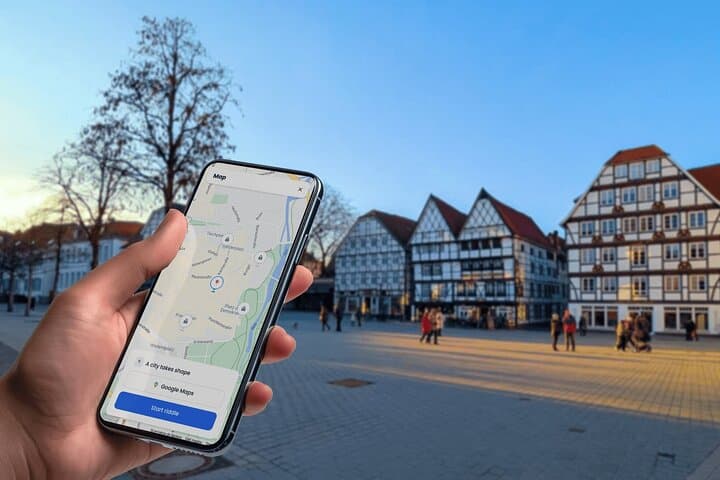
No app is required—the tour plays in your phone’s web browser with audio and text available in seven languages.
The itinerary runs about 90 minutes including stops; starting between 10:00 and 16:00 is recommended so sites and nearby businesses are open.
Much of the old town is on paved streets, but narrow passages and steps at some points limit full accessibility; contact local services for detailed access maps.
Service animals are allowed; bringing pets is subject to local leash laws and comfort in crowded historic streets.
Soest was an important medieval market town with a strong civic identity; landmarks like the Rathaus and St. Patroclus Dom reflect centuries of regional power and rebuilds.
The old town’s fabric is fragile—stay on marked paths, avoid touching frescoes and historic woodwork, and support local shops to keep heritage conservation viable.
Ciceru operates guided outdoor trips and adventures with an emphasis on safety, stewardship, and memorable experiences.

You step onto cobblestones that remember merchants and processions, phone in hand and a gentle bell from St. Pauli Kirche marking the start. The route threads past soaring spires and timber-framed facades; audio cues and short texts nudge you into courtyard corners and market benches where the city’s details live.
You step onto cobblestones that remember merchants and processions, phone in hand and a gentle bell from St. Pauli Kirche marking the start. The route threads past soaring spires and timber-framed facades; audio cues and short texts nudge you into courtyard corners and market benches where the city’s details live.
Soest earned its wealth and identity in the medieval period as a regional trading center, and echoes of that era remain in the Rathaus, the Osthofen Gate and the soaring St. Patroclus Dom — a layered Romanesque-Gothic presence that dominates the skyline. The town sits on low rolling ground of Westphalia, its streets shaped more by human craft than dramatic geology, yet small green pockets and the old city wall give the place an urban-edge-of-country feel.
Culturally, Soest is compact and lived-in: markets at the Marktplatz, neighborhood bakeries, and church bells that punctuate the afternoon. The tour’s quizzes and riddles make it family-friendly and turn signposts into small discoveries rather than background detail.
Practicalities: the experience is entirely self-guided via mobile web—no app needed—and runs about 90 minutes with recommended start times between 10:00 and 16:00 when interior views and nearby shops are accessible. Expect paved streets, short staircases in older buildings, and frequent stops for audio content. Charge your phone, wear supportive shoes, and allow extra time if you plan to enter churches or cafés. The route is suitable for most fitness levels but is not recommended for visitors with serious back, heart, or pregnancy-related restrictions.