THE ADVENTURE COLLECTIVE® · Independent discovery and booking for outdoor travel

Launch out over Bali’s famous rice terraces on the Aloha Swing in Ubud — a short, secure treetop experience that pairs a rush of air with wide, volcanic-sculpted views. Ideal for most visitors, it’s best timed for morning light and fair weather.
Launch out over Bali’s famous rice terraces on the Aloha Swing in Ubud — a short, secure treetop experience that pairs a rush of air with wide, volcanic-sculpted views. Ideal for most visitors, it’s best timed for morning light and fair weather.
Standing on the wooden platform, wind pushes at your shirt and the valley opens like a green page beneath you. The Aloha Swing in Ubud launches guests out over rice terraces and rainforest canopy — a simple, engineered arc that gives a brief, clean moment of flight and a clear view of Bali’s terraced slopes and coconut palms.
Verified experiences and guided adventures in the surrounding area.
Operated by PT. Diwira Wisata Indonesia · Ubud, Bali
Standing on the wooden platform, wind pushes at your shirt and the valley opens like a green page beneath you. The Aloha Swing in Ubud launches guests out over rice terraces and rainforest canopy — a simple, engineered arc that gives a brief, clean moment of flight and a clear view of Bali’s terraced slopes and coconut palms.
The swing sits in the cultural landscape of central Bali, where irrigation systems called subak shaped rice cultivation for centuries and Tegallalang’s sculpted terraces became both food source and scenic attraction. The geology here is volcanic: eroded volcanic soils and steep slopes create the layered paddies you’ll see from the swing, while local Balinese Hindu culture frames the experience with offerings, carved gates, and small temple shrines nearby.
Practicalities are straightforward: guests are fitted with a harness and helmet, a staff member gives the push, and sessions are brief — often a few swings per booking — making it accessible to most people. Expect short lines during peak hours and slick surfaces in the wet season.
Bring a secure camera strap, avoid loose scarves, and time your visit for morning light when terraces are crisp and crowds are smaller. If you have spinal or heart issues check with your doctor first. Combine the swing with a walk through nearby terraces or a café stop to taste kopi luwak or fresh coconut water.
The Aloha Swing is less about endurance and more about timing, safety, and savoring that suspended moment over Bali’s living landscape.
easy.
1–2 hours.
Suitable for most fitness levels; the activity requires only the ability to sit and hold on briefly during the swing.
Operators use harnesses and trained staff to secure guests; follow staff instructions and inspect gear visually before use.
Policies vary by operator, but most swings have upper weight limits and require young children to be accompanied; check the provider’s exact limits when booking.
Yes — but secure it with a strap or case; many guests use smartphones for photos, and staff may ask you to hold devices down until strapped.
Operations may continue in light rain but will pause for heavy rain or strong winds for safety; consider booking in the morning to avoid afternoon storms.
The terraces visible from the swing are tied to Bali’s subak irrigation tradition, a community-managed water system with centuries of agricultural history.
High foot traffic can cause erosion and waste issues; stick to paths, avoid littering, and support vendors who follow local waste management practices.
PT. Diwira Wisata Indonesia operates guided outdoor trips and adventures with an emphasis on safety, stewardship, and memorable experiences.


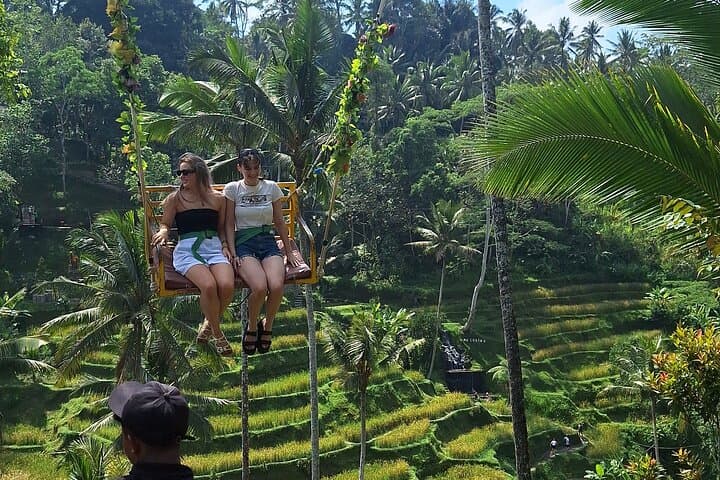
Standing on the wooden platform, wind pushes at your shirt and the valley opens like a green page beneath you. The Aloha Swing in Ubud launches guests out over rice terraces and rainforest canopy — a simple, engineered arc that gives a brief, clean moment of flight and a clear view of Bali’s terraced slopes and coconut palms.
Standing on the wooden platform, wind pushes at your shirt and the valley opens like a green page beneath you. The Aloha Swing in Ubud launches guests out over rice terraces and rainforest canopy — a simple, engineered arc that gives a brief, clean moment of flight and a clear view of Bali’s terraced slopes and coconut palms.
The swing sits in the cultural landscape of central Bali, where irrigation systems called subak shaped rice cultivation for centuries and Tegallalang’s sculpted terraces became both food source and scenic attraction. The geology here is volcanic: eroded volcanic soils and steep slopes create the layered paddies you’ll see from the swing, while local Balinese Hindu culture frames the experience with offerings, carved gates, and small temple shrines nearby.
Practicalities are straightforward: guests are fitted with a harness and helmet, a staff member gives the push, and sessions are brief — often a few swings per booking — making it accessible to most people. Expect short lines during peak hours and slick surfaces in the wet season.
Bring a secure camera strap, avoid loose scarves, and time your visit for morning light when terraces are crisp and crowds are smaller. If you have spinal or heart issues check with your doctor first. Combine the swing with a walk through nearby terraces or a café stop to taste kopi luwak or fresh coconut water.
The Aloha Swing is less about endurance and more about timing, safety, and savoring that suspended moment over Bali’s living landscape.