THE ADVENTURE COLLECTIVE® · Independent discovery and booking for outdoor travel

Launch from a grassy ridge above Phewa Lake and glide for 20–30 minutes with panoramic views of the Annapurna foothills. This tandem paragliding experience in Pokhara pairs certified pilots with flexible takeoff sites to maximize flying conditions.
Launch from a grassy ridge above Phewa Lake and glide for 20–30 minutes with panoramic views of the Annapurna foothills. This tandem paragliding experience in Pokhara pairs certified pilots with flexible takeoff sites to maximize flying conditions.
You crest a short grassy ridge and the world tilts: the terraced hills fall away, Phewa Lake catches the sunlight like a coin, and the Annapurna flank fills the horizon. A pilot checks the lines, the wing swells, and a few running steps turn into silence—wind carrying you out over Pokhara’s lakeside town with the Himalaya as a slow-moving backdrop.
Verified experiences and guided adventures in the surrounding area.
Operated by himalayan sanctuary adventure private limited · Pokhara, Gandaki Province
You crest a short grassy ridge and the world tilts: the terraced hills fall away, Phewa Lake catches the sunlight like a coin, and the Annapurna flank fills the horizon. A pilot checks the lines, the wing swells, and a few running steps turn into silence—wind carrying you out over Pokhara’s lakeside town with the Himalaya as a slow-moving backdrop.
Paragliding around Pokhara started to grow in the 1990s as adventure tourism in Nepal expanded beyond trekking. The ridges west of the city—Sarangkot, Kaskikot and nearby Vik—are volcanic- and glacial-shaped foothills that create reliable updrafts in dry months, while Phewa Lake and the valley floor shape local thermals. Culturally, flights pass over Newari and Gurung villages where farming patterns and prayer flags mark a lived landscape as old as the Annapurna routes.
Practically, this is a tandem experience with certified pilots registered under Nepal Air Sports and local operators; most flights are 20–30 minutes with hotel pickup and drop-off included. Best windows are early morning and late afternoon when winds calm and visibility is highest—monsoon months bring low clouds and rain. Expect a light briefing, a short run from a gentle slope, and the option to handle controls if the instructor allows.
Bring a small daypack, wear sturdy shoes (running or hiking), and secure electronics; sunglasses and layered windproof clothing matter at altitude. If you want photos, ask your pilot about helmet mounts or a GoPro—many pilots offer in-flight media. Above all, check weather, be ready to swap days, and enjoy an aerial view that turns ordinary travel logistics into a clean, brief moment of flight.
easy.
2–3 hours.
Minimal fitness required—able to run a few steps and sit for the flight; suitable for most ages in good health.
Flights typically last 20–30 minutes depending on weather and thermals; the full activity with transfers takes 2–3 hours.
Operators use certified tandem pilots and licensed equipment; safety briefings and checks are standard—avoid flying in poor weather.
Most instructors allow brief control for interested passengers when conditions are suitable, but the pilot manages takeoff and landing for safety.
Post-monsoon (September–November) and spring (March–May) offer stable thermals and clearer mountain views; monsoon months are less reliable.
Paragliding in Pokhara grew with Nepal’s adventure tourism in the 1990s; takeoff ridges are traditional grazing and village lands adapted to recreational use.
Operators are increasingly conscious of noise, litter, and landing-site erosion—pack out waste, and follow pilot instructions to minimize impact.
himalayan sanctuary adventure private limited operates guided outdoor trips and adventures with an emphasis on safety, stewardship, and memorable experiences.
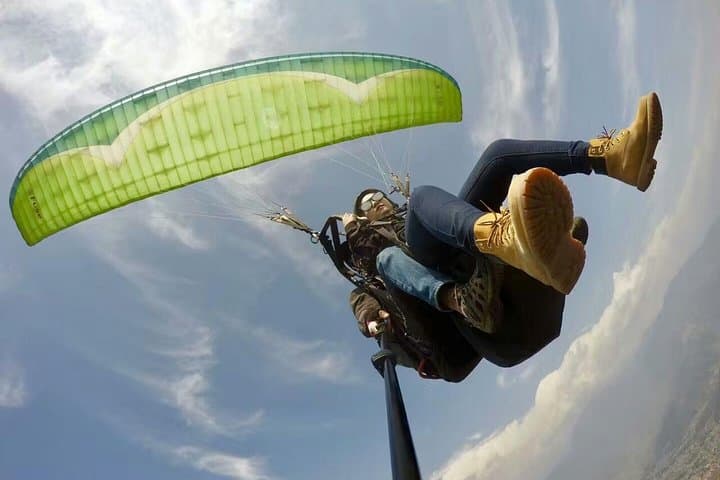
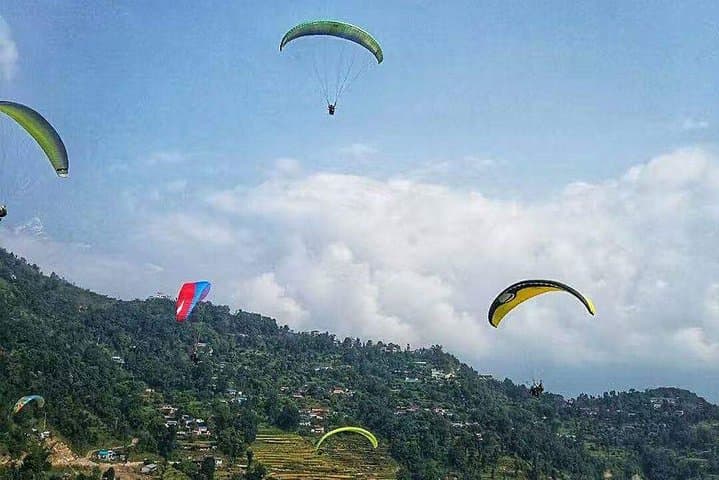
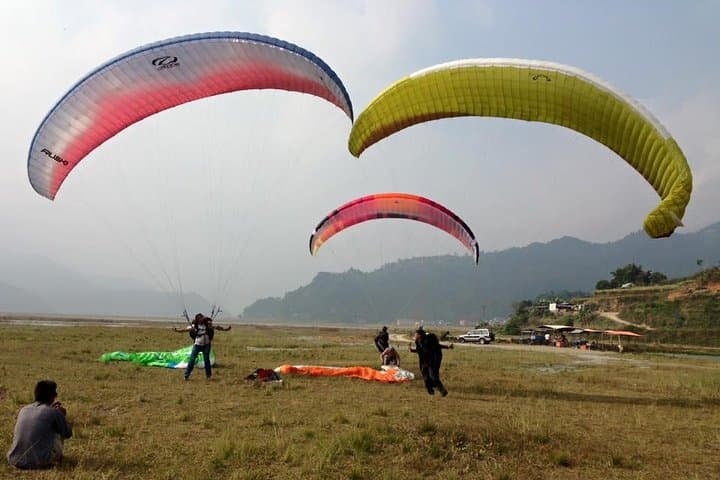
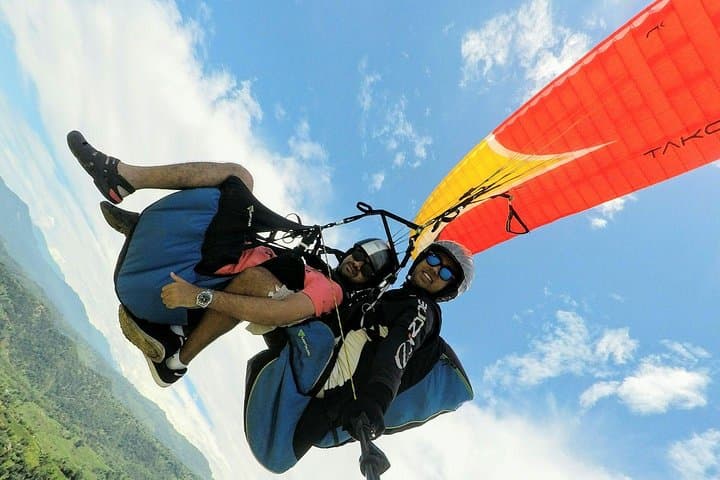
You crest a short grassy ridge and the world tilts: the terraced hills fall away, Phewa Lake catches the sunlight like a coin, and the Annapurna flank fills the horizon. A pilot checks the lines, the wing swells, and a few running steps turn into silence—wind carrying you out over Pokhara’s lakeside town with the Himalaya as a slow-moving backdrop.
You crest a short grassy ridge and the world tilts: the terraced hills fall away, Phewa Lake catches the sunlight like a coin, and the Annapurna flank fills the horizon. A pilot checks the lines, the wing swells, and a few running steps turn into silence—wind carrying you out over Pokhara’s lakeside town with the Himalaya as a slow-moving backdrop.
Paragliding around Pokhara started to grow in the 1990s as adventure tourism in Nepal expanded beyond trekking. The ridges west of the city—Sarangkot, Kaskikot and nearby Vik—are volcanic- and glacial-shaped foothills that create reliable updrafts in dry months, while Phewa Lake and the valley floor shape local thermals. Culturally, flights pass over Newari and Gurung villages where farming patterns and prayer flags mark a lived landscape as old as the Annapurna routes.
Practically, this is a tandem experience with certified pilots registered under Nepal Air Sports and local operators; most flights are 20–30 minutes with hotel pickup and drop-off included. Best windows are early morning and late afternoon when winds calm and visibility is highest—monsoon months bring low clouds and rain. Expect a light briefing, a short run from a gentle slope, and the option to handle controls if the instructor allows.
Bring a small daypack, wear sturdy shoes (running or hiking), and secure electronics; sunglasses and layered windproof clothing matter at altitude. If you want photos, ask your pilot about helmet mounts or a GoPro—many pilots offer in-flight media. Above all, check weather, be ready to swap days, and enjoy an aerial view that turns ordinary travel logistics into a clean, brief moment of flight.