THE ADVENTURE COLLECTIVE® · Independent discovery and booking for outdoor travel

Take off above Pamukkale’s white travertine terraces on a tandem paraglide and see the ancient spa city of Hierapolis from a bird’s-eye view. This 45-minute aerial experience pairs reliable thermals with certified pilots for an accessible adrenaline rush.
Take off above Pamukkale’s white travertine terraces on a tandem paraglide and see the ancient spa city of Hierapolis from a bird’s-eye view. This 45-minute aerial experience pairs reliable thermals with certified pilots for an accessible adrenaline rush.
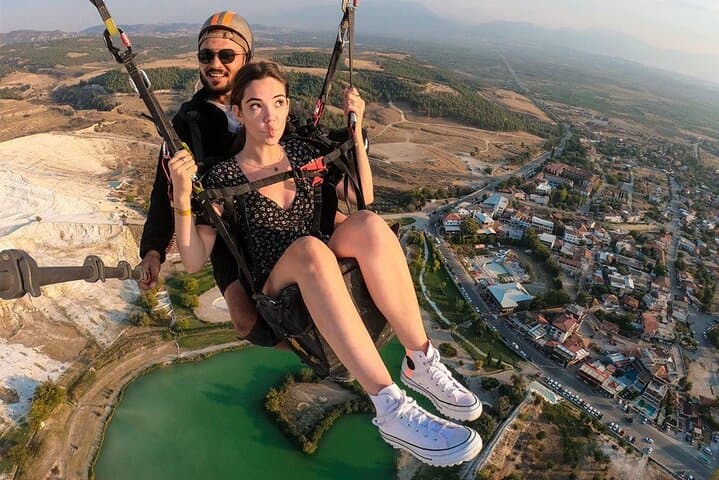
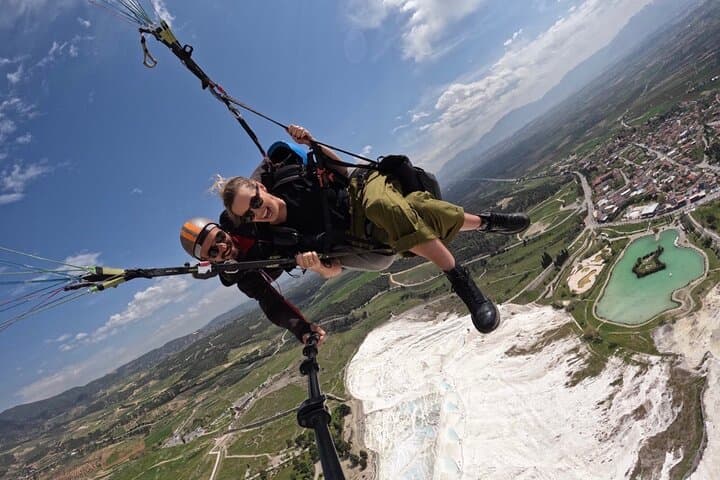
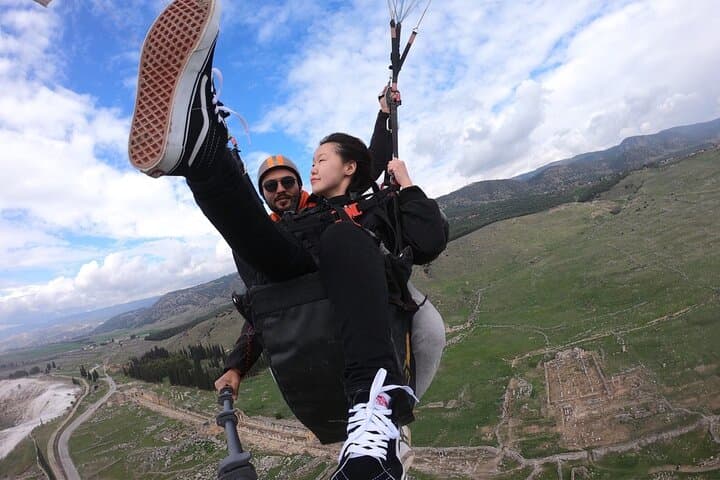
A cold wind lifts you before the pilot clips you in. In seconds the valley drops away and the chalk-white terraces of Pamukkale unfold beneath—irregular shelves of calcite, turquoise pools catching the sun, and the ruins of Hierapolis pushed like punctuation into the landscape.
Verified experiences and guided adventures in the surrounding area.
Operated by atatravels.com · Pamukkale, Denizli
A cold wind lifts you before the pilot clips you in. In seconds the valley drops away and the chalk-white terraces of Pamukkale unfold beneath—irregular shelves of calcite, turquoise pools catching the sun, and the ruins of Hierapolis pushed like punctuation into the landscape.
This is flight over a geological wonder. The terraces are living deposits: calcium-rich thermal waters cooling and leaving mineral steps that have grown for millennia. Hierapolis, founded as a spa town in the Hellenistic era and later rebuilt by Romans, frames the terraces with columns, baths and an amphitheater that read differently from the air.
Locals prize Pamukkale for its thermal springs and the red-hued Karahayıt nearby; pilots use consistent thermals from the Aegean flank of the Taurus foothills to keep tandems aloft. Culture here is practical—visitors balance reverence for the site with the town’s tourism rhythm: cafes, small hotels, and thermal pools.
Practical notes: most commercial flights are tandems with certified instructors and last roughly 30–45 minutes of actual airtime depending on conditions. Wear sturdy shoes and layered clothing—the temperature drops with altitude and wind. Expect a short run or assisted launch and a controlled landing on open ground; operators typically provide helmets and harnesses. Flights are weather dependent—book early in the morning for smoother air, and confirm pickup and weight limits in advance.
Seen from above, Pamukkale reads as both fragile and vast—a place where geology, history and the clean, precise work of flight meet.
moderate.
45 minutes (flight time varies; total excursion 2–4 hours including transport).
Light to moderate; participants should be able to stand and run a few steps for assisted takeoff and handle brief physical exertion
Yes—commercial Pamukkale paragliding is typically tandem with a certified pilot who handles launch, flight decisions and landing.
Operators set weight limits and ask about spinal, heart conditions and pregnancy; you must disclose medical issues when booking.
Flight time is usually about 30–45 minutes depending on thermal conditions; the full activity including transfers often takes 2–4 hours.
Flights are weather-dependent; reputable operators cancel for unsafe conditions and offer refunds or rescheduling—confirm the 24-hour cancellation policy.
Pamukkale sits above Hierapolis, an ancient spa city whose Roman baths and necropolis reflect centuries of thermal-driven settlement.
Pamukkale is a protected UNESCO site—walking on the travertines is restricted to protect calcite formations; follow signage and use designated paths to minimize impact.
atatravels.com operates guided outdoor trips and adventures with an emphasis on safety, stewardship, and memorable experiences.
A cold wind lifts you before the pilot clips you in. In seconds the valley drops away and the chalk-white terraces of Pamukkale unfold beneath—irregular shelves of calcite, turquoise pools catching the sun, and the ruins of Hierapolis pushed like punctuation into the landscape.
A cold wind lifts you before the pilot clips you in. In seconds the valley drops away and the chalk-white terraces of Pamukkale unfold beneath—irregular shelves of calcite, turquoise pools catching the sun, and the ruins of Hierapolis pushed like punctuation into the landscape.
This is flight over a geological wonder. The terraces are living deposits: calcium-rich thermal waters cooling and leaving mineral steps that have grown for millennia. Hierapolis, founded as a spa town in the Hellenistic era and later rebuilt by Romans, frames the terraces with columns, baths and an amphitheater that read differently from the air.
Locals prize Pamukkale for its thermal springs and the red-hued Karahayıt nearby; pilots use consistent thermals from the Aegean flank of the Taurus foothills to keep tandems aloft. Culture here is practical—visitors balance reverence for the site with the town’s tourism rhythm: cafes, small hotels, and thermal pools.
Practical notes: most commercial flights are tandems with certified instructors and last roughly 30–45 minutes of actual airtime depending on conditions. Wear sturdy shoes and layered clothing—the temperature drops with altitude and wind. Expect a short run or assisted launch and a controlled landing on open ground; operators typically provide helmets and harnesses. Flights are weather dependent—book early in the morning for smoother air, and confirm pickup and weight limits in advance.
Seen from above, Pamukkale reads as both fragile and vast—a place where geology, history and the clean, precise work of flight meet.