THE ADVENTURE COLLECTIVE® · Independent discovery and booking for outdoor travel

Launch from a 1,550 m ridge and float above the ochre walls of Chicamocha Canyon in a tandem paraglider. This half-day outing pairs reliable thermals with professional pilots for panoramic flights and an accessible aerial experience.
Launch from a 1,550 m ridge and float above the ochre walls of Chicamocha Canyon in a tandem paraglider. This half-day outing pairs reliable thermals with professional pilots for panoramic flights and an accessible aerial experience.
Wind lifts you before the canyon does — the takeoff ridge at about 1,550 meters gives way to a broad, falling sky. Below, the Chicamocha River carves ochre walls and sun-baked terraces; you and a professional pilot lean into thermals and glide, pausing long enough to read the canyon’s layers and the tiny roads that stitch the valley together.
Verified experiences and guided adventures in the surrounding area.
Operated by Parapente Fenixtreme · Bucaramanga, Santander
Wind lifts you before the canyon does — the takeoff ridge at about 1,550 meters gives way to a broad, falling sky. Below, the Chicamocha River carves ochre walls and sun-baked terraces; you and a professional pilot lean into thermals and glide, pausing long enough to read the canyon’s layers and the tiny roads that stitch the valley together.
The Chicamocha Canyon is the work of water and time: the river’s incision over millions of years exposed sedimentary bands that tell of ancient seas and uplift. That geological drama sits near towns shaped by colonial routes and Guane indigenous history, with Panachi (Chicamocha National Park) developed as a viewpoint and visitor hub. Local culture mixes ranching, coffee terraces, and adventurous sports — paragliding grew here because the canyon’s columns and afternoon thermals reliably deliver lift.
Expect a tandem flight that launches from 1,550 m with potential climbs past 2,000 m, lasting a guided sortie within a half-day schedule (total time ~4 hours including transfers and briefings). Pilots handle takeoff, navigation, and landing; passengers should be ready for short uphill approaches, a standing launch, and windier conditions at altitude.
Practical tips: bring a windproof layer, secure footwear, sun protection, and a small camera with a wrist strap. Flights depend on weather — mornings can be calm while afternoons build thermal activity. Weight and safety briefings are strict; follow the pilot’s instructions. When skies are good, the canyon’s scale and the river’s course make paragliding here a clear, visceral way to see Santander from above.
easy.
4 hours.
Light fitness: able to stand for short periods, walk short uneven approaches, and follow safety instructions.
The airborne portion usually lasts 10–30 minutes depending on conditions; the full activity including transfers and briefing takes about 4 hours.
Yes — operators require weight information at booking and may set limits for safety; minors typically must be accompanied and the provider will confirm age rules.
No prior paragliding experience is needed — flights are tandem with a certified pilot who controls launch, flight, and landing.
Flights are canceled for unsafe wind or rain; operators typically offer a full refund or rescheduling if canceled at least 24 hours before the scheduled time.
The canyon’s exposed rocks record uplift and river incision over millions of years; the area was historically occupied by Guane indigenous communities and later integrated into colonial trade routes.
Visitor pressure and off-road driving can worsen erosion; stick to marked paths, minimize waste, and support local operators that follow park guidelines.
Parapente Fenixtreme operates guided outdoor trips and adventures with an emphasis on safety, stewardship, and memorable experiences.
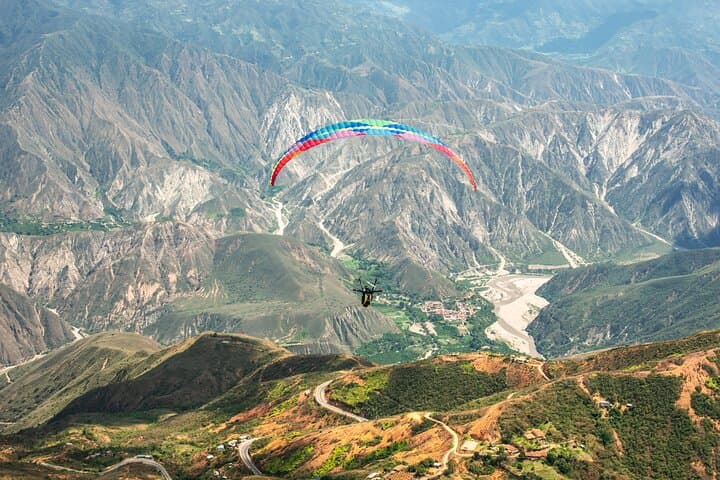
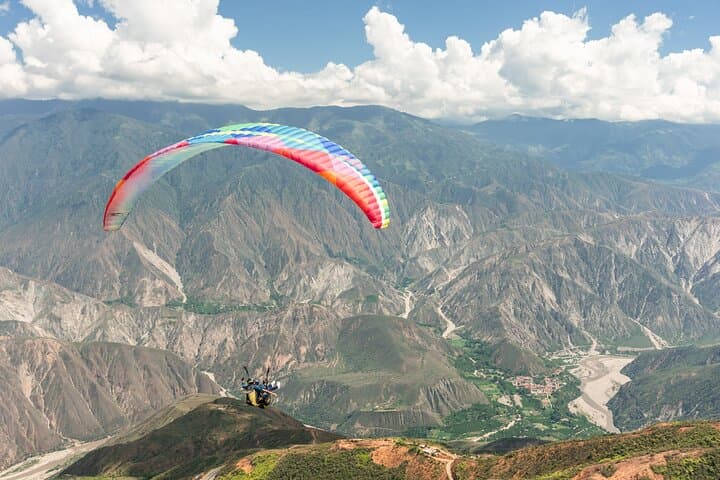
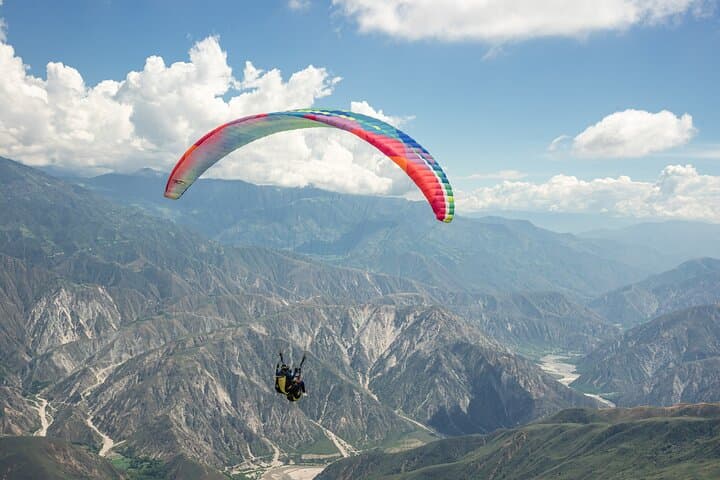
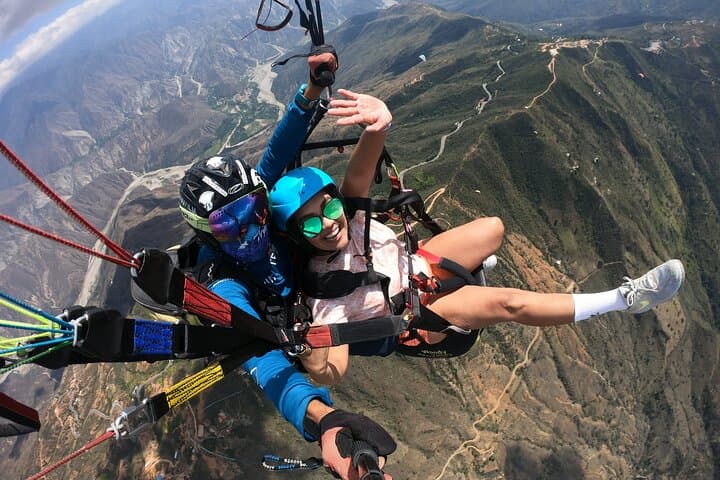
Wind lifts you before the canyon does — the takeoff ridge at about 1,550 meters gives way to a broad, falling sky. Below, the Chicamocha River carves ochre walls and sun-baked terraces; you and a professional pilot lean into thermals and glide, pausing long enough to read the canyon’s layers and the tiny roads that stitch the valley together.
Wind lifts you before the canyon does — the takeoff ridge at about 1,550 meters gives way to a broad, falling sky. Below, the Chicamocha River carves ochre walls and sun-baked terraces; you and a professional pilot lean into thermals and glide, pausing long enough to read the canyon’s layers and the tiny roads that stitch the valley together.
The Chicamocha Canyon is the work of water and time: the river’s incision over millions of years exposed sedimentary bands that tell of ancient seas and uplift. That geological drama sits near towns shaped by colonial routes and Guane indigenous history, with Panachi (Chicamocha National Park) developed as a viewpoint and visitor hub. Local culture mixes ranching, coffee terraces, and adventurous sports — paragliding grew here because the canyon’s columns and afternoon thermals reliably deliver lift.
Expect a tandem flight that launches from 1,550 m with potential climbs past 2,000 m, lasting a guided sortie within a half-day schedule (total time ~4 hours including transfers and briefings). Pilots handle takeoff, navigation, and landing; passengers should be ready for short uphill approaches, a standing launch, and windier conditions at altitude.
Practical tips: bring a windproof layer, secure footwear, sun protection, and a small camera with a wrist strap. Flights depend on weather — mornings can be calm while afternoons build thermal activity. Weight and safety briefings are strict; follow the pilot’s instructions. When skies are good, the canyon’s scale and the river’s course make paragliding here a clear, visceral way to see Santander from above.