THE ADVENTURE COLLECTIVE® · Independent discovery and booking for outdoor travel

Clip into your harness and fly for 2.5 miles over Mayflower Bocawina National Park. This full-morning zipline pairs sustained adrenaline with a practical look at Belize’s rainforest, geology, and local conservation efforts.
Clip into your harness and fly for 2.5 miles over Mayflower Bocawina National Park. This full-morning zipline pairs sustained adrenaline with a practical look at Belize’s rainforest, geology, and local conservation efforts.
The harness clicks and the forest exhales beneath you—an immediate drop from solid ground into a corridor of green. From the first platform the canopy opens into a moving sea of glossy leaves and lianas; mist hangs in the gullies and birds call from vantage points you won’t see until you’re level with them. This is Bocawina: Belize’s most ambitious zipline, stretching roughly 2.5 miles across the ridges and ravines of Mayflower Bocawina National Park and giving you a rare, fast-moving view into the heart of lowland rainforest.
Verified experiences and guided adventures in the surrounding area.
Operated by UNTAME BELIZE · Hopkins, Stann Creek District
The harness clicks and the forest exhales beneath you—an immediate drop from solid ground into a corridor of green. From the first platform the canopy opens into a moving sea of glossy leaves and lianas; mist hangs in the gullies and birds call from vantage points you won’t see until you’re level with them. This is Bocawina: Belize’s most ambitious zipline, stretching roughly 2.5 miles across the ridges and ravines of Mayflower Bocawina National Park and giving you a rare, fast-moving view into the heart of lowland rainforest.
Mayflower Bocawina sits on karst ridgelines carved from ancient limestone. The park preserves waterfalls, secondary and primary forest, and scattered Maya sites—geology and culture folded together—not far from the Garifuna coastal communities of Hopkins. Ziplines here are a modern layer above a landscape that has long sustained local life: small farms, seasonal hunting and harvesting, and a growing eco-tourism economy that balances access with protection.
On the line you notice the forest’s personality: a river of green pushing past you, emergent trees standing like watchful elders, and the hydrographic cut of gullies daring you to look down. Guides point out fig trees whose root systems stabilize slopes and explain how the canopy corridors connect wildlife pockets—how a jaguar or howler monkey uses the same ridgelines you cross.
The experience is both exhilarating and calibrated. The operator runs small groups (up to 14 per shared tour), provides full harnesses and helmets, and includes door-to-door pickup in an air-conditioned vehicle from Hopkins and nearby hotels. Expect about five hours total: transfer, safety briefing, multiple lines, and a short hiking approach between platforms. Bottled water is provided; wear closed-toe shoes and comfortable layers you don’t mind getting dusty or damp.
Safety notes are direct: the course requires moderate fitness, and it’s not recommended for pregnant travelers or those with spinal or serious cardiovascular conditions. Weather matters—heavy rain closes the lines—and cancellations for a full refund are available up to 24 hours before departure. If you want quieter lines, ask for an early morning slot: the air is cooler and birds are most active then.
Beyond the zipline, carve out time for a short trail to the park’s waterfalls or an evening in Hopkins to hear Garifuna drumming and sample fresh seafood. The zipline is a concentrated way to feel the rainforest’s scale and energy—an adrenaline route that also leaves you with a practical appreciation for the park’s geology, ecology, and the local communities stewarding it.
moderate.
5 hours.
Moderate: able to hike short, uneven approaches and tolerate heights and short bursts of exertion
Plan for roughly five hours total, including transport, safety briefing, multiple zipline segments, and short hikes between platforms.
Age and weight restrictions vary—confirm at booking, but younger children often must meet a minimum age and weight for harnessing; infant seats are available for transfers.
Operators supply certified harnesses, helmets, gloves, and a full safety briefing; follow guide instructions at all times.
No—this tour is not recommended for travelers with spinal injuries, serious cardiovascular conditions, or who are pregnant.
Yes—air-conditioned pickup from Hopkins-area hotels is included; confirm your pickup point when booking.
Heavy rain and thunderstorms close the course; cancellations for a full refund are available up to 24 hours before departure, and operators will cancel if conditions are unsafe.
Mayflower Bocawina National Park protects lowland rainforest, waterfalls, and scattered Maya-influenced landscapes that supported local communities long before modern tourism.
Operators work with local guides and the park to limit trail impacts—stay on platforms and trails, pack out trash, and support community-run services.
UNTAME BELIZE operates guided outdoor trips and adventures with an emphasis on safety, stewardship, and memorable experiences.
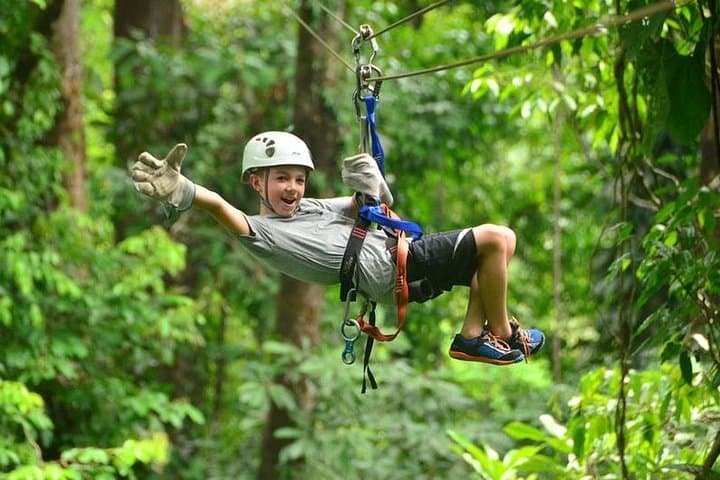
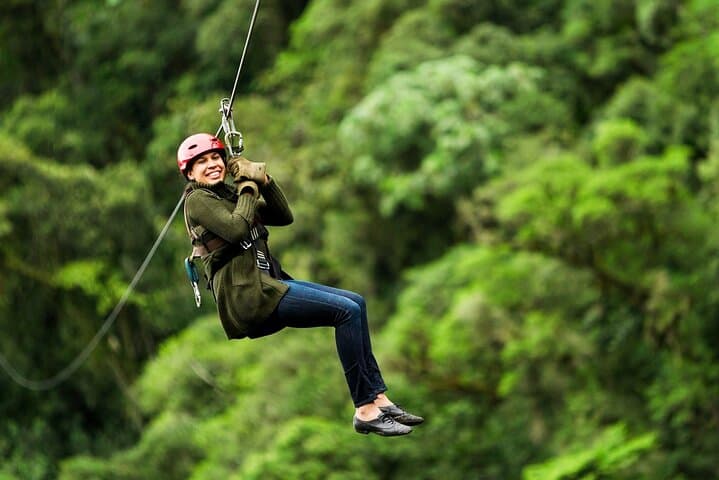
The harness clicks and the forest exhales beneath you—an immediate drop from solid ground into a corridor of green. From the first platform the canopy opens into a moving sea of glossy leaves and lianas; mist hangs in the gullies and birds call from vantage points you won’t see until you’re level with them. This is Bocawina: Belize’s most ambitious zipline, stretching roughly 2.5 miles across the ridges and ravines of Mayflower Bocawina National Park and giving you a rare, fast-moving view into the heart of lowland rainforest.
The harness clicks and the forest exhales beneath you—an immediate drop from solid ground into a corridor of green. From the first platform the canopy opens into a moving sea of glossy leaves and lianas; mist hangs in the gullies and birds call from vantage points you won’t see until you’re level with them. This is Bocawina: Belize’s most ambitious zipline, stretching roughly 2.5 miles across the ridges and ravines of Mayflower Bocawina National Park and giving you a rare, fast-moving view into the heart of lowland rainforest.
Mayflower Bocawina sits on karst ridgelines carved from ancient limestone. The park preserves waterfalls, secondary and primary forest, and scattered Maya sites—geology and culture folded together—not far from the Garifuna coastal communities of Hopkins. Ziplines here are a modern layer above a landscape that has long sustained local life: small farms, seasonal hunting and harvesting, and a growing eco-tourism economy that balances access with protection.
On the line you notice the forest’s personality: a river of green pushing past you, emergent trees standing like watchful elders, and the hydrographic cut of gullies daring you to look down. Guides point out fig trees whose root systems stabilize slopes and explain how the canopy corridors connect wildlife pockets—how a jaguar or howler monkey uses the same ridgelines you cross.
The experience is both exhilarating and calibrated. The operator runs small groups (up to 14 per shared tour), provides full harnesses and helmets, and includes door-to-door pickup in an air-conditioned vehicle from Hopkins and nearby hotels. Expect about five hours total: transfer, safety briefing, multiple lines, and a short hiking approach between platforms. Bottled water is provided; wear closed-toe shoes and comfortable layers you don’t mind getting dusty or damp.
Safety notes are direct: the course requires moderate fitness, and it’s not recommended for pregnant travelers or those with spinal or serious cardiovascular conditions. Weather matters—heavy rain closes the lines—and cancellations for a full refund are available up to 24 hours before departure. If you want quieter lines, ask for an early morning slot: the air is cooler and birds are most active then.
Beyond the zipline, carve out time for a short trail to the park’s waterfalls or an evening in Hopkins to hear Garifuna drumming and sample fresh seafood. The zipline is a concentrated way to feel the rainforest’s scale and energy—an adrenaline route that also leaves you with a practical appreciation for the park’s geology, ecology, and the local communities stewarding it.