THE ADVENTURE COLLECTIVE® · Independent discovery and booking for outdoor travel

Climb the rocky stairways of Cerro del Crestón, strap in at El Faro, and fly 1,260 meters over the Pacific at up to 60 km/h. This two-hour Farolesa zipline tour combines a coastal hike, historical viewpoints, and a pulse-racing descent above Mazatlán’s shoreline.
Climb the rocky stairways of Cerro del Crestón, strap in at El Faro, and fly 1,260 meters over the Pacific at up to 60 km/h. This two-hour Farolesa zipline tour combines a coastal hike, historical viewpoints, and a pulse-racing descent above Mazatlán’s shoreline.
The roundabout at Cerro del Crestón smells of sun-warmed salt and frying fish. Guides in bright harnesses gather a small group, check IDs, and hand over helmets and gloves; you can hear the Pacific grumbling against the rocks below. The hike to El Faro’s summit is a physical exhale—stair-stepped switchbacks, carved stone steps, and a final push that puts you 157 meters above sea level with the city flattening behind you and a wide blue horizon ahead.
Verified experiences and guided adventures in the surrounding area.
Operated by Shekinah Beach Club · Mazatlán, Sinaloa
The roundabout at Cerro del Crestón smells of sun-warmed salt and frying fish. Guides in bright harnesses gather a small group, check IDs, and hand over helmets and gloves; you can hear the Pacific grumbling against the rocks below. The hike to El Faro’s summit is a physical exhale—stair-stepped switchbacks, carved stone steps, and a final push that puts you 157 meters above sea level with the city flattening behind you and a wide blue horizon ahead.
The site combines natural drama with history. The ascent leads to the 1873 Observatorio, a vantage point long used to watch shipping lanes and whale migrations. The promontory itself is an abrupt, rocky finger into the Pacific—wind-swept and bird-pocked—formed by resistant coastal rock that forces waves into a constant, salt-scented tempo. Mazatlán’s identity as a working port and fishing town is visible everywhere: nets at the waterline, shrimp boats on the horizon, and old cobbled streets tumbling down toward the historic Plazuela Machado.
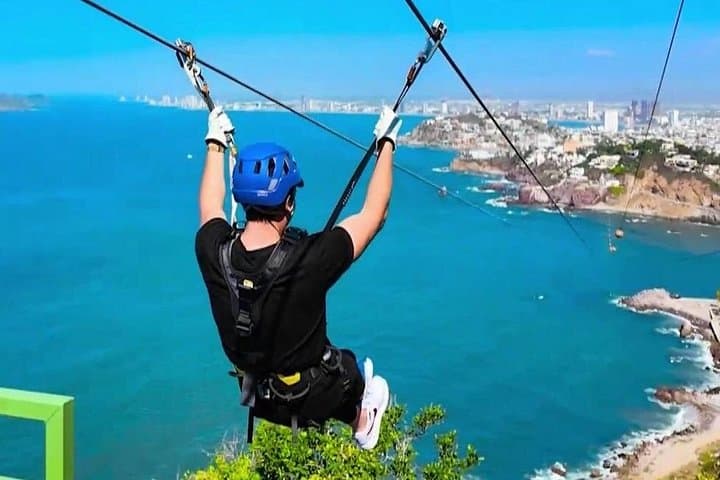
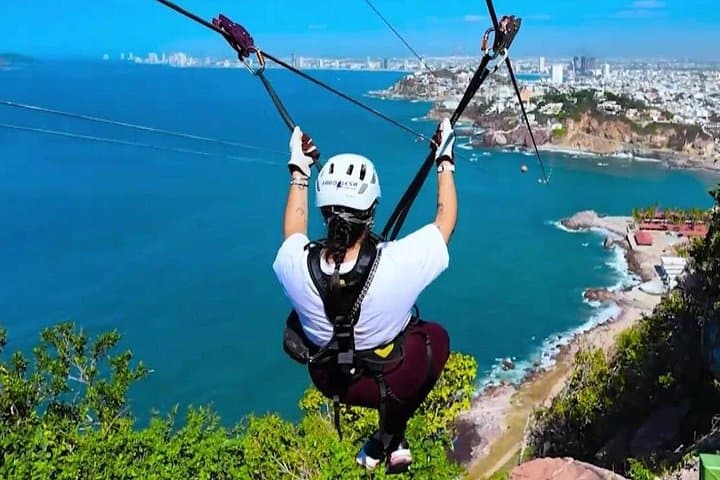
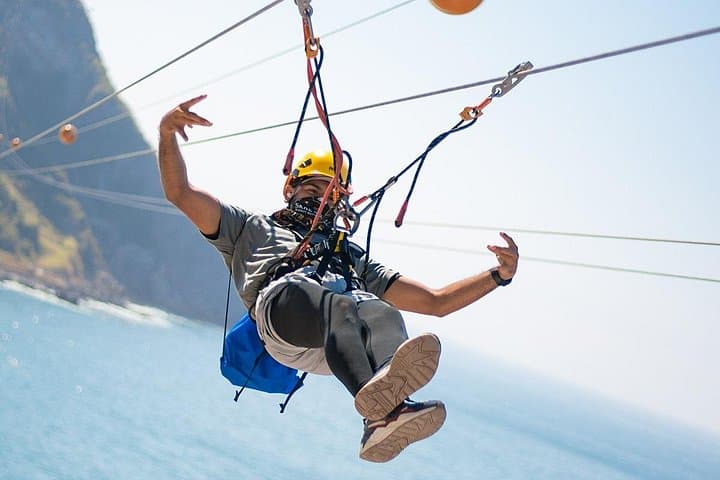
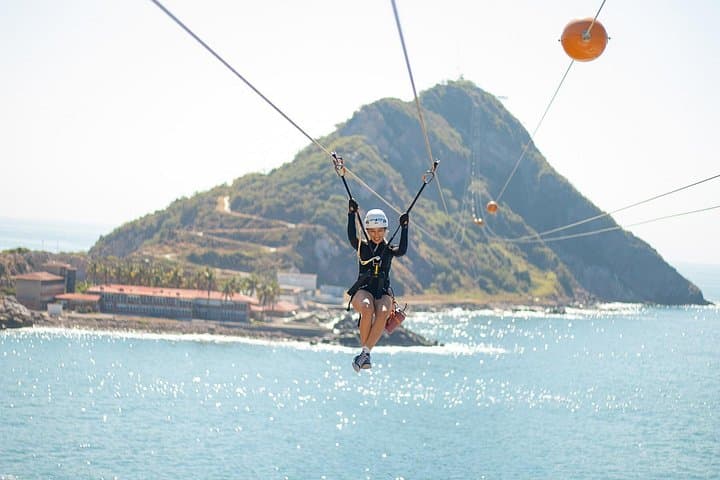
Off the summit the real rush arrives. The Farolesa zipline stretches 1,260 meters across sea and bluff; at full tilt you can reach speeds of up to 60 km/h. The line is internationally certified, and guides run a methodical safety brief before every launch. Riders launch from a platform carved into the cliff, angled so the Pacific forms your primary horizon as you fly—an action-shot playground for adrenaline-seekers and landscape photographers alike.
Practicalities are straightforward. Total tour time runs about two hours: a 35-minute check-in and gear-up, roughly 60 minutes for the guided hike to the lighthouse summit, and the zipline and wrap-up taking the remainder. Wear sturdy closed-toe shoes for the uneven trail; sun protection is essential—the coast offers little shade. Note the restrictions: participants must weigh between 50–100 kg, be at least 1.40 m tall, and be 12 years or older. This activity isn’t recommended for pregnant travelers or those with serious heart or spinal conditions.
To make the most of it, arrive 15 minutes early at the Farolesa ticket booth at the Glorieta del Faro de Mazatlán, hydrate, and keep an eye on local weather—rides are canceled in storms. After your flight, linger at the Observatorio 1873 or walk down toward the National Whale Museum (MUNBA) to round out a coastal day that mixes history, marine life, and one very good reason to look down and then look far, far out.
moderate.
2 hours.
Moderate—able to manage a 1–1.5 km uphill walk with about 157 m elevation gain and uneven steps
Meet at the Farolesa ticket booth at the Glorieta del Faro de Mazatlán (Cerro del Crestón roundabout). Arrive at least 15 minutes before your scheduled time for check-in and safety briefing.
Yes—participants must weigh between 50–100 kg, be at least 1.40 m tall, and be 12 years or older. The activity is not recommended for pregnant travelers or those with heart or spinal conditions.
The zipline is 1,260 meters long and can reach speeds up to 60 km/h, depending on conditions and rider weight.
Closed-toe shoes, sun protection (hat, sunscreen), a filled water bottle, and a light layer are recommended; leave loose items behind or secure them—camera straps only.
The guided ascent is moderate—expect uneven steps and a net elevation gain of about 157 meters over roughly 1–1.5 km; a basic level of fitness is required.
Rides are canceled in unsafe weather conditions; for a full refund cancel at least 24 hours before the scheduled departure time per the operator’s policy.
The observatory above Mazatlán dates to the 19th century (noted locally as 1873), used historically to watch shipping lanes and marine life—the lighthouse and observatory shaped the city’s maritime identity.
The cliff and coastal waters are sensitive habitats for seabirds and nearshore marine life; visitors should stay on designated trails, avoid disturbing nesting birds, and pack out all trash.
Shekinah Beach Club operates guided outdoor trips and adventures with an emphasis on safety, stewardship, and memorable experiences.
The roundabout at Cerro del Crestón smells of sun-warmed salt and frying fish. Guides in bright harnesses gather a small group, check IDs, and hand over helmets and gloves; you can hear the Pacific grumbling against the rocks below. The hike to El Faro’s summit is a physical exhale—stair-stepped switchbacks, carved stone steps, and a final push that puts you 157 meters above sea level with the city flattening behind you and a wide blue horizon ahead.
The roundabout at Cerro del Crestón smells of sun-warmed salt and frying fish. Guides in bright harnesses gather a small group, check IDs, and hand over helmets and gloves; you can hear the Pacific grumbling against the rocks below. The hike to El Faro’s summit is a physical exhale—stair-stepped switchbacks, carved stone steps, and a final push that puts you 157 meters above sea level with the city flattening behind you and a wide blue horizon ahead.
The site combines natural drama with history. The ascent leads to the 1873 Observatorio, a vantage point long used to watch shipping lanes and whale migrations. The promontory itself is an abrupt, rocky finger into the Pacific—wind-swept and bird-pocked—formed by resistant coastal rock that forces waves into a constant, salt-scented tempo. Mazatlán’s identity as a working port and fishing town is visible everywhere: nets at the waterline, shrimp boats on the horizon, and old cobbled streets tumbling down toward the historic Plazuela Machado.
Off the summit the real rush arrives. The Farolesa zipline stretches 1,260 meters across sea and bluff; at full tilt you can reach speeds of up to 60 km/h. The line is internationally certified, and guides run a methodical safety brief before every launch. Riders launch from a platform carved into the cliff, angled so the Pacific forms your primary horizon as you fly—an action-shot playground for adrenaline-seekers and landscape photographers alike.
Practicalities are straightforward. Total tour time runs about two hours: a 35-minute check-in and gear-up, roughly 60 minutes for the guided hike to the lighthouse summit, and the zipline and wrap-up taking the remainder. Wear sturdy closed-toe shoes for the uneven trail; sun protection is essential—the coast offers little shade. Note the restrictions: participants must weigh between 50–100 kg, be at least 1.40 m tall, and be 12 years or older. This activity isn’t recommended for pregnant travelers or those with serious heart or spinal conditions.
To make the most of it, arrive 15 minutes early at the Farolesa ticket booth at the Glorieta del Faro de Mazatlán, hydrate, and keep an eye on local weather—rides are canceled in storms. After your flight, linger at the Observatorio 1873 or walk down toward the National Whale Museum (MUNBA) to round out a coastal day that mixes history, marine life, and one very good reason to look down and then look far, far out.