THE ADVENTURE COLLECTIVE® · Independent discovery and booking for outdoor travel

Launch from Lumbisí and drift over Quito on a guided tandem paragliding flight. Learn when to book, what to bring, and what to expect from a thermal-powered 12–15 minute glide above the Andean city.
Launch from Lumbisí and drift over Quito on a guided tandem paragliding flight. Learn when to book, what to bring, and what to expect from a thermal-powered 12–15 minute glide above the Andean city.
On a clear morning above Quito you climb into an air-conditioned vehicle and head up toward Lumbisí, the low ridge that launches paragliders into the city's open skies. From takeoff the urban grid loosens into patchwork slopes, the wing responds to warm pockets of air and the city shrinks beneath you while volcanic ridgelines puncture the horizon.
Verified experiences and guided adventures in the surrounding area.
Operated by Parapente Montanita · Quito, Pichincha
On a clear morning above Quito you climb into an air-conditioned vehicle and head up toward Lumbisí, the low ridge that launches paragliders into the city's open skies. From takeoff the urban grid loosens into patchwork slopes, the wing responds to warm pockets of air and the city shrinks beneath you while volcanic ridgelines puncture the horizon.
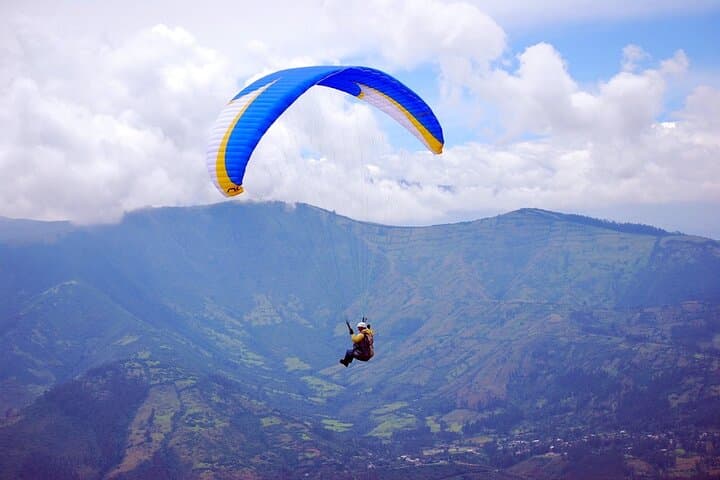
Flights from Lumbisí are thermal tandem flights: pilots read the wind that hits the slope and use ascending thermals generated by sun-warmed terrain to stay aloft. The advertised flight time is 12–15 minutes, but the whole outing — transfer, briefing, gearing up and landing — can take one to two hours. This operator is presented as Quito’s legal paragliding provider; tandem certified guides manage every part of the launch and landing.
Geologically, Quito sits on Andean flanks carved by volcanic activity and river erosion; those features create reliable updrafts in stable weather. Culturally the city blends Indigenous and colonial layers — flights often drift over neighborhoods with old churches and new construction, offering a literal change of perspective on Quito’s history.
Practically: expect a short run at takeoff, a safety briefing, and weather-dependent windows; flights are commonly scheduled mid-morning to late afternoon when thermals form. Bring closed-toe shoes, layered clothing for quick temperature shifts, sun protection, and ID. Operators screen by weight and may cancel for rain or excessive turbulence — always confirm limits and cancellation policy before you go.
moderate.
1–2 hours.
No special fitness required beyond the ability to follow instructions and run briefly at takeoff; suitable for most active adults.
The airborne portion is about 12–15 minutes; expect an overall excursion of 1–2 hours including transfer, briefing and gearing up.
Operators typically set weight limits and screen for pregnancy or serious heart conditions — disclose medical issues and check specific weight limits when booking.
Flights are weather-dependent and will be cancelled or rescheduled for rain, strong winds or excessive turbulence; refunds often require 24+ hour notice per policy.
No — flights are tandem with a certified pilot who handles launch, flight, and landing; passengers should follow crew instructions and be able to run a short distance at takeoff.
Quito grew from indigenous settlements and became a major Spanish colonial center; flying over the city exposes colonial plazas, churches, and modern expansion in tight proximity.
Operators work from private launch and landing areas — respect fenced fields and local farmland, avoid litter, and follow guide instructions to minimize disturbance.
Parapente Montanita operates guided outdoor trips and adventures with an emphasis on safety, stewardship, and memorable experiences.
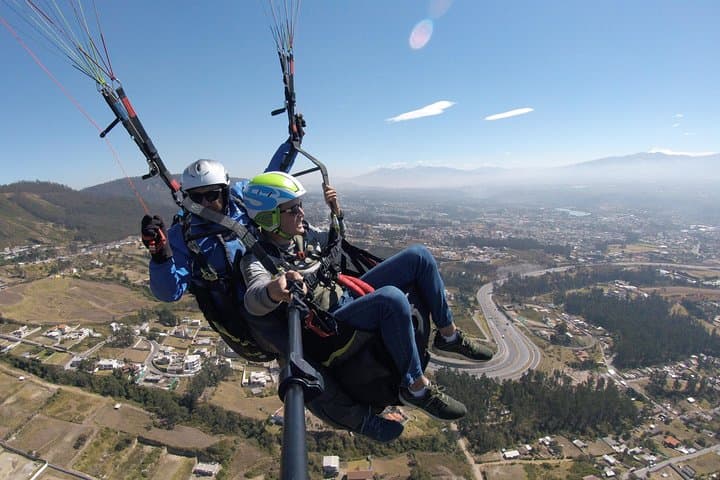
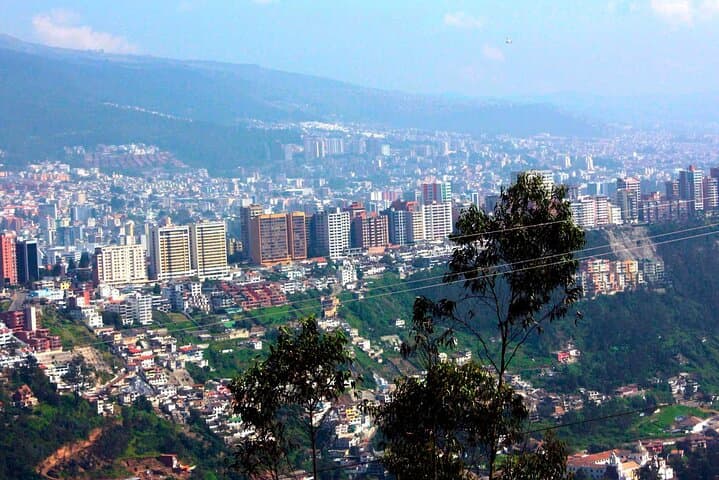
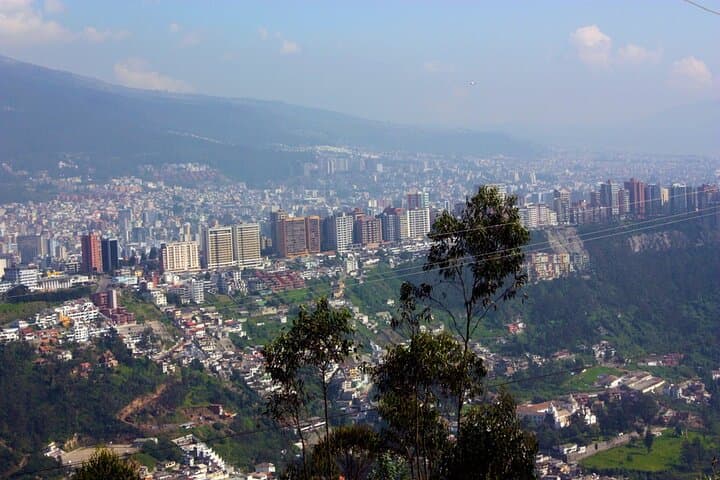
On a clear morning above Quito you climb into an air-conditioned vehicle and head up toward Lumbisí, the low ridge that launches paragliders into the city's open skies. From takeoff the urban grid loosens into patchwork slopes, the wing responds to warm pockets of air and the city shrinks beneath you while volcanic ridgelines puncture the horizon.
On a clear morning above Quito you climb into an air-conditioned vehicle and head up toward Lumbisí, the low ridge that launches paragliders into the city's open skies. From takeoff the urban grid loosens into patchwork slopes, the wing responds to warm pockets of air and the city shrinks beneath you while volcanic ridgelines puncture the horizon.
Flights from Lumbisí are thermal tandem flights: pilots read the wind that hits the slope and use ascending thermals generated by sun-warmed terrain to stay aloft. The advertised flight time is 12–15 minutes, but the whole outing — transfer, briefing, gearing up and landing — can take one to two hours. This operator is presented as Quito’s legal paragliding provider; tandem certified guides manage every part of the launch and landing.
Geologically, Quito sits on Andean flanks carved by volcanic activity and river erosion; those features create reliable updrafts in stable weather. Culturally the city blends Indigenous and colonial layers — flights often drift over neighborhoods with old churches and new construction, offering a literal change of perspective on Quito’s history.
Practically: expect a short run at takeoff, a safety briefing, and weather-dependent windows; flights are commonly scheduled mid-morning to late afternoon when thermals form. Bring closed-toe shoes, layered clothing for quick temperature shifts, sun protection, and ID. Operators screen by weight and may cancel for rain or excessive turbulence — always confirm limits and cancellation policy before you go.