THE ADVENTURE COLLECTIVE® · Independent discovery and booking for outdoor travel

Face the height, take the line: five ziplines across the Krnica valley give riders 500–700m runs and speeds to 60 km/h, framed by the dramatic Kanin and Rombon peaks. This three-hour experience combines technical safety, local guides, and alpine views worth the small leap.
Face the height, take the line: five ziplines across the Krnica valley give riders 500–700m runs and speeds to 60 km/h, framed by the dramatic Kanin and Rombon peaks. This three-hour experience combines technical safety, local guides, and alpine views worth the small leap.
The platform perches at about 1,300 meters, wind sharpening the view and the smell of alpine grass. Below, the Krnica valley cuts a green-blue ribbon toward Bovec and the Soča River, while Kanin and Rombon rise like folded maps of limestone and scree. A guide clips a harness with quick, calm motions; for a moment the world is a checklist of straps and a heartbeat. Then gravity takes its pull and you are moving—straight, fast, and impossible not to notice—over a valley that dares you to look away.
Verified experiences and guided adventures in the surrounding area.
Operated by Hostel Soča rocks · Bovec, Slovenian Littoral
The platform perches at about 1,300 meters, wind sharpening the view and the smell of alpine grass. Below, the Krnica valley cuts a green-blue ribbon toward Bovec and the Soča River, while Kanin and Rombon rise like folded maps of limestone and scree. A guide clips a harness with quick, calm motions; for a moment the world is a checklist of straps and a heartbeat. Then gravity takes its pull and you are moving—straight, fast, and impossible not to notice—over a valley that dares you to look away.
This is a zipline park built for repeated small acts of audacity: five lines ranging roughly 500–700 meters each, top speeds near 60 km/h, and a cumulative experience that stretches for about three hours from intro to last touchdown. The wires thread between ridgelines in the Julian Alps, part of a range folded from Mesozoic limestone, scoured by glaciers and water to create the steep cirques and plunging gorges the area is known for. Human history here is braided with conflict and travel—fortified passes and World War I Isonzo battlefields are visible in the broader region—while modern Bovec is a river town built around whitewater and high-adrenaline tourism.
Culture in the valley is quietly local: shepherding traditions, small mountain huts (kojte), and a cuisine that favors smoked meats, hearty stews, and mountain cheeses—good fuel before a run of zips. Guides carry more than technical know-how; they carry local route knowledge, weather sense, and a practiced way of helping nervous riders turn fear into focus.
Practicalities are straightforward. Show up with closed-toe shoes and layers—temperatures can drop quickly at altitude. The operator provides helmet, harness, and gloves; weight, age, and health restrictions apply, and visitors with heart or spinal conditions should avoid the course. Expect a moderate fitness requirement: you’ll walk between platforms and stand on uneven wooden decks at altitude. Timing matters—midday can be warm and bright, but late afternoon light yields the best horizon shots and often quieter runs.
Safety and etiquette: follow guide instructions, keep hands off the braking system unless instructed, and avoid bulky backpacks while zipping. Photographers: secure small cameras to a wrist strap or let guides handle them during your run; some operators offer video/photo add-ons.
End the experience with a coffee in Bovec or a short detour to Boka Waterfall—both ways to let the pulse settle and the alpine landscape rearrange itself into memory.
This zipline is not just a sequence of fast runs; it’s a concentrated way to read the Julian Alps at speed: rock, sky, and a river that keeps pulling you back to the valley floor.
moderate.
3 hours.
Moderate fitness—comfortable walking between platforms, able to stand on exposed platforms and follow safety instructions.
Age and weight restrictions apply for safety; children must be comfortable being assisted by guides. Confirm exact limits with the operator when booking.
No—guides provide instruction and necessary equipment; a moderate level of fitness and comfort with heights helps.
The activity is weather-dependent; if canceled due to poor conditions you’ll be offered an alternative date or a refund according to the booking policy.
Yes—necessary safety equipment is supplied and checked by guides before each run.
Small cameras secured on a wrist strap may be allowed but check operator rules; many guests use guide-operated photography services for hands-free shots.
Meet-up is typically at the start point; confirm pickup options with the operator—most require guests to arrive at the designated meeting location.
The Julian Alps and surrounding valleys saw significant World War I action along the Isonzo Front; forts and mountain trails still carry traces of that history.
Operators work within protected alpine zones—stay on marked paths, pack out waste, and respect seasonal closures to protect fragile high-mountain flora.
Hostel Soča rocks operates guided outdoor trips and adventures with an emphasis on safety, stewardship, and memorable experiences.
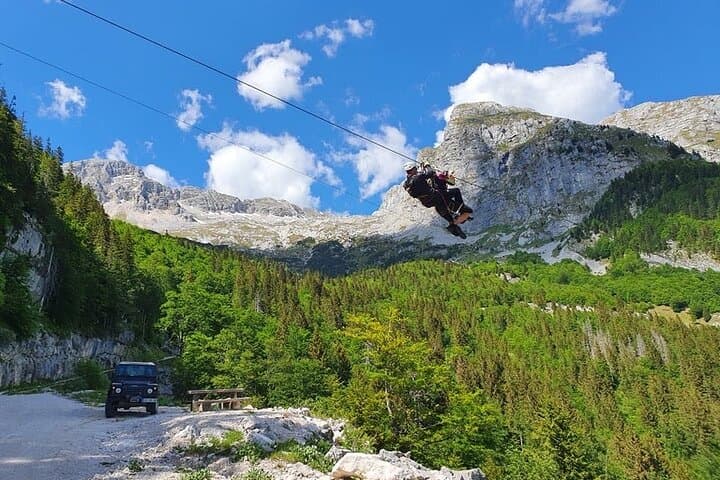
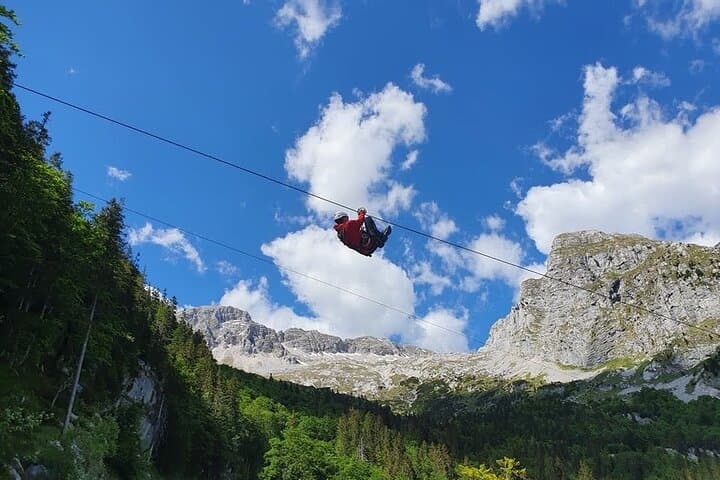
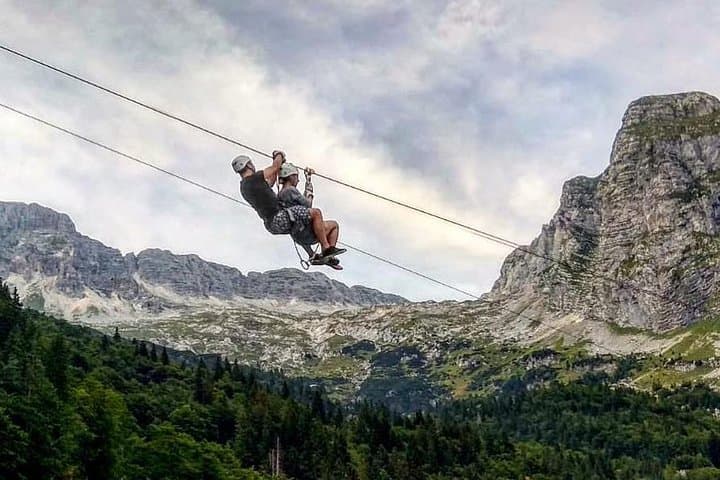
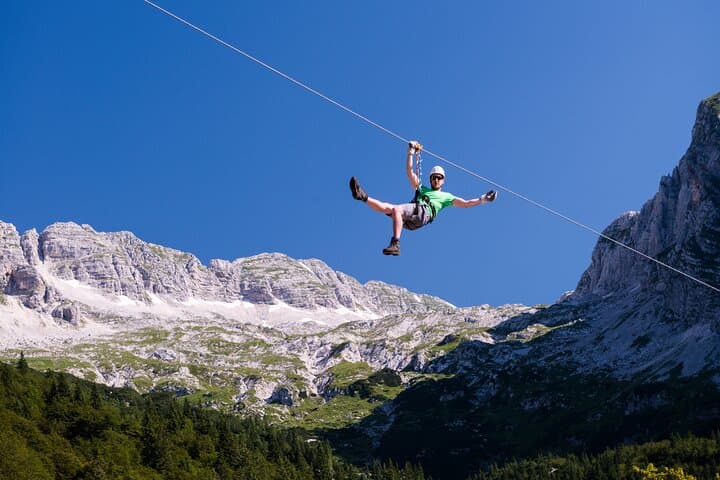
The platform perches at about 1,300 meters, wind sharpening the view and the smell of alpine grass. Below, the Krnica valley cuts a green-blue ribbon toward Bovec and the Soča River, while Kanin and Rombon rise like folded maps of limestone and scree. A guide clips a harness with quick, calm motions; for a moment the world is a checklist of straps and a heartbeat. Then gravity takes its pull and you are moving—straight, fast, and impossible not to notice—over a valley that dares you to look away.
The platform perches at about 1,300 meters, wind sharpening the view and the smell of alpine grass. Below, the Krnica valley cuts a green-blue ribbon toward Bovec and the Soča River, while Kanin and Rombon rise like folded maps of limestone and scree. A guide clips a harness with quick, calm motions; for a moment the world is a checklist of straps and a heartbeat. Then gravity takes its pull and you are moving—straight, fast, and impossible not to notice—over a valley that dares you to look away.
This is a zipline park built for repeated small acts of audacity: five lines ranging roughly 500–700 meters each, top speeds near 60 km/h, and a cumulative experience that stretches for about three hours from intro to last touchdown. The wires thread between ridgelines in the Julian Alps, part of a range folded from Mesozoic limestone, scoured by glaciers and water to create the steep cirques and plunging gorges the area is known for. Human history here is braided with conflict and travel—fortified passes and World War I Isonzo battlefields are visible in the broader region—while modern Bovec is a river town built around whitewater and high-adrenaline tourism.
Culture in the valley is quietly local: shepherding traditions, small mountain huts (kojte), and a cuisine that favors smoked meats, hearty stews, and mountain cheeses—good fuel before a run of zips. Guides carry more than technical know-how; they carry local route knowledge, weather sense, and a practiced way of helping nervous riders turn fear into focus.
Practicalities are straightforward. Show up with closed-toe shoes and layers—temperatures can drop quickly at altitude. The operator provides helmet, harness, and gloves; weight, age, and health restrictions apply, and visitors with heart or spinal conditions should avoid the course. Expect a moderate fitness requirement: you’ll walk between platforms and stand on uneven wooden decks at altitude. Timing matters—midday can be warm and bright, but late afternoon light yields the best horizon shots and often quieter runs.
Safety and etiquette: follow guide instructions, keep hands off the braking system unless instructed, and avoid bulky backpacks while zipping. Photographers: secure small cameras to a wrist strap or let guides handle them during your run; some operators offer video/photo add-ons.
End the experience with a coffee in Bovec or a short detour to Boka Waterfall—both ways to let the pulse settle and the alpine landscape rearrange itself into memory.
This zipline is not just a sequence of fast runs; it’s a concentrated way to read the Julian Alps at speed: rock, sky, and a river that keeps pulling you back to the valley floor.