THE ADVENTURE COLLECTIVE® · Independent discovery and booking for outdoor travel

Float silently over Tenerife’s south coast on a 30–40 minute tandem paragliding flight that launches from hillside thermals and, when conditions allow, lands on La Caleta’s sand. This Silver flight pairs long airtime with local expertise for an approachable aerial adventure.
Float silently over Tenerife’s south coast on a 30–40 minute tandem paragliding flight that launches from hillside thermals and, when conditions allow, lands on La Caleta’s sand. This Silver flight pairs long airtime with local expertise for an approachable aerial adventure.
You step out of the Mercedes Vito as the Atlantic wind tests the hill and the instructor checks straps—within minutes the world opens and Tenerife slips beneath you like a moving map.
Verified experiences and guided adventures in the surrounding area.
Operated by Airsports Tenerife Paragliding · Costa Adeje, Santa Cruz de Tenerife
You step out of the Mercedes Vito as the Atlantic wind tests the hill and the instructor checks straps—within minutes the world opens and Tenerife slips beneath you like a moving map.
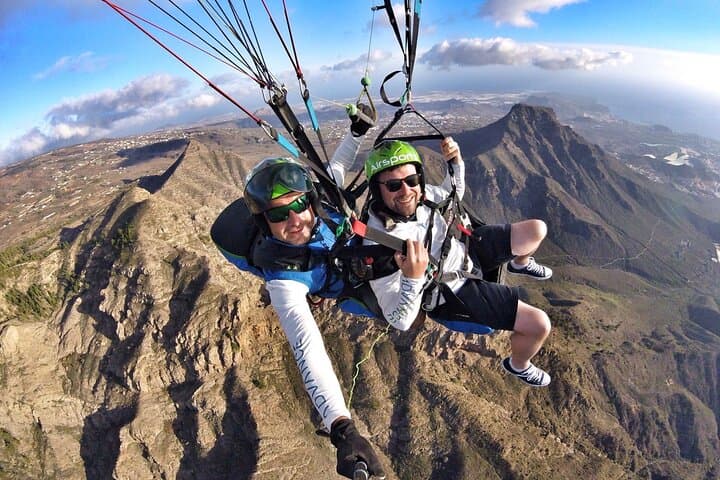
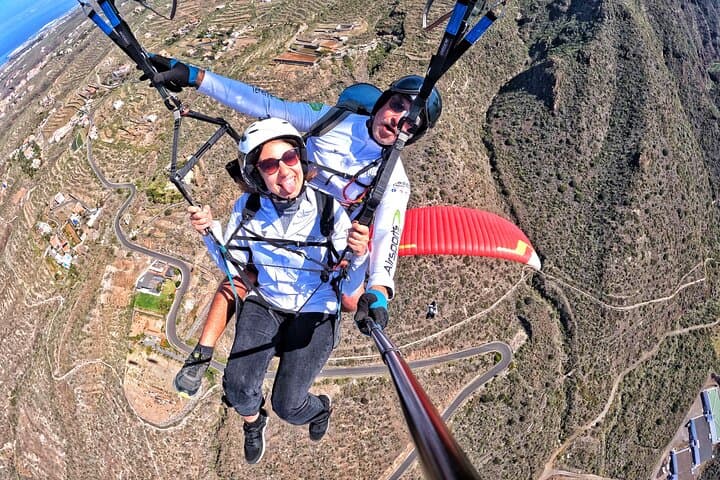
South Tenerife is volcanic bone and coastal skin: black lava flows graduated into golden beaches and the blue of the Atlantic. From takeoff the island’s geology reads like a travel-sized history of fire—ridges carved by ancient flows, terraces cut for farming, and the distant cone of Mount Teide holding court on the horizon. La Caleta and Costa Adeje below were once quiet fishing coves; today their whitewashed roofs and beaches give way to resorts, but the coastline’s pulse is still ocean-driven.
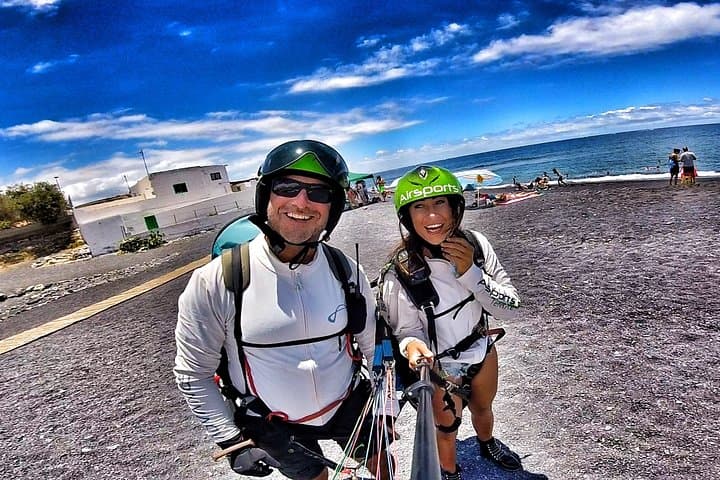
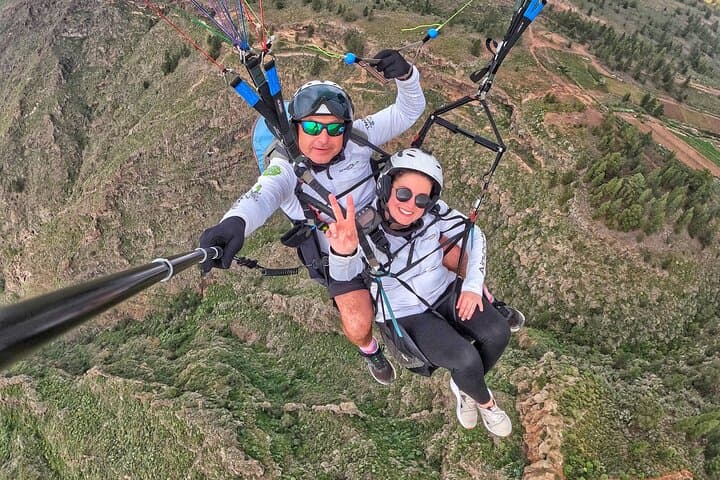
Airsports Tenerife, flying locally since the late 1980s, uses predictable south-coast thermals to extend flights and show off sweeping shorelines. Expect an introductory safety briefing, harness and helmet fitting, and a short, assisted run at takeoff. Once airborne the pilot will seek thermals, point out landmarks, and may let you try gentle control inputs if you want. Landings are typically on sand or a prepared field when conditions permit.
Practical notes: weight limit is generally 100 kg, children from around four years old can fly, and flights are weather-dependent—plan a flexible window. Dress in layers, bring secure eyewear and a small daypack, and budget time for pickup and return. For anyone wanting a high-adrenaline, low-effort way to read Tenerife from the air, this tandem flight balances spectacle with accessible logistics.
moderate.
2 hours (including transport and briefing).
Minimal fitness required—able to walk short distances and run a few quick steps at takeoff; not suitable for those with serious spinal or heart conditions.
Children from about four years old can fly; pilots will assess readiness and guardians must consent.
Yes, the operator’s maximum passenger weight is typically 100 kg—disclose weight at booking to ensure safety compliance.
Flights are weather-dependent; if conditions are unsafe the provider will cancel and offer a full refund if done more than 24 hours before or reschedule where possible.
Under instructor guidance you may be allowed to make small control inputs, but the pilot retains final authority for safety.
Tenerife’s south coast grew from volcanic activity; villages like La Caleta evolved as fishing hamlets before tourism reshaped the shoreline. Local pilots have refined flying routes along predictable south-coast thermals since the late 20th century.
Respect protected coastal areas and avoid disturbing seabird nesting sites; land on designated beaches only and pack out all gear and litter to protect fragile coastal ecosystems.
Airsports Tenerife Paragliding operates guided outdoor trips and adventures with an emphasis on safety, stewardship, and memorable experiences.
You step out of the Mercedes Vito as the Atlantic wind tests the hill and the instructor checks straps—within minutes the world opens and Tenerife slips beneath you like a moving map.
You step out of the Mercedes Vito as the Atlantic wind tests the hill and the instructor checks straps—within minutes the world opens and Tenerife slips beneath you like a moving map.
South Tenerife is volcanic bone and coastal skin: black lava flows graduated into golden beaches and the blue of the Atlantic. From takeoff the island’s geology reads like a travel-sized history of fire—ridges carved by ancient flows, terraces cut for farming, and the distant cone of Mount Teide holding court on the horizon. La Caleta and Costa Adeje below were once quiet fishing coves; today their whitewashed roofs and beaches give way to resorts, but the coastline’s pulse is still ocean-driven.
Airsports Tenerife, flying locally since the late 1980s, uses predictable south-coast thermals to extend flights and show off sweeping shorelines. Expect an introductory safety briefing, harness and helmet fitting, and a short, assisted run at takeoff. Once airborne the pilot will seek thermals, point out landmarks, and may let you try gentle control inputs if you want. Landings are typically on sand or a prepared field when conditions permit.
Practical notes: weight limit is generally 100 kg, children from around four years old can fly, and flights are weather-dependent—plan a flexible window. Dress in layers, bring secure eyewear and a small daypack, and budget time for pickup and return. For anyone wanting a high-adrenaline, low-effort way to read Tenerife from the air, this tandem flight balances spectacle with accessible logistics.