THE ADVENTURE COLLECTIVE® · Independent discovery and booking for outdoor travel

Strap on snowshoes and walk across frozen lakes, peat bog overlooks, and forest tracks to reach the red-brick Trakai Island Castle. This six‑hour winter tour blends easy snowshoeing with regional history and scenic viewpoints.
Strap on snowshoes and walk across frozen lakes, peat bog overlooks, and forest tracks to reach the red-brick Trakai Island Castle. This six‑hour winter tour blends easy snowshoeing with regional history and scenic viewpoints.
A hush settles over the peninsula as you step off the minivan: a low, cold light, snow pressing soft under newly fitted snowshoes, and the rounded silhouette of Trakai Island Castle across glassy Lake Galvė daring you to close the distance.
Verified experiences and guided adventures in the surrounding area.
Operated by Baltic nature travel · Trakai, Vilnius County
A hush settles over the peninsula as you step off the minivan: a low, cold light, snow pressing soft under newly fitted snowshoes, and the rounded silhouette of Trakai Island Castle across glassy Lake Galvė daring you to close the distance.
The route threads forest and meadow, then climbs to rim views over the Varnekai Bog—peat and water lenses that record glacial history and still hold cold air like a pocket watch. Trakai Castle, a 14th-century red-brick stronghold built by the Grand Dukes of Lithuania, punctuates the skyline; across the shore, Uzutrakis Manor offers 19th-century manor-house geometry against winter trees. The area’s cultural fingerprint includes the Karaim community, whose culinary and architectural traces remain local touchstones.
Geology here is post-glacial: kettle lakes and bogs formed as ice retreated, leaving varied terrain that snowshoes make accessible. Wildlife—tracks of elk and the flash of a white-tailed eagle—offers quiet encounters if you move deliberately.
Practical guide: expect roughly six hours total with about three hours of walking on moderate terrain—forest tracks, frozen shorelines and boardwalks over bog edges. Dress in breathable insulating layers, waterproof boots and gaiters; the operator supplies snowshoes, poles and hot tea plus a guide. Start mid-morning for better light and firmer snow; keep to marked routes to protect peatland. Hydrate before and during, carry a compact emergency layer, and respect cultural sites by keeping noise low.
This is an accessible winter adventure: deliberate, scenic, and grounded in regional history—ideal for walkers who want a measured dose of cold, landscape and heritage.
easy.
6 hours.
Suitable for most fitness levels; should be comfortable walking up to three hours on packed snow with short elevation changes.
Walking on snowshoes is roughly three hours spread over a six-hour tour that includes transport and stops at viewpoints.
Yes—the operator supplies snowshoes, poles and gaiters as part of the tour inclusions.
Yes—this tour is rated easy and suitable for most fitness levels; infants must sit on an adult’s lap for transport.
The tour may be canceled for a full refund if weather makes conditions unsafe; check cancellation terms at booking.
Trakai Island Castle dates to the 14th century and served as a residence of the Grand Dukes; the town also preserves Karaim cultural influences from a Turkic-speaking community invited in the Middle Ages.
The Varnekai Bog and surrounding wetlands are sensitive peat habitats—stay on designated paths, avoid trampling vegetation and pack out all waste to reduce impact.
Baltic nature travel operates guided outdoor trips and adventures with an emphasis on safety, stewardship, and memorable experiences.
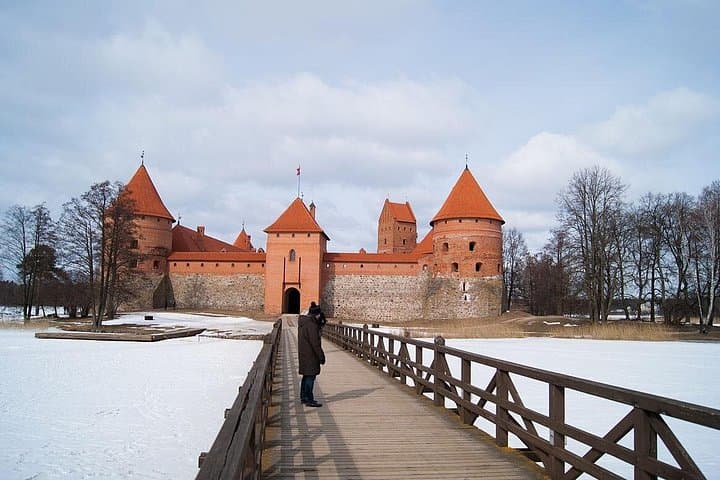
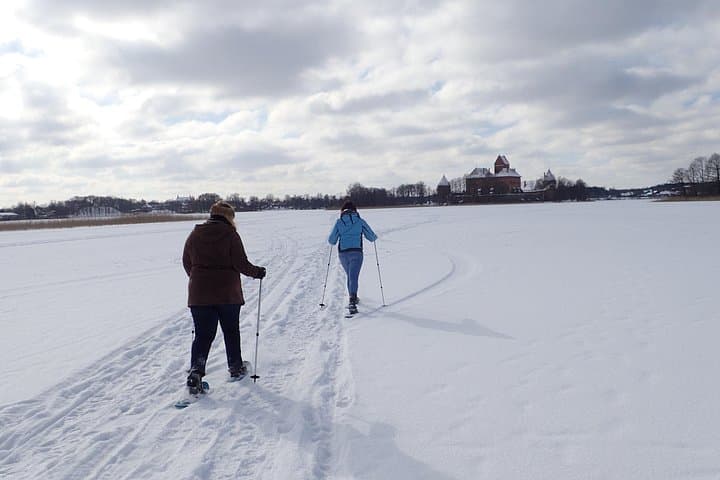
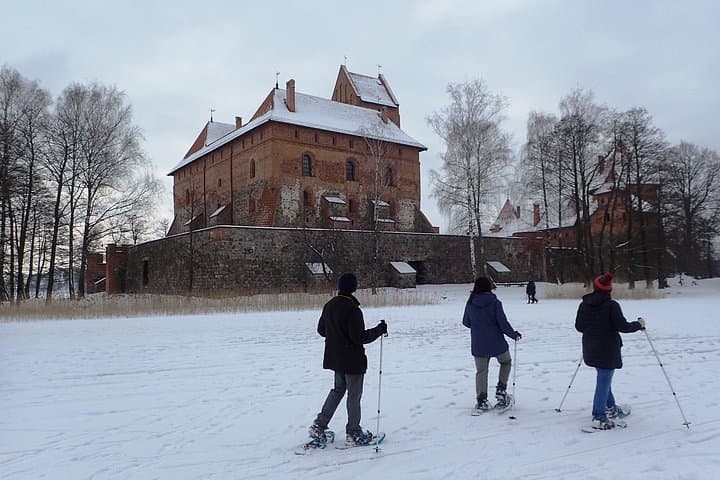
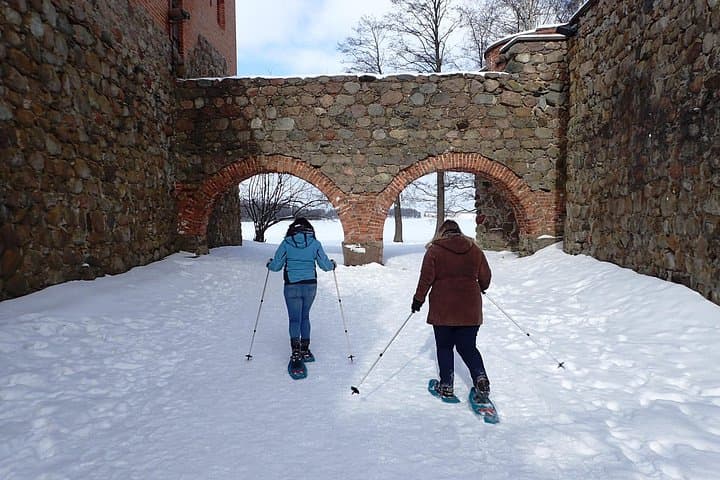
A hush settles over the peninsula as you step off the minivan: a low, cold light, snow pressing soft under newly fitted snowshoes, and the rounded silhouette of Trakai Island Castle across glassy Lake Galvė daring you to close the distance.
A hush settles over the peninsula as you step off the minivan: a low, cold light, snow pressing soft under newly fitted snowshoes, and the rounded silhouette of Trakai Island Castle across glassy Lake Galvė daring you to close the distance.
The route threads forest and meadow, then climbs to rim views over the Varnekai Bog—peat and water lenses that record glacial history and still hold cold air like a pocket watch. Trakai Castle, a 14th-century red-brick stronghold built by the Grand Dukes of Lithuania, punctuates the skyline; across the shore, Uzutrakis Manor offers 19th-century manor-house geometry against winter trees. The area’s cultural fingerprint includes the Karaim community, whose culinary and architectural traces remain local touchstones.
Geology here is post-glacial: kettle lakes and bogs formed as ice retreated, leaving varied terrain that snowshoes make accessible. Wildlife—tracks of elk and the flash of a white-tailed eagle—offers quiet encounters if you move deliberately.
Practical guide: expect roughly six hours total with about three hours of walking on moderate terrain—forest tracks, frozen shorelines and boardwalks over bog edges. Dress in breathable insulating layers, waterproof boots and gaiters; the operator supplies snowshoes, poles and hot tea plus a guide. Start mid-morning for better light and firmer snow; keep to marked routes to protect peatland. Hydrate before and during, carry a compact emergency layer, and respect cultural sites by keeping noise low.
This is an accessible winter adventure: deliberate, scenic, and grounded in regional history—ideal for walkers who want a measured dose of cold, landscape and heritage.