THE ADVENTURE COLLECTIVE® · Independent discovery and booking for outdoor travel

Step into Kananaskis winter on a guided 2-hour snowshoe trek from Nakiska. Learn valley history, spot wildlife, and move efficiently across firm snow with a professional guide and provided snowshoes.
Step into Kananaskis winter on a guided 2-hour snowshoe trek from Nakiska. Learn valley history, spot wildlife, and move efficiently across firm snow with a professional guide and provided snowshoes.
A wind-sketched ridge of grey pines frames the trail as you click into rented snowshoes and step onto the thick winter crust. The snowpack gives beneath each stride, then holds — the terrain daring you to keep pace. In this guided 2-hour outing from Nakiska, small groups move deliberately through quiet forest pockets and open glades where breath fogs in the cold and the valley’s bones are visible in exposed rock and ridge lines.
Verified experiences and guided adventures in the surrounding area.
Operated by Kananaskis Outfitters · Kananaskis Village, Alberta
A wind-sketched ridge of grey pines frames the trail as you click into rented snowshoes and step onto the thick winter crust. The snowpack gives beneath each stride, then holds — the terrain daring you to keep pace. In this guided 2-hour outing from Nakiska, small groups move deliberately through quiet forest pockets and open glades where breath fogs in the cold and the valley’s bones are visible in exposed rock and ridge lines.
People have used frames strapped to boots here for millennia; the tour notes how Indigenous peoples and later European trappers relied on similar tools to travel across deep winters. Geology shows itself in folded sedimentary cliffs and talus slopes that trace the collision of ancient seas and mountain-building forces. Culture in Kananaskis today is pragmatic: respect wildlife, leave no trace, and expect sudden weather shifts. Nakiska itself was developed for the 1988 Winter Olympics and remains a gateway for low-elevation alpine recreation.
Practically: arrive in thermal boots or rent theirs, layer breathable fabrics, and bring sunglasses — the sun off snow is intense. Guides carry hot beverage and cookies; expect conversational history, basic snowshoe technique, and wildlife-spotting pauses. Tracks in the snow tell stories of deer, fox, and occasionally bighorn sheep; keep distance and warm hands.
Timing mid-morning or mid-afternoon avoids the coldest hours; the route is family-friendly (recommended 6+), but younger children may need carrying at times. Dress warmer than you think, hydrate, and let the guide set the pace — the day’s memorable bits are the quiet stretches where the valley seems to exhale.
easy.
2 hours.
Suitable for most activity levels; basic cardiovascular fitness and balance for walking on varied snow required.
The tour is 2 hours with a relaxed, interpretive pace; guides stop for instruction and wildlife/landscape observations.
Snowshoes are provided; the operator has a limited number of winter boots for rent—bringing your own insulated winter boots is recommended.
Recommended for ages 6 and up; younger children are welcome but parents should expect to carry small children for portions of the tour.
All sales are final with no refunds; trips may be cancelled by the operator if minimum participant numbers aren’t met.
Indigenous peoples used snow-travel techniques here for generations; Nakiska was later built for the 1988 Winter Olympics and opened the valley to organized winter recreation.
Stay on established routes, avoid disturbing wildlife during winter energy-stress months, and pack out all waste to protect fragile alpine ecosystems.
Kananaskis Outfitters operates guided outdoor trips and adventures with an emphasis on safety, stewardship, and memorable experiences.
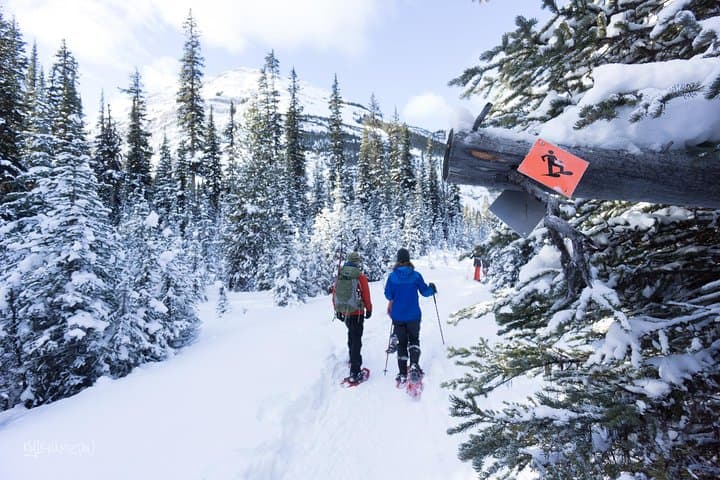
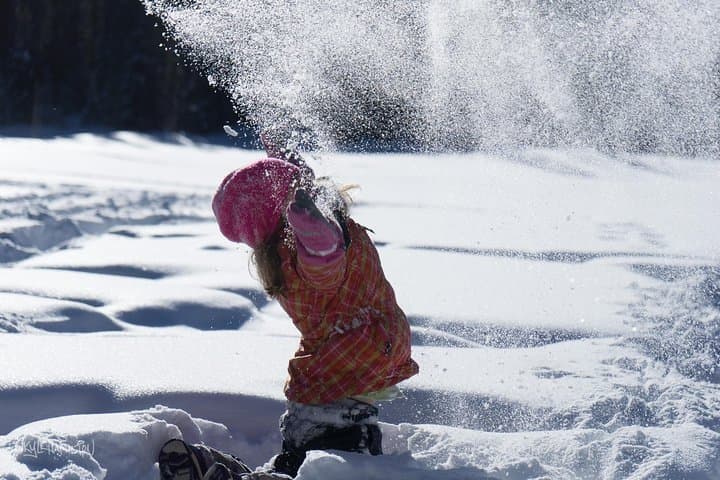
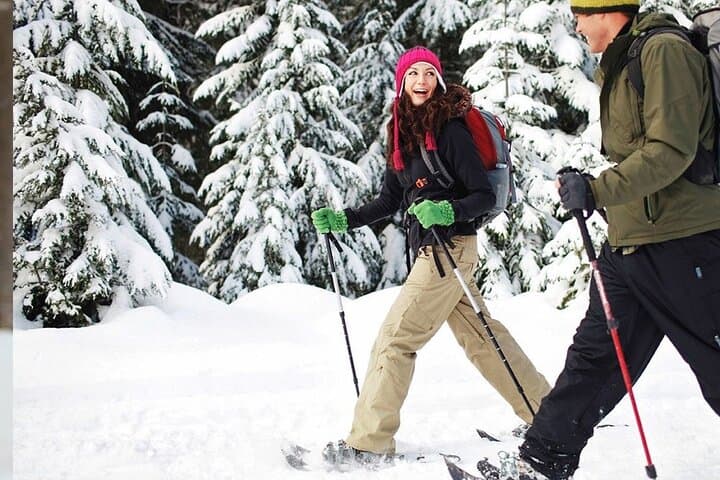
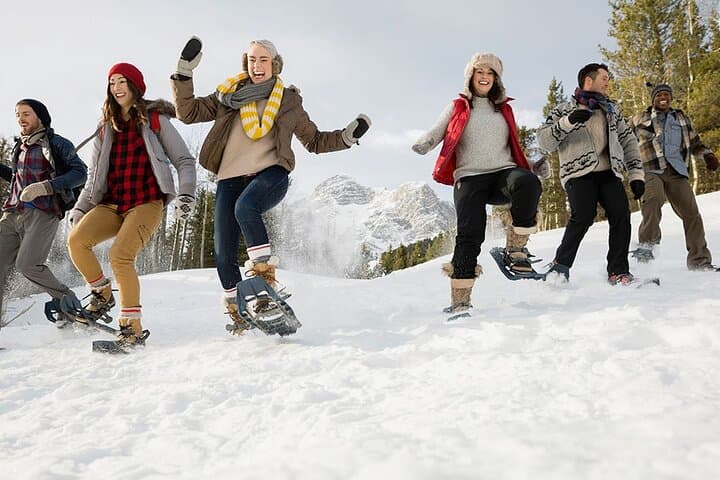
A wind-sketched ridge of grey pines frames the trail as you click into rented snowshoes and step onto the thick winter crust. The snowpack gives beneath each stride, then holds — the terrain daring you to keep pace. In this guided 2-hour outing from Nakiska, small groups move deliberately through quiet forest pockets and open glades where breath fogs in the cold and the valley’s bones are visible in exposed rock and ridge lines.
A wind-sketched ridge of grey pines frames the trail as you click into rented snowshoes and step onto the thick winter crust. The snowpack gives beneath each stride, then holds — the terrain daring you to keep pace. In this guided 2-hour outing from Nakiska, small groups move deliberately through quiet forest pockets and open glades where breath fogs in the cold and the valley’s bones are visible in exposed rock and ridge lines.
People have used frames strapped to boots here for millennia; the tour notes how Indigenous peoples and later European trappers relied on similar tools to travel across deep winters. Geology shows itself in folded sedimentary cliffs and talus slopes that trace the collision of ancient seas and mountain-building forces. Culture in Kananaskis today is pragmatic: respect wildlife, leave no trace, and expect sudden weather shifts. Nakiska itself was developed for the 1988 Winter Olympics and remains a gateway for low-elevation alpine recreation.
Practically: arrive in thermal boots or rent theirs, layer breathable fabrics, and bring sunglasses — the sun off snow is intense. Guides carry hot beverage and cookies; expect conversational history, basic snowshoe technique, and wildlife-spotting pauses. Tracks in the snow tell stories of deer, fox, and occasionally bighorn sheep; keep distance and warm hands.
Timing mid-morning or mid-afternoon avoids the coldest hours; the route is family-friendly (recommended 6+), but younger children may need carrying at times. Dress warmer than you think, hydrate, and let the guide set the pace — the day’s memorable bits are the quiet stretches where the valley seems to exhale.