THE ADVENTURE COLLECTIVE® · Independent discovery and booking for outdoor travel

Walk the Shimamui Coast by snowshoe and watch the famous Shakotan Blue Sea meet dramatic columnar cliffs. This four-hour guided winter trek combines accessible snow travel with coastal geology, wildlife viewing and lighthouse panoramas.
Walk the Shimamui Coast by snowshoe and watch the famous Shakotan Blue Sea meet dramatic columnar cliffs. This four-hour guided winter trek combines accessible snow travel with coastal geology, wildlife viewing and lighthouse panoramas.
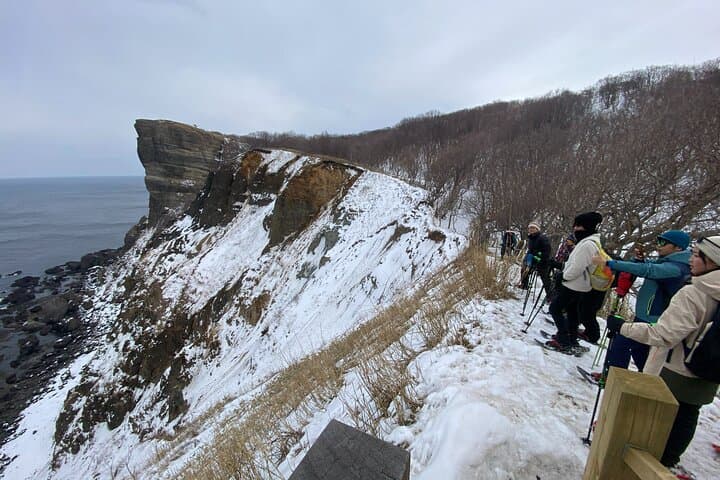
Gray winter sky, wind off the Sea of Japan and a wide, cobalt stretch of water that seems to push back against the cliffs — that’s the first impression on the Cape Shakotan snowshoe walk.
Verified experiences and guided adventures in the surrounding area.
Operated by JTB Hokkaido · Shakotan, Hokkaido
Gray winter sky, wind off the Sea of Japan and a wide, cobalt stretch of water that seems to push back against the cliffs — that’s the first impression on the Cape Shakotan snowshoe walk.
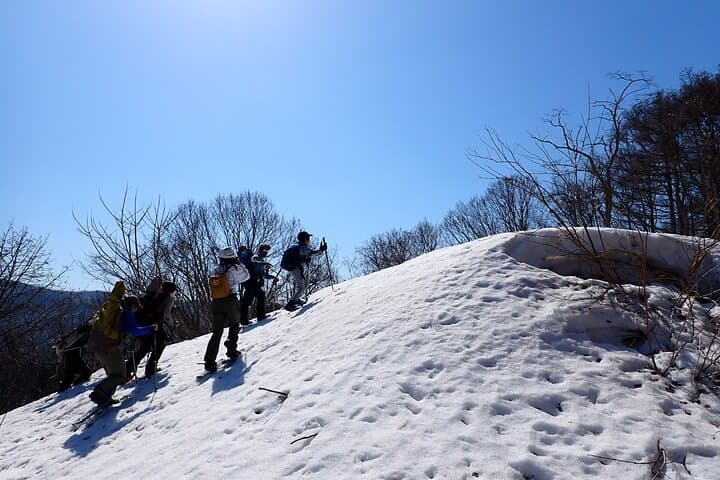
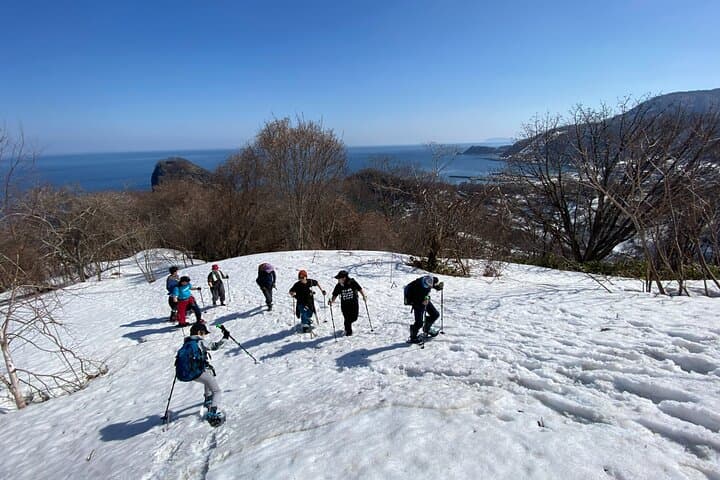
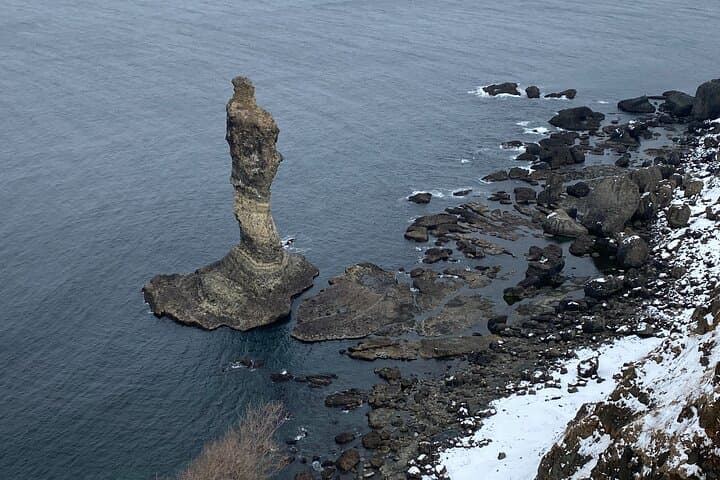
You meet at SHAKOMARU BASE and move by short transfer to the Shimamui Coast. Guides fit you with snowshoes and poles, run a brief technique lesson, then lead a roughly 3.5 km one-way traverse across compacted snow and coastal ridgelines. The route threads past columnar-jointed cliffs and oddly shaped stacks such as Jyorokkoiwa while Demisaki Observatory and its lighthouse punctuate the skyline.
Geology is on display: slow-cooled lava flows formed the regular pillar-like joints visible where cliffs meet surf. Culturally, fishing villages on the Shakotan Peninsula have long relied on these seas; in winter the coastline reads like a natural history page — seals hauled out on shore, sea eagles wheeling above, and flocks of cormorants and gulls riding the thermals.
The experience balances visual payoff with steady exertion; expect 4 hours total, frequent stops for photos and observation, and a return to the base where a hot-spring option often awaits. Guides adapt pace for beginners, but cold winds and changing visibility demand preparation.
Practical essentials: layered, windproof insulation, traction-aware footwear, and enough water and snacks for a half-day outing. Time your trip for clear weather windows to get the signature Shakotan blue; otherwise the sea can fade to pewter.
moderate.
4 hours.
Light to moderate fitness — able to walk 3–4 km over packed snow with periodic elevation change.
Yes; guides provide snowshoeing instruction and adapt pace—basic mobility and willingness to walk in snow are sufficient.
Coastal Hokkaido winter can be very cold with strong winds—layer a moisture-wicking base, insulating midlayer and windproof outer shell; bring gloves and a warm hat.
Wildlife sightings (Steller's sea eagles, seals, cormorants) are common in winter but not guaranteed; sightings depend on weather and timing.
Most operators provide snowshoes and poles; check ahead if you prefer to bring your own to ensure compatibility and fitting time.
Shakotan's coastline is part of a national park and a Hokkaido Heritage Site, recognized for its developed sea cliffs and unique coastal geology.
Stay on guided routes and avoid disturbing shorebirds and seals; pack out all waste and follow guide instructions to protect fragile winter habitats.
JTB Hokkaido operates guided outdoor trips and adventures with an emphasis on safety, stewardship, and memorable experiences.
Gray winter sky, wind off the Sea of Japan and a wide, cobalt stretch of water that seems to push back against the cliffs — that’s the first impression on the Cape Shakotan snowshoe walk.
Gray winter sky, wind off the Sea of Japan and a wide, cobalt stretch of water that seems to push back against the cliffs — that’s the first impression on the Cape Shakotan snowshoe walk.
You meet at SHAKOMARU BASE and move by short transfer to the Shimamui Coast. Guides fit you with snowshoes and poles, run a brief technique lesson, then lead a roughly 3.5 km one-way traverse across compacted snow and coastal ridgelines. The route threads past columnar-jointed cliffs and oddly shaped stacks such as Jyorokkoiwa while Demisaki Observatory and its lighthouse punctuate the skyline.
Geology is on display: slow-cooled lava flows formed the regular pillar-like joints visible where cliffs meet surf. Culturally, fishing villages on the Shakotan Peninsula have long relied on these seas; in winter the coastline reads like a natural history page — seals hauled out on shore, sea eagles wheeling above, and flocks of cormorants and gulls riding the thermals.
The experience balances visual payoff with steady exertion; expect 4 hours total, frequent stops for photos and observation, and a return to the base where a hot-spring option often awaits. Guides adapt pace for beginners, but cold winds and changing visibility demand preparation.
Practical essentials: layered, windproof insulation, traction-aware footwear, and enough water and snacks for a half-day outing. Time your trip for clear weather windows to get the signature Shakotan blue; otherwise the sea can fade to pewter.