THE ADVENTURE COLLECTIVE® · Independent discovery and booking for outdoor travel

A short guided snowshoe loop on the frozen shores of Johnson Lake—perfect for first-timers and seasoned winter walkers alike. Expect forested trails, lake views, wildlife tracks, and a sweet finish with maple taffy on snow.
A short guided snowshoe loop on the frozen shores of Johnson Lake—perfect for first-timers and seasoned winter walkers alike. Expect forested trails, lake views, wildlife tracks, and a sweet finish with maple taffy on snow.
You step out of the van into a hush that only a high mountain winter can manufacture. The air bites clean, the trees hold their breath under white coats, and the surface of Johnson Lake is a blank, frozen mirror edged by ice-sculpted rock. Your guide fits you with snowshoes and poles, points toward a low band of pines, and leads the group onto a shoreline trail where the Rockies keep watch.
Verified experiences and guided adventures in the surrounding area.
Operated by Explore Banff Tours & Transfers · Banff, Alberta
You step out of the van into a hush that only a high mountain winter can manufacture. The air bites clean, the trees hold their breath under white coats, and the surface of Johnson Lake is a blank, frozen mirror edged by ice-sculpted rock. Your guide fits you with snowshoes and poles, points toward a low band of pines, and leads the group onto a shoreline trail where the Rockies keep watch.
The route follows an easy 3.5 km loop around Johnson Lake with only about 40–60 m of cumulative elevation gain—small numbers, but in winter they translate to steady, satisfying work. The lake itself is a product of glacial carving and Pleistocene ice; the curved headwalls and polished bedrock around you read like pages from the region’s geological past. Indigenous peoples traveled these valleys for millennia, and later European explorers and early tourists helped open Banff as Canada’s first national park in 1885—an origin that still shapes land-use and visitor customs today.
On the snow, wildlife is present in subtle ways: a hare’s track zigzags between trees, and the guide pauses to identify spruce bark stripped by foraging elk. The forest feels alive with motion you can’t hear—pines creaking, wind chiseling the ridge line—and the lake seems to dare you to take it all in. Cultural flourishes anchor the outing: the guide’s stories about winter ecology are paired with a final local ritual—maple taffy poured on fresh snow, a sticky, smoky-sweet Canadian finish that turns cold fingers into a small celebration.
Practically, this is an accessible introduction to winter backcountry movement. Snowshoes and poles are provided, and the group moves at an easy pace suitable for novice snowshoers who have basic balance and moderate fitness. The tour runs about 4.5 hours total (including transfers), and National Park entry fees and GST are included. Expect forested single-track, packed snow on lakeside flats, and occasional icy patches—traction and poles make a noticeable difference.
Plan to layer: temperatures can swing quickly, and wind on the exposed shoreline feels colder than still air in town. Bring insulated, waterproof boots, warm gloves, and a closed water bottle (hydration in winter is nonnegotiable). Cameras fare best at the start and end of the loop—golden light hits the surrounding peaks in the morning and late afternoon.
This outing is ideal when you want a short, interpretive winter walk with a local guide, some quiet alpine scenery, and a small, memorable Canadian culinary twist—maple taffy on snow. It’s winter travel with low technical demands but high sensory payoff.
moderate.
3–4.5 hours.
Moderate fitness; you should be comfortable walking 3–5 km on uneven snowy terrain and managing short climbs.
No—this guided loop is designed for beginners; guides teach technique and adjust pace to the group.
Price includes snowshoe and pole rental, guide service, National Park entry fees, GST, transportation from select Banff hotels, and the maple taffy treat.
Expect sub-freezing temperatures; dress in moisture-wicking base layers, an insulating midlayer, and a windproof shell with insulated boots and warm gloves.
This tour is not suitable for children under 12 according to the operator—check with the supplier for age exceptions or family programs.
Yes—pickup from Banff hotels is provided; be ready in the lobby five minutes before your scheduled time.
You may spot tracks and occasionally elk, deer, or small mammals; sightings of large predators are rare but possible—your guide will cover wildlife safety.
Johnson Lake lies within Banff National Park, Canada’s oldest national park (established 1885); the area’s trails and tourism history grew with early railway access and alpine exploration.
Stay on designated trails to protect fragile subalpine vegetation; Banff enforces strict food and wildlife rules—pack out waste and never feed animals.
Explore Banff Tours & Transfers operates guided outdoor trips and adventures with an emphasis on safety, stewardship, and memorable experiences.
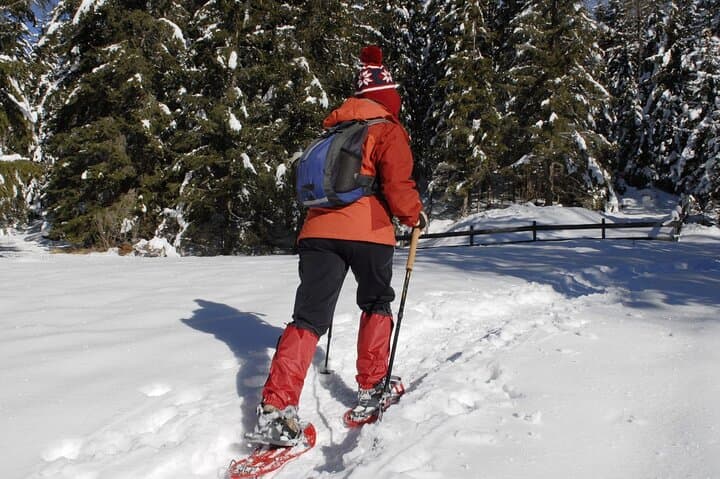
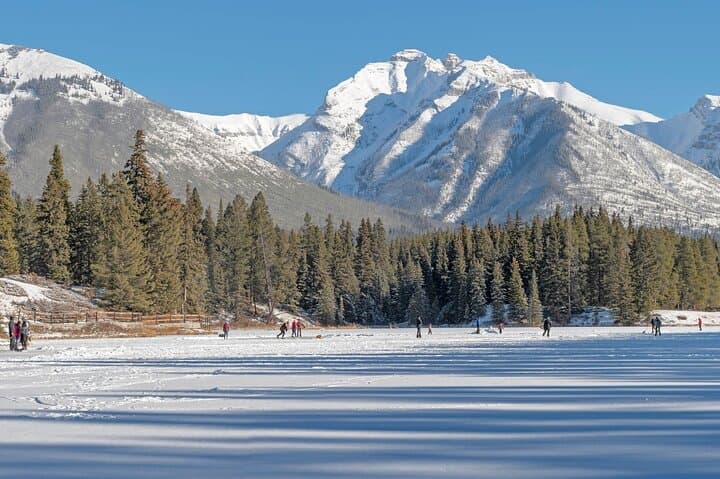
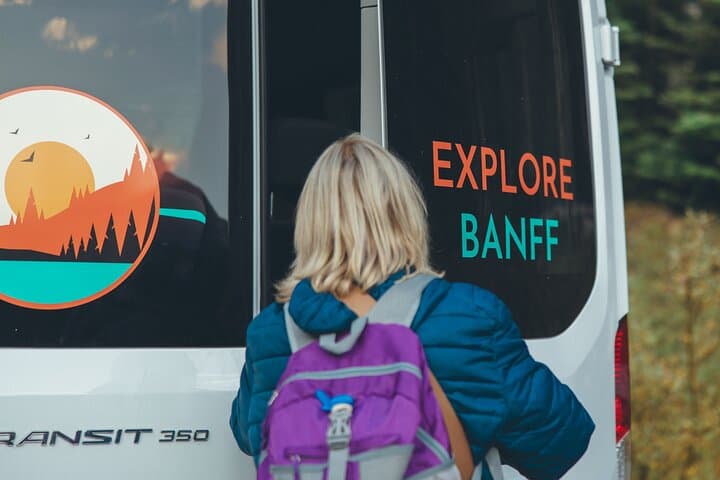
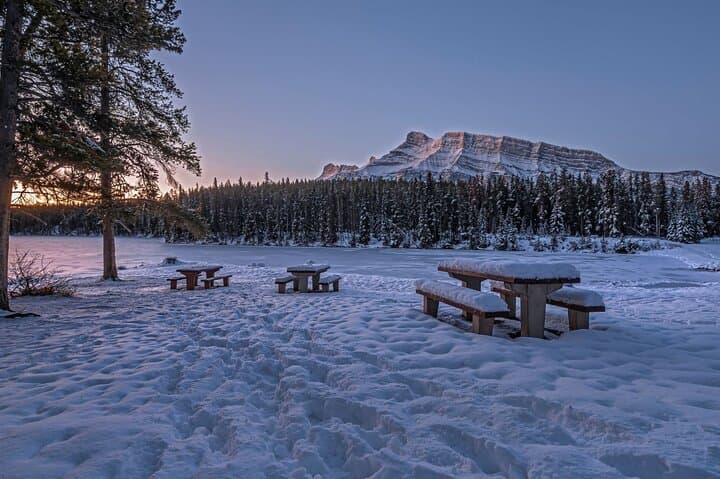
You step out of the van into a hush that only a high mountain winter can manufacture. The air bites clean, the trees hold their breath under white coats, and the surface of Johnson Lake is a blank, frozen mirror edged by ice-sculpted rock. Your guide fits you with snowshoes and poles, points toward a low band of pines, and leads the group onto a shoreline trail where the Rockies keep watch.
You step out of the van into a hush that only a high mountain winter can manufacture. The air bites clean, the trees hold their breath under white coats, and the surface of Johnson Lake is a blank, frozen mirror edged by ice-sculpted rock. Your guide fits you with snowshoes and poles, points toward a low band of pines, and leads the group onto a shoreline trail where the Rockies keep watch.
The route follows an easy 3.5 km loop around Johnson Lake with only about 40–60 m of cumulative elevation gain—small numbers, but in winter they translate to steady, satisfying work. The lake itself is a product of glacial carving and Pleistocene ice; the curved headwalls and polished bedrock around you read like pages from the region’s geological past. Indigenous peoples traveled these valleys for millennia, and later European explorers and early tourists helped open Banff as Canada’s first national park in 1885—an origin that still shapes land-use and visitor customs today.
On the snow, wildlife is present in subtle ways: a hare’s track zigzags between trees, and the guide pauses to identify spruce bark stripped by foraging elk. The forest feels alive with motion you can’t hear—pines creaking, wind chiseling the ridge line—and the lake seems to dare you to take it all in. Cultural flourishes anchor the outing: the guide’s stories about winter ecology are paired with a final local ritual—maple taffy poured on fresh snow, a sticky, smoky-sweet Canadian finish that turns cold fingers into a small celebration.
Practically, this is an accessible introduction to winter backcountry movement. Snowshoes and poles are provided, and the group moves at an easy pace suitable for novice snowshoers who have basic balance and moderate fitness. The tour runs about 4.5 hours total (including transfers), and National Park entry fees and GST are included. Expect forested single-track, packed snow on lakeside flats, and occasional icy patches—traction and poles make a noticeable difference.
Plan to layer: temperatures can swing quickly, and wind on the exposed shoreline feels colder than still air in town. Bring insulated, waterproof boots, warm gloves, and a closed water bottle (hydration in winter is nonnegotiable). Cameras fare best at the start and end of the loop—golden light hits the surrounding peaks in the morning and late afternoon.
This outing is ideal when you want a short, interpretive winter walk with a local guide, some quiet alpine scenery, and a small, memorable Canadian culinary twist—maple taffy on snow. It’s winter travel with low technical demands but high sensory payoff.