THE ADVENTURE COLLECTIVE® · Independent discovery and booking for outdoor travel

Walk across a living glacier from Fairbanks to an ice cave glowing with blue ice. This guided, family‑friendly snowshoe hike covers about 1.5 miles on mostly flat terrain and includes expert briefing on glacier safety and regional geology.
Walk across a living glacier from Fairbanks to an ice cave glowing with blue ice. This guided, family‑friendly snowshoe hike covers about 1.5 miles on mostly flat terrain and includes expert briefing on glacier safety and regional geology.
A low, steely light stretches across the tundra as the van leaves Fairbanks and the Trans‑Alaska Pipeline becomes a ribbon beside the highway. The drive south opens to barren slopes and distant peaks of the Alaska Range; wind-polished snowfields reflect a pale sky while the glacier ahead waits like a living cathedral of ice.
Verified experiences and guided adventures in the surrounding area.
Operated by CoveredGround Tours · Fairbanks, Alaska
A low, steely light stretches across the tundra as the van leaves Fairbanks and the Trans‑Alaska Pipeline becomes a ribbon beside the highway. The drive south opens to barren slopes and distant peaks of the Alaska Range; wind-polished snowfields reflect a pale sky while the glacier ahead waits like a living cathedral of ice.
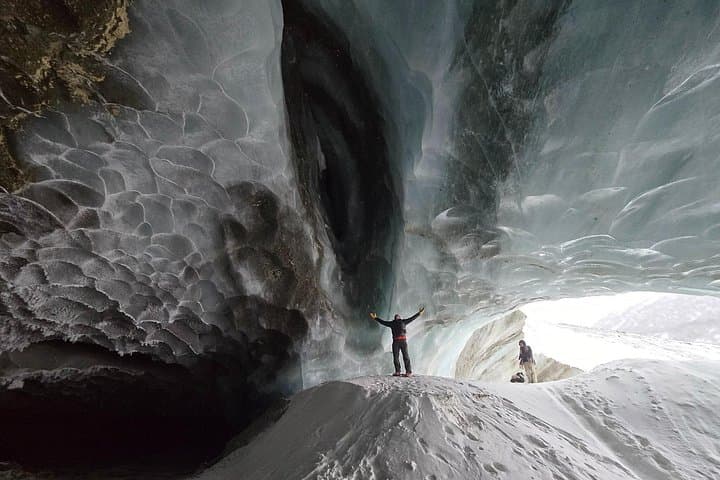
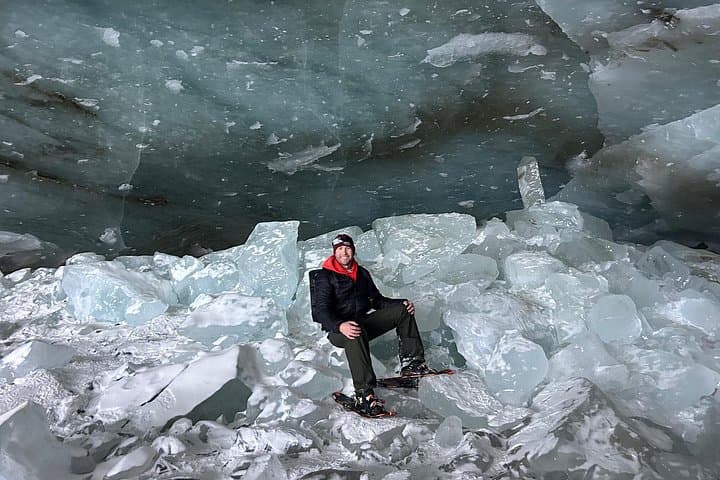
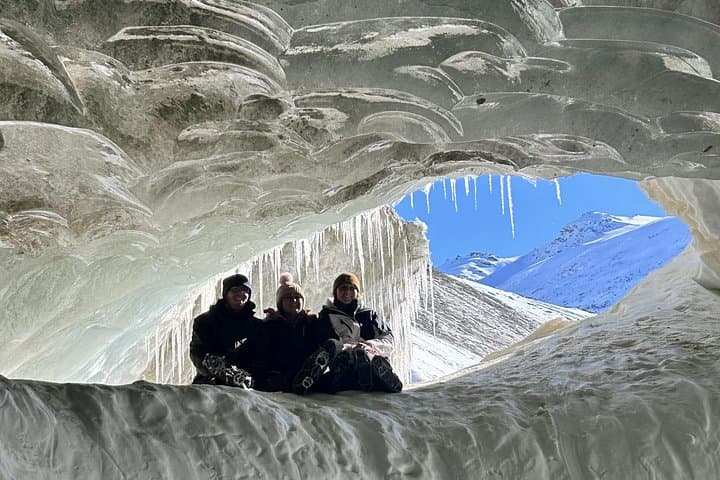
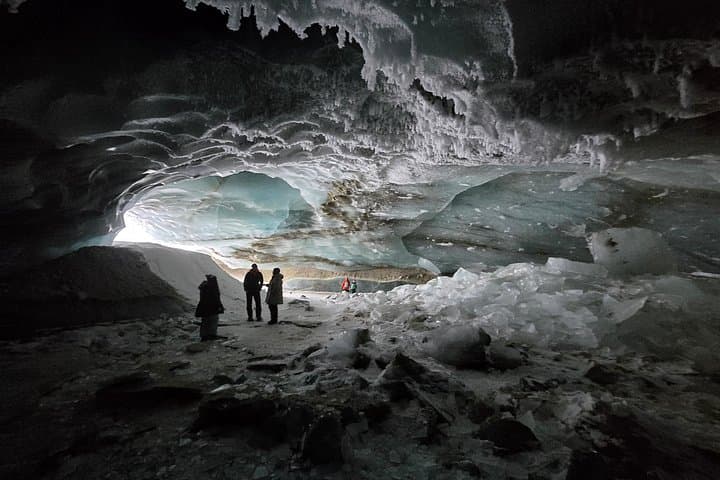
Castner Glacier is part of the greater glacial systems that carved interior Alaska; its ice layers record centuries of snowfall and seasonal melt. The guided route crosses roughly 1.5 miles of glacier and moraine—mostly flat, occasionally uneven—and terminates at an ice cave whose walls glow in deep aquamarine where sunlight filters through compacted ice. Guides cover local history, regional geology, and stories of pioneer routes along the Alaska‑Canadian (AlCan) corridor and nearby Santa Claus House in North Pole.
Practical planning centers on cold-weather readiness. Trips run as full‑day outings from Fairbanks (about 4–8 hours total including transit), so dress in insulated, moisture‑wicking layers and bring footwear compatible with snowshoes or microspikes. Expect wind and temperatures well below freezing; the guide provides snowshoes, poles, and bottled water. Photography windows are short—blue ice shifts and caves can change seasonally—so move deliberately and listen to safety briefings: glacier caves are dynamic and accessible only with an experienced leader and a BLM permit.
Best for outdoorspeople comfortable with winter travel, this excursion delivers a compact, high-reward encounter with Alaska’s icy interior: up close, tactile, and governed by raw mountain weather.
moderate.
6–8 hours (includes transit).
Suitable for people in good general health who can hike 1.5 miles on snow and handle cold conditions; low impact but sustained exposure to cold.
The guided glacier walk across ice and moraine is about 1.5 miles roundtrip, typically over mostly flat terrain but with uneven surfaces.
The tour is family‑friendly but requires moderate fitness and cold‑weather tolerance; consult the operator about specific age or health concerns.
Ice caves are dynamic and seasonal—guides choose safe, accessible caves when conditions permit; caves can change or close due to melt and weather.
Tours can be canceled for safety in extreme cold, high winds, or unstable glacier conditions; the operator requires cancellations 24 hours prior for full refunds per policy.
The glaciers around the Tanana Valley record Pleistocene and Holocene ice advances; nearby routes were used by prospectors and later highway builders linking interior Alaska.
Glacial features are sensitive to warming and foot traffic—stay on guided routes, pack out waste, and respect seasonal closures to protect ice and fragile tundra.
CoveredGround Tours operates guided outdoor trips and adventures with an emphasis on safety, stewardship, and memorable experiences.
A low, steely light stretches across the tundra as the van leaves Fairbanks and the Trans‑Alaska Pipeline becomes a ribbon beside the highway. The drive south opens to barren slopes and distant peaks of the Alaska Range; wind-polished snowfields reflect a pale sky while the glacier ahead waits like a living cathedral of ice.
A low, steely light stretches across the tundra as the van leaves Fairbanks and the Trans‑Alaska Pipeline becomes a ribbon beside the highway. The drive south opens to barren slopes and distant peaks of the Alaska Range; wind-polished snowfields reflect a pale sky while the glacier ahead waits like a living cathedral of ice.
Castner Glacier is part of the greater glacial systems that carved interior Alaska; its ice layers record centuries of snowfall and seasonal melt. The guided route crosses roughly 1.5 miles of glacier and moraine—mostly flat, occasionally uneven—and terminates at an ice cave whose walls glow in deep aquamarine where sunlight filters through compacted ice. Guides cover local history, regional geology, and stories of pioneer routes along the Alaska‑Canadian (AlCan) corridor and nearby Santa Claus House in North Pole.
Practical planning centers on cold-weather readiness. Trips run as full‑day outings from Fairbanks (about 4–8 hours total including transit), so dress in insulated, moisture‑wicking layers and bring footwear compatible with snowshoes or microspikes. Expect wind and temperatures well below freezing; the guide provides snowshoes, poles, and bottled water. Photography windows are short—blue ice shifts and caves can change seasonally—so move deliberately and listen to safety briefings: glacier caves are dynamic and accessible only with an experienced leader and a BLM permit.
Best for outdoorspeople comfortable with winter travel, this excursion delivers a compact, high-reward encounter with Alaska’s icy interior: up close, tactile, and governed by raw mountain weather.