THE ADVENTURE COLLECTIVE® · Independent discovery and booking for outdoor travel

Grip the throttle and cross the ice-capped flank of Eyjafjallajökull, a three-hour snowmobile tour that pairs big views with volcanic history. Helmets and insulated gear are supplied—bring sturdy boots and layered clothing for shifting weather.
Grip the throttle and cross the ice-capped flank of Eyjafjallajökull, a three-hour snowmobile tour that pairs big views with volcanic history. Helmets and insulated gear are supplied—bring sturdy boots and layered clothing for shifting weather.
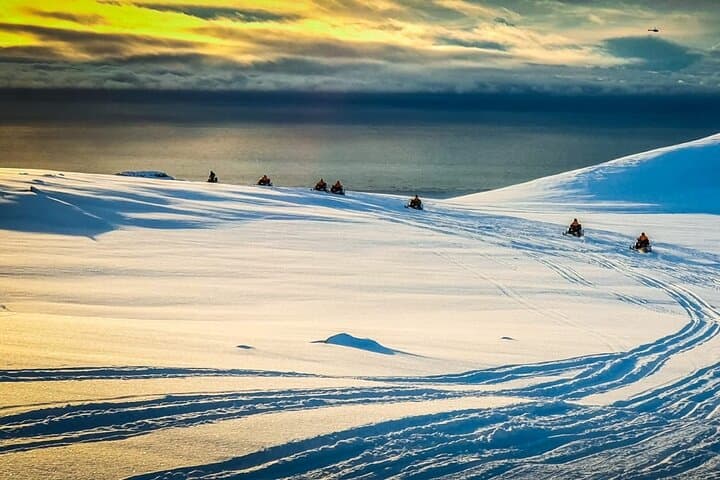
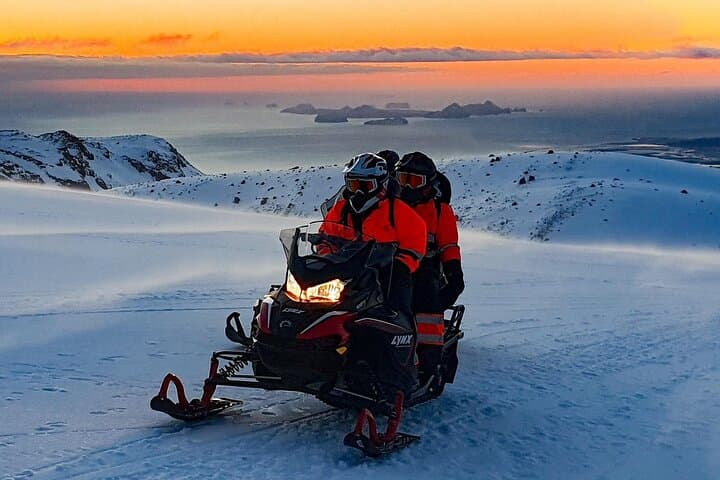
You push through a cold rush of air and the glacier answers with a low, vast silence. Tracks curl across a white field that seems to stretch to the ocean; the machine hums beneath you and the ice under Eyjafjallajökull catches the light, sending a hard glare toward the Westman Islands and the ragged line of the south coast.
Verified experiences and guided adventures in the surrounding area.
Operated by Southcoast Adventure · Vík, Southern Region
You push through a cold rush of air and the glacier answers with a low, vast silence. Tracks curl across a white field that seems to stretch to the ocean; the machine hums beneath you and the ice under Eyjafjallajökull catches the light, sending a hard glare toward the Westman Islands and the ragged line of the south coast.
This ride sits on the southern flank of Eyjafjallajökull, the glacier that caps a restless volcano made famous by its 2010 eruption and the ash cloud that paused international air traffic. The glacier rests on layered volcanic deposits—black ash, older lava flows and compressed snow—so the terrain is a mix of compacted snow, wind-sculpted sastrugi and occasional exposed moraine. Culturally, the south coast’s small farms and fishing communities have long read the land for signs of change; local guides will point out scars from past eruptions and the high point known as Goðasteinn (1,666 m).
Practicalities are straightforward: tours depart from Brúbasecamp (Road 249, about 3 km from Seljalandsfoss) and run about three hours. Helmets, balaclavas and insulated coveralls are provided; bring a waterproof outer layer, sturdy boots, sunglasses or goggles, and extra warm base layers. Expect variable conditions—clear panoramas in calm weather or wind-driven whiteouts—so book a morning slot for steadier light and quieter wind. Follow your guide, keep to group speed, and respect closed or marked zones on the ice; the glacier moves and changes, and your safety depends on local knowledge.
moderate.
3 hours.
Suitable for most fitness levels; you should be able to mount/dismount a snowmobile, handle brief standing or leaning, and tolerate cold conditions for several hours.
No—tours are designed for first-time riders; guides provide instruction and you can usually ride tandem with an experienced driver if preferred.
Age limits vary; infant seats are available per the operator but check at booking—children often ride as passengers rather than drivers.
Glacier conditions are cold and windy; the operator supplies insulated coveralls and balaclavas, but bring warm base layers and waterproof outerwear for full comfort.
Guides route tours to avoid unstable or hazardous areas—expect interpretive stops pointing out eruption effects and safe viewpoints rather than close access to fragile features.
Eyjafjallajökull’s 2010 eruption sent ash across Europe and reshaped local deposits; the glacier lies atop layered volcanic material that records repeated eruptions.
Glacial terrain is sensitive; stay on guide-designated routes to protect ice features and avoid accelerating erosion. Climate-driven retreat is altering access—book with operators who follow low-impact practices.
Southcoast Adventure operates guided outdoor trips and adventures with an emphasis on safety, stewardship, and memorable experiences.


You push through a cold rush of air and the glacier answers with a low, vast silence. Tracks curl across a white field that seems to stretch to the ocean; the machine hums beneath you and the ice under Eyjafjallajökull catches the light, sending a hard glare toward the Westman Islands and the ragged line of the south coast.
You push through a cold rush of air and the glacier answers with a low, vast silence. Tracks curl across a white field that seems to stretch to the ocean; the machine hums beneath you and the ice under Eyjafjallajökull catches the light, sending a hard glare toward the Westman Islands and the ragged line of the south coast.
This ride sits on the southern flank of Eyjafjallajökull, the glacier that caps a restless volcano made famous by its 2010 eruption and the ash cloud that paused international air traffic. The glacier rests on layered volcanic deposits—black ash, older lava flows and compressed snow—so the terrain is a mix of compacted snow, wind-sculpted sastrugi and occasional exposed moraine. Culturally, the south coast’s small farms and fishing communities have long read the land for signs of change; local guides will point out scars from past eruptions and the high point known as Goðasteinn (1,666 m).
Practicalities are straightforward: tours depart from Brúbasecamp (Road 249, about 3 km from Seljalandsfoss) and run about three hours. Helmets, balaclavas and insulated coveralls are provided; bring a waterproof outer layer, sturdy boots, sunglasses or goggles, and extra warm base layers. Expect variable conditions—clear panoramas in calm weather or wind-driven whiteouts—so book a morning slot for steadier light and quieter wind. Follow your guide, keep to group speed, and respect closed or marked zones on the ice; the glacier moves and changes, and your safety depends on local knowledge.