THE ADVENTURE COLLECTIVE® · Independent discovery and booking for outdoor travel

Race across snowy bowls on a late-model snowmobile, then slow to a walk on snowshoes beneath the face of Exit Glacier. This four-hour dual adventure through Kenai Fjords National Park pairs speed with stillness for a winterly view of Alaska’s ice-sculpted coast.
Race across snowy bowls on a late-model snowmobile, then slow to a walk on snowshoes beneath the face of Exit Glacier. This four-hour dual adventure through Kenai Fjords National Park pairs speed with stillness for a winterly view of Alaska’s ice-sculpted coast.
The first breath of Alaskan winter is a physical thing — sharp, cold, and immediate. You step from the company office in Seward into a world hushed by snow: spruce boughs sag under powder, the air tastes metallic, and the silhouette of Exit Glacier slices the sky. For the next four hours the day alternates between speed and silence. On a late-model snowmobile you push through open bowls and along cross-country trails, the machines hissing like industrial wolves. Then you swap the throttle for snowshoes, padding out across a moraine where the glacier’s face creeps toward the valley, blue ice daring you to come closer.
Verified experiences and guided adventures in the surrounding area.
Operated by Kenai Backcountry Adventures · Seward, Alaska
The first breath of Alaskan winter is a physical thing — sharp, cold, and immediate. You step from the company office in Seward into a world hushed by snow: spruce boughs sag under powder, the air tastes metallic, and the silhouette of Exit Glacier slices the sky. For the next four hours the day alternates between speed and silence. On a late-model snowmobile you push through open bowls and along cross-country trails, the machines hissing like industrial wolves. Then you swap the throttle for snowshoes, padding out across a moraine where the glacier’s face creeps toward the valley, blue ice daring you to come closer.
Kenai Fjords National Park is young in federal terms but ancient in geology. The landscape is a product of repeated ice ages; Exit Glacier itself is a visible ledger of climate—its retreat chronicled in tree lines and exposed moraine. The route taken on this dual adventure threads subalpine spruce, braided glacial streams, and finally the raw, mineral silence of the glacier forefield, a place where the land still remembers its last great shove of ice.
Culturally, Seward is a working harbor town with a long relationship to the sea and the mountains. Guides on this trip are local Alaskans who read weather and snow like a map. They bring not only machines and gear but stories: how the Harding Icefield carved the coast, where fox and moose slip through the pines, and why quieter winters mean fewer boats in the bay.
Practicalities matter here. The operator supplies helmets, goggles, insulated coveralls, gloves, and winter boots — yet layering is still essential. Expect 4 hours on tour, with roughly half the time riding and the other half moving on snowshoes near Exit Glacier. Fitness at a moderate level is needed: you'll handle a snowmobile, stand for long stretches, and hike on uneven, packed snow. Weather turns fast; plan to arrive with a charged camera, spare batteries (cold kills power), and a daypack with water and snacks. Hydrate — warm fluids are included — and keep windproof layers handy for the open runs.
Safety is straightforward but non-negotiable: listen to your guide about machine operation, stay on marked runs, and keep a respectful distance from the glacier face. Photographers will find contrast everywhere — crystalline blue ice, dark spruce, and the quick motion of machines against white fields.
This is a trip that alternates adrenaline and awe, the kind that leaves a glove-print on memory as cleanly as the tracks it makes in fresh snow.
moderate.
4 hours.
Moderate fitness: comfortable standing, short uphill walks on packed snow, and basic ability to operate or ride a snowmobile.
The operator supplies helmets, goggles, insulated coveralls, gloves, winter boots, snowshoes, trekking poles, a professional guide, and hot drinks.
Expect moderate exertion: riding is low-impact but snowshoe sections involve steady walking on packed snow and uneven moraine; travelers should be comfortable with short uphill sections.
Full refunds are available if you cancel at least 24 hours before departure; cancellations within 24 hours are not refundable.
Yes — guides provide instruction and the tour accommodates first-time riders; however, operators may set age or licensing requirements for drivers, so confirm when booking.
Absolutely — bring protective cases and spare batteries; guides will pause at scenic viewpoints but keep safety distances from the glacier face.
Synthetic or wool base layers and an insulating mid-layer are best; avoid cotton. Bring a warm hat and thin liner gloves to wear under provided gloves.
Kenai Fjords National Park was established in 1980; its coastal fjords and Exit Glacier are products of Pleistocene glaciation and ongoing ice dynamics.
Winter access limits human impact but the area remains sensitive: stay on groomed routes, pack out waste, and follow guide instructions to protect fragile alpine zones.
Kenai Backcountry Adventures operates guided outdoor trips and adventures with an emphasis on safety, stewardship, and memorable experiences.
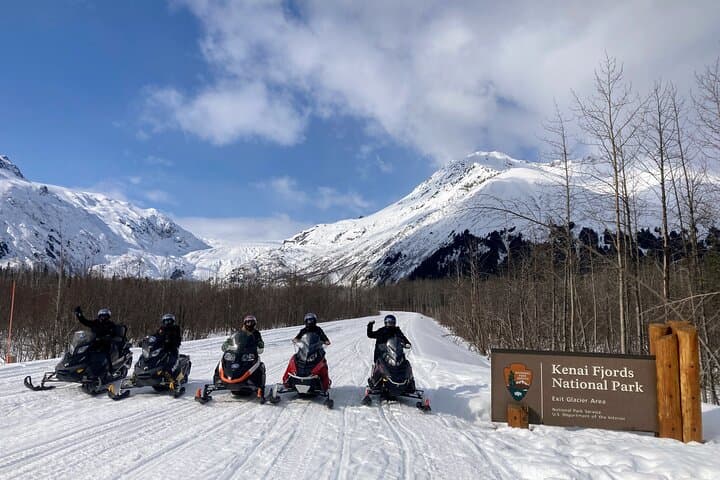
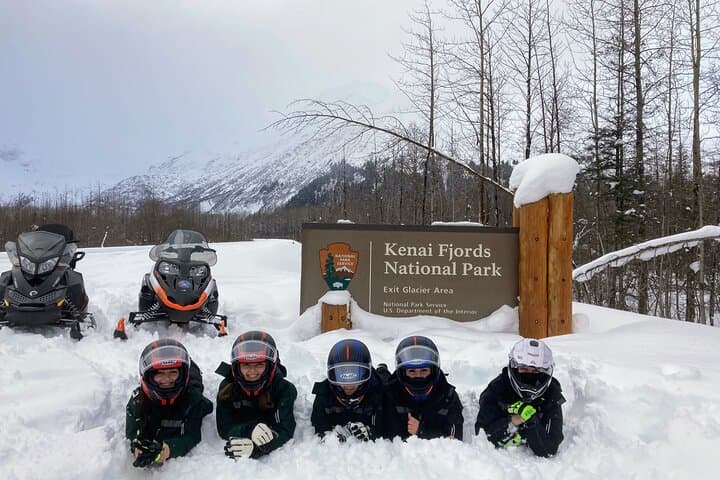
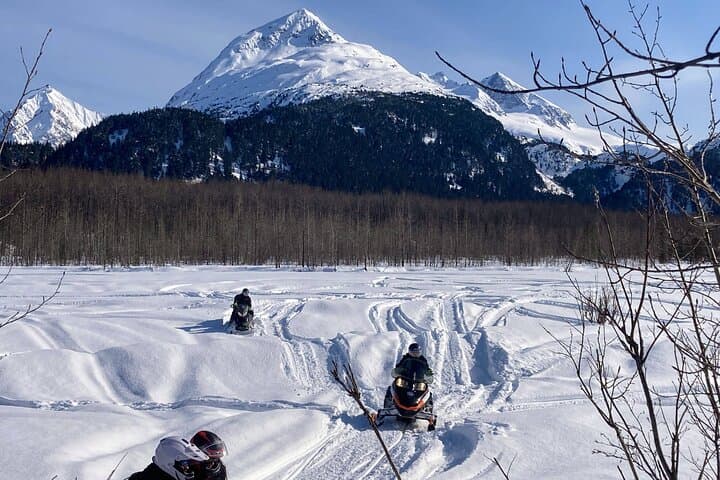
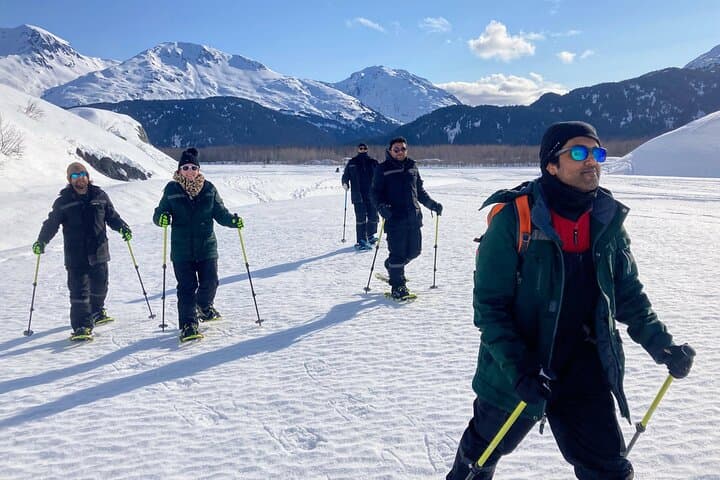
The first breath of Alaskan winter is a physical thing — sharp, cold, and immediate. You step from the company office in Seward into a world hushed by snow: spruce boughs sag under powder, the air tastes metallic, and the silhouette of Exit Glacier slices the sky. For the next four hours the day alternates between speed and silence. On a late-model snowmobile you push through open bowls and along cross-country trails, the machines hissing like industrial wolves. Then you swap the throttle for snowshoes, padding out across a moraine where the glacier’s face creeps toward the valley, blue ice daring you to come closer.
The first breath of Alaskan winter is a physical thing — sharp, cold, and immediate. You step from the company office in Seward into a world hushed by snow: spruce boughs sag under powder, the air tastes metallic, and the silhouette of Exit Glacier slices the sky. For the next four hours the day alternates between speed and silence. On a late-model snowmobile you push through open bowls and along cross-country trails, the machines hissing like industrial wolves. Then you swap the throttle for snowshoes, padding out across a moraine where the glacier’s face creeps toward the valley, blue ice daring you to come closer.
Kenai Fjords National Park is young in federal terms but ancient in geology. The landscape is a product of repeated ice ages; Exit Glacier itself is a visible ledger of climate—its retreat chronicled in tree lines and exposed moraine. The route taken on this dual adventure threads subalpine spruce, braided glacial streams, and finally the raw, mineral silence of the glacier forefield, a place where the land still remembers its last great shove of ice.
Culturally, Seward is a working harbor town with a long relationship to the sea and the mountains. Guides on this trip are local Alaskans who read weather and snow like a map. They bring not only machines and gear but stories: how the Harding Icefield carved the coast, where fox and moose slip through the pines, and why quieter winters mean fewer boats in the bay.
Practicalities matter here. The operator supplies helmets, goggles, insulated coveralls, gloves, and winter boots — yet layering is still essential. Expect 4 hours on tour, with roughly half the time riding and the other half moving on snowshoes near Exit Glacier. Fitness at a moderate level is needed: you'll handle a snowmobile, stand for long stretches, and hike on uneven, packed snow. Weather turns fast; plan to arrive with a charged camera, spare batteries (cold kills power), and a daypack with water and snacks. Hydrate — warm fluids are included — and keep windproof layers handy for the open runs.
Safety is straightforward but non-negotiable: listen to your guide about machine operation, stay on marked runs, and keep a respectful distance from the glacier face. Photographers will find contrast everywhere — crystalline blue ice, dark spruce, and the quick motion of machines against white fields.
This is a trip that alternates adrenaline and awe, the kind that leaves a glove-print on memory as cleanly as the tracks it makes in fresh snow.