THE ADVENTURE COLLECTIVE® · Independent discovery and booking for outdoor travel

Spend a private day in Nagano watching wild snow monkeys soak in a steaming onsen, explore the ancient Zenko-ji Temple, and sample Shinshu sake. This customizable tour combines an easy forest walk, cultural history, and local flavors in a single day.
Spend a private day in Nagano watching wild snow monkeys soak in a steaming onsen, explore the ancient Zenko-ji Temple, and sample Shinshu sake. This customizable tour combines an easy forest walk, cultural history, and local flavors in a single day.
Steam rises like a slow exhale from a narrow valley as you step from the vehicle into the alpine hush of Nagano’s mountains. The trail to Jigokudani Monkey Park threads through fir and beech, a thirty-minute walk of soft roots and packed earth that opens onto a gorge where snow monkeys braid their days around a naturally warm onsen.
Verified experiences and guided adventures in the surrounding area.
Operated by Smile Tours · Nagano, Nagano Prefecture
Steam rises like a slow exhale from a narrow valley as you step from the vehicle into the alpine hush of Nagano’s mountains. The trail to Jigokudani Monkey Park threads through fir and beech, a thirty-minute walk of soft roots and packed earth that opens onto a gorge where snow monkeys braid their days around a naturally warm onsen.
By midday the group moves to Zenko-ji, an understated temple in Nagano city whose broad wooden gate and dim interior date back to a foundation in the 7th century; its aisles have guided pilgrims for more than a millennium. Between those two notes — geothermal wildness and living history — the tour folds in a local sake tasting: short pours of Shinshu rice wine, cooled by mountain spring water that defines the region’s flavor.
Geology here is active and visible: volcanic heat below the valley feeds the hot springs, while the surrounding volcanic soils support dense forests and clear streams. Culturally, Zenko-ji remains a community center — nearby stalls serve simple bowls and rice crackers, and chefs lean on local apples and buckwheat in their kitchens.
Practical guidance: expect roughly six hours on a private vehicle itinerary, a 30–40 minute forest walk to the monkey enclosure (about 1.5–2 km roundtrip), and short strolls around the temple complex. Wear waterproof hiking shoes, bring layers for sudden mountain chill, and keep camera settings ready for low light without flash. Respect wildlife: no feeding, maintain distance, and follow guide instructions. Aim for morning or late afternoon visits for softer light and more active monkey behavior.
moderate.
6 hours.
Participants should be comfortable walking 30–40 minutes on uneven forest trails and standing for short viewing periods; basic mobility required.
Expect a gentle 30–40 minute walk from the drop-off point to the monkey viewing area—roughly 1.5–2 km roundtrip on a forest trail.
No — the Japanese macaques are wild and should not be touched or fed; keep distance and follow guide rules for safety and conservation.
This tour description notes access to the park area; confirm with the operator whether the small local entry fee for the restricted viewing zone is included in your booking.
Children can join but infants are typically required to sit on laps; moderate mobility is needed for the forest walk, and pregnant travelers are advised to consult their doctor.
Zenko-ji Temple dates back to the 7th century and has long served as a major pilgrimage site in central Japan, influencing Nagano’s cultural life.
The park manages close contact carefully: visitors must stay on designated paths and not feed wildlife to prevent habituation and protect the macaques’ health.
Smile Tours operates guided outdoor trips and adventures with an emphasis on safety, stewardship, and memorable experiences.
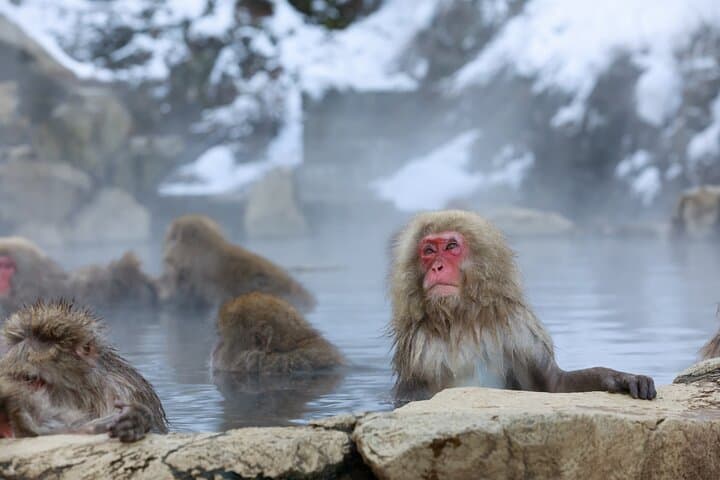


Steam rises like a slow exhale from a narrow valley as you step from the vehicle into the alpine hush of Nagano’s mountains. The trail to Jigokudani Monkey Park threads through fir and beech, a thirty-minute walk of soft roots and packed earth that opens onto a gorge where snow monkeys braid their days around a naturally warm onsen.
Steam rises like a slow exhale from a narrow valley as you step from the vehicle into the alpine hush of Nagano’s mountains. The trail to Jigokudani Monkey Park threads through fir and beech, a thirty-minute walk of soft roots and packed earth that opens onto a gorge where snow monkeys braid their days around a naturally warm onsen.
By midday the group moves to Zenko-ji, an understated temple in Nagano city whose broad wooden gate and dim interior date back to a foundation in the 7th century; its aisles have guided pilgrims for more than a millennium. Between those two notes — geothermal wildness and living history — the tour folds in a local sake tasting: short pours of Shinshu rice wine, cooled by mountain spring water that defines the region’s flavor.
Geology here is active and visible: volcanic heat below the valley feeds the hot springs, while the surrounding volcanic soils support dense forests and clear streams. Culturally, Zenko-ji remains a community center — nearby stalls serve simple bowls and rice crackers, and chefs lean on local apples and buckwheat in their kitchens.
Practical guidance: expect roughly six hours on a private vehicle itinerary, a 30–40 minute forest walk to the monkey enclosure (about 1.5–2 km roundtrip), and short strolls around the temple complex. Wear waterproof hiking shoes, bring layers for sudden mountain chill, and keep camera settings ready for low light without flash. Respect wildlife: no feeding, maintain distance, and follow guide instructions. Aim for morning or late afternoon visits for softer light and more active monkey behavior.