THE ADVENTURE COLLECTIVE® · Independent discovery and booking for outdoor travel

Swim through three types of cenotes—open, semi-open, and cave—and snorkel a passage in the Sac Actun underwater cave system. This four-hour guided expedition pairs easy snorkeling with geology, Mayan history, and conservation-minded cave protocol.
Swim through three types of cenotes—open, semi-open, and cave—and snorkel a passage in the Sac Actun underwater cave system. This four-hour guided expedition pairs easy snorkeling with geology, Mayan history, and conservation-minded cave protocol.
You push through a curtain of humidity and jungle leaves, and the air changes—cool, mineral-rich, and quiet enough that your breath sounds loud. The guide lowers a rubber ladder into a pool the color of polished jade and gestures: this is the open cenote. Sunlight flares across the surface in bright ribbons while the jungle leans forward, as if to see who has come to swim in an old well.
Verified experiences and guided adventures in the surrounding area.
Operated by Tulum & Riviera Maya Outdoors · Tulum, Quintana Roo
You push through a curtain of humidity and jungle leaves, and the air changes—cool, mineral-rich, and quiet enough that your breath sounds loud. The guide lowers a rubber ladder into a pool the color of polished jade and gestures: this is the open cenote. Sunlight flares across the surface in bright ribbons while the jungle leans forward, as if to see who has come to swim in an old well.
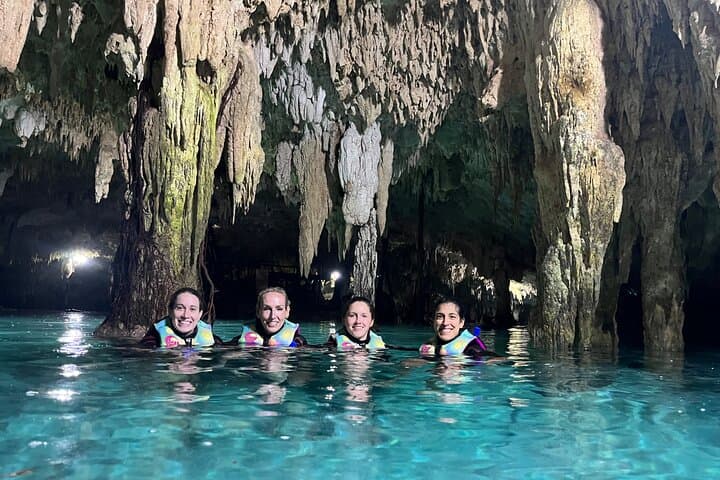
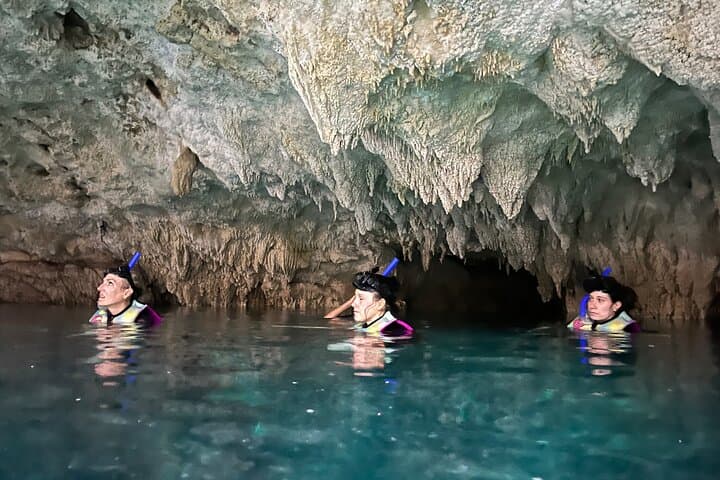
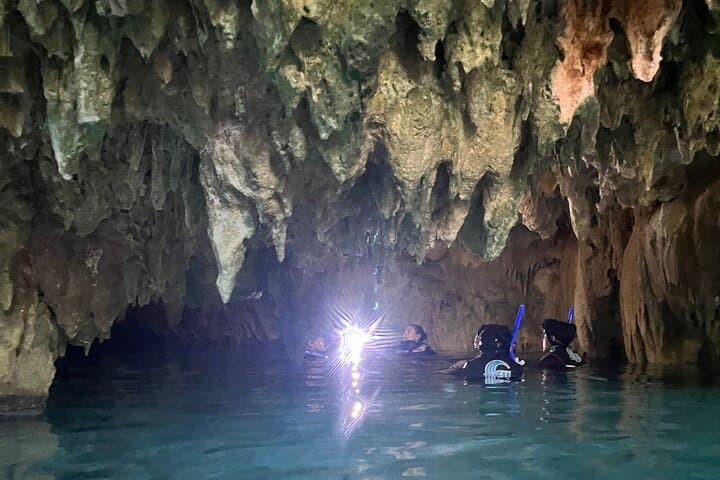
Over four hours you move between three distinct cenote environments: the open sinkhole where trees lean and birds call, a semi-open chamber where the roof has caved and a skylight frames the sky, and finally a true cave cenote whose cathedral darkness gives way to shafts of light and rock formations tens of thousands of years old. From the second cenote you’ll snorkel a passage through part of the Sac Actun system—the longest underwater cave network on Earth—where the current nudges you and the water seems to remember every drop that ever fell into it.
The cenotes are product and archive: a karst landscape scoured by eons of rain, then exposed when sea levels shifted and the limestone roof collapsed. To the Maya they were sources of life and portals to the underworld; ceremonial pottery and human remains discovered in many cenotes speak to that long relationship. Today local guides combine geology, Mayan history, and strict cave etiquette to keep both visitors and fragile formations safe.
Expect visibility that can run 10–30 meters depending on sediment and recent rain, and water temps around 24–26°C (75–79°F). Depths vary: shallow swim areas give way to deep caverns and suspended haloclines—layers that hang like veils between fresh and saltwater. The pace is gentle: snorkeling, occasional short walks on wooden platforms, and time to listen to bats and water dripping deep behind rock.
Practical details: tours typically include pick-up from Tulum hotels, entrance fees, and snorkel gear. Bring reef-safe sunscreen and a full change of clothes; waterproof bags keep cameras and phones safe. Move slowly in cave passages, follow your guide’s hand signals, and avoid touching formations—stalactites and flowstones take millennia to grow and seconds to scar.
This expedition suits travelers who want accessible, low-impact adventure with a heavy dose of natural history. It’s an intimate way to connect with a landscape where water still shapes the world beneath the jungle floor.
easy.
4 hours.
Suitable for most fitness levels; requires basic swimming ability and comfort in confined-water snorkeling
No—this tour is suitable for beginners; guides provide basic instruction and stay close during cave passages.
Yes, professional snorkel gear is included, but many travelers bring their own mask for fit and comfort.
Depths vary by cenote—shallow swimming areas of a few meters give way to caverns that can exceed 20–30 meters; guides will keep activities within safe, non-technical zones.
Children comfortable in water can join if accompanied by adults; non-swimmers should discuss options with the operator—flotation aids are available for those who need them.
Do not touch formations, do not use non-biodegradable sunscreen, and avoid feeding or disturbing wildlife such as fish and bats.
Cenote tours generally operate in light rain but may be rescheduled for safety in severe weather or during hurricane threats; check cancellation terms.
Cenotes formed when rain dissolved the Yucatán’s limestone, creating underground rivers; to the Maya these pools were vital water sources and sacred sites.
Operators limit group sizes and enforce no-touch policies; use reef-safe products and avoid entering after heavy rain to reduce sediment disturbance.
Tulum & Riviera Maya Outdoors operates guided outdoor trips and adventures with an emphasis on safety, stewardship, and memorable experiences.
You push through a curtain of humidity and jungle leaves, and the air changes—cool, mineral-rich, and quiet enough that your breath sounds loud. The guide lowers a rubber ladder into a pool the color of polished jade and gestures: this is the open cenote. Sunlight flares across the surface in bright ribbons while the jungle leans forward, as if to see who has come to swim in an old well.
You push through a curtain of humidity and jungle leaves, and the air changes—cool, mineral-rich, and quiet enough that your breath sounds loud. The guide lowers a rubber ladder into a pool the color of polished jade and gestures: this is the open cenote. Sunlight flares across the surface in bright ribbons while the jungle leans forward, as if to see who has come to swim in an old well.
Over four hours you move between three distinct cenote environments: the open sinkhole where trees lean and birds call, a semi-open chamber where the roof has caved and a skylight frames the sky, and finally a true cave cenote whose cathedral darkness gives way to shafts of light and rock formations tens of thousands of years old. From the second cenote you’ll snorkel a passage through part of the Sac Actun system—the longest underwater cave network on Earth—where the current nudges you and the water seems to remember every drop that ever fell into it.
The cenotes are product and archive: a karst landscape scoured by eons of rain, then exposed when sea levels shifted and the limestone roof collapsed. To the Maya they were sources of life and portals to the underworld; ceremonial pottery and human remains discovered in many cenotes speak to that long relationship. Today local guides combine geology, Mayan history, and strict cave etiquette to keep both visitors and fragile formations safe.
Expect visibility that can run 10–30 meters depending on sediment and recent rain, and water temps around 24–26°C (75–79°F). Depths vary: shallow swim areas give way to deep caverns and suspended haloclines—layers that hang like veils between fresh and saltwater. The pace is gentle: snorkeling, occasional short walks on wooden platforms, and time to listen to bats and water dripping deep behind rock.
Practical details: tours typically include pick-up from Tulum hotels, entrance fees, and snorkel gear. Bring reef-safe sunscreen and a full change of clothes; waterproof bags keep cameras and phones safe. Move slowly in cave passages, follow your guide’s hand signals, and avoid touching formations—stalactites and flowstones take millennia to grow and seconds to scar.
This expedition suits travelers who want accessible, low-impact adventure with a heavy dose of natural history. It’s an intimate way to connect with a landscape where water still shapes the world beneath the jungle floor.