THE ADVENTURE COLLECTIVE® · Independent discovery and booking for outdoor travel

Combine guided snorkeling, optional freediving or spearfishing and a beachside seafood grill on Trinidad’s north-west coast. This private, customizable six-hour trip pairs hands-on marine education with fresh-catch lunch and flexible pick-up from Port of Spain.
Combine guided snorkeling, optional freediving or spearfishing and a beachside seafood grill on Trinidad’s north-west coast. This private, customizable six-hour trip pairs hands-on marine education with fresh-catch lunch and flexible pick-up from Port of Spain.
The boat slips away from the shore and the swell breathes against the hull; sunlight fractures into silver on the water and the guide points toward a contour on the reef where parrotfish graze.
Verified experiences and guided adventures in the surrounding area.
Operated by eSpeara Charters · Chaguaramas, Diego Martin
The boat slips away from the shore and the swell breathes against the hull; sunlight fractures into silver on the water and the guide points toward a contour on the reef where parrotfish graze.
This is a day that moves at the tide: guided snorkel loops through coral gardens, optional freediving and spearfishing for competent divers, then a beachside grill where what was caught becomes the meal. The west and north coasts of Trinidad—approachable from Chaguaramas and smaller off-shore islands—are volcanic in origin, with fringing reefs formed on basalt shelves and pockets of sand between rocky outcrops.
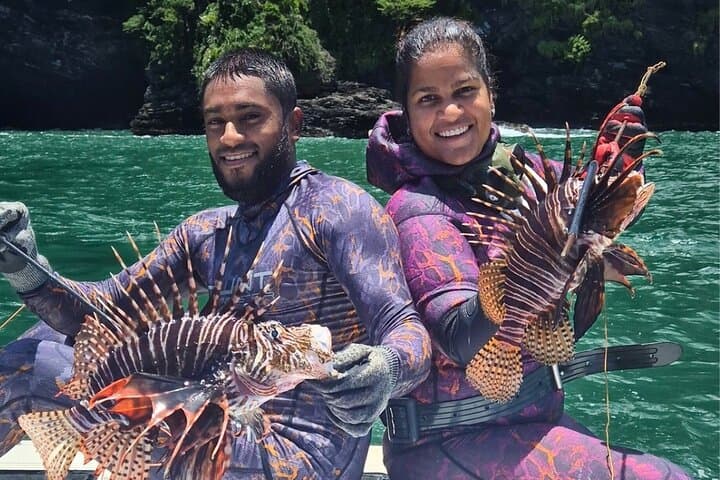
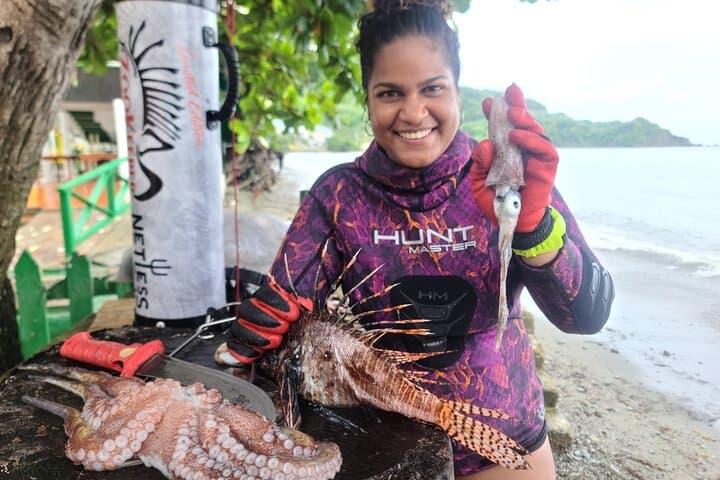
Local fishing culture here mixes Amerindian knowledge with centuries of European and African coastal traditions; small-scale fishers, boat builders and shore cooks have shaped how seafood is harvested and prepared. Guides commonly target invasive species like lionfish for removal, turning a conservation need into a fresh-course benefit.
Practically: tours run about six hours, include private transport, snorkel gear, bottled water and a grilled seafood lunch. Spearfishing requires experience and a buoy; instructors can add short freediving or spearfishing clinics. Expect reef swims on moderate chop; currents can test beginners, so basic snorkeling skills and comfort in open water are essential.
Plan for reef-safe sunscreen, a lightweight wetskin or rashguard for sun and abrasion protection, and a waterproof bag for valuables. Morning departures generally offer calmer seas and clearer visibility. Respect marine life—no touching coral—and ask guides about edible species and safe handling if you plan to help grill the catch.
moderate.
6 hours.
Moderate fitness; comfortable swimming ability and ability to climb in/out of boats and walk on uneven beach terrain.
No—beginners can join snorkel-only, but spearfishing should only be attempted by competent freedivers; instructors offer mini-classes to improve skills.
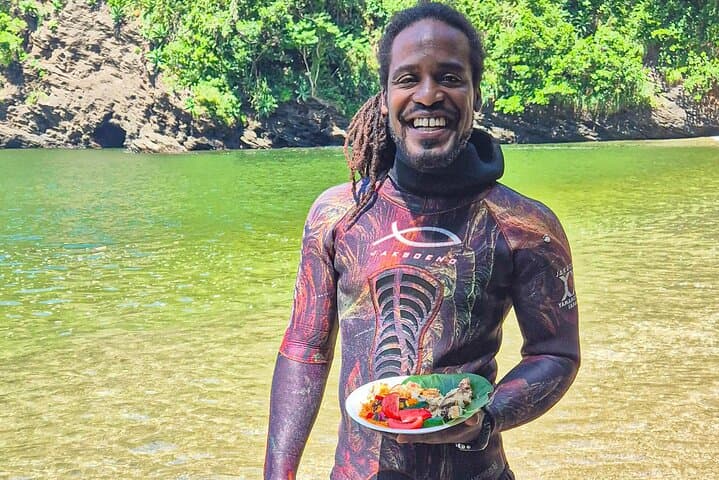
Yes; lunch with grilled seafood and sides is included and can feature locally caught items (you can request specific species when available).
Families are welcome; organizers recommend children be confident swimmers and may provide infant seats for transport—confirm age limits when booking.
The operator cancels for unsafe conditions with full refund if done at least 24 hours prior; same-day weather cancellations are possible and refunded per policy.
The north-west coast has a layered maritime history: Amerindian coastal use, colonial-era fishing and sugar-era settlements shaped local seafood traditions and boatcraft.
Guides often encourage removal of invasive lionfish and stress no-touch reef etiquette; use reef-safe sunscreen and avoid anchoring on coral to reduce impact.
eSpeara Charters operates guided outdoor trips and adventures with an emphasis on safety, stewardship, and memorable experiences.
The boat slips away from the shore and the swell breathes against the hull; sunlight fractures into silver on the water and the guide points toward a contour on the reef where parrotfish graze.
The boat slips away from the shore and the swell breathes against the hull; sunlight fractures into silver on the water and the guide points toward a contour on the reef where parrotfish graze.
This is a day that moves at the tide: guided snorkel loops through coral gardens, optional freediving and spearfishing for competent divers, then a beachside grill where what was caught becomes the meal. The west and north coasts of Trinidad—approachable from Chaguaramas and smaller off-shore islands—are volcanic in origin, with fringing reefs formed on basalt shelves and pockets of sand between rocky outcrops.
Local fishing culture here mixes Amerindian knowledge with centuries of European and African coastal traditions; small-scale fishers, boat builders and shore cooks have shaped how seafood is harvested and prepared. Guides commonly target invasive species like lionfish for removal, turning a conservation need into a fresh-course benefit.
Practically: tours run about six hours, include private transport, snorkel gear, bottled water and a grilled seafood lunch. Spearfishing requires experience and a buoy; instructors can add short freediving or spearfishing clinics. Expect reef swims on moderate chop; currents can test beginners, so basic snorkeling skills and comfort in open water are essential.
Plan for reef-safe sunscreen, a lightweight wetskin or rashguard for sun and abrasion protection, and a waterproof bag for valuables. Morning departures generally offer calmer seas and clearer visibility. Respect marine life—no touching coral—and ask guides about edible species and safe handling if you plan to help grill the catch.