THE ADVENTURE COLLECTIVE® · Independent discovery and booking for outdoor travel

Float between continents in Silfra, the fissure in Þingvellir where glacial melt creates near-perfect visibility. This guided drysuit snorkel offers 25–30 minutes in one of the clearest waters on earth, framed by tectonics and Icelandic history.
Float between continents in Silfra, the fissure in Þingvellir where glacial melt creates near-perfect visibility. This guided drysuit snorkel offers 25–30 minutes in one of the clearest waters on earth, framed by tectonics and Icelandic history.
You stand on the rocky rim of Þingvellir, wind pinching cheeks while the fissure ahead looks like a slice in the earth — a glass-blue crack where two tectonic plates casually drift apart. The water in Silfra is not just clear; it behaves like a polished mirror, daring you to trust its depth before you slip into a world where visibility exceeds 100 meters and every boulder and filament of algae holds a crystalline, almost surgical presence.
Verified experiences and guided adventures in the surrounding area.
Operated by Diving Island · Thingvellir, Southwest
You stand on the rocky rim of Þingvellir, wind pinching cheeks while the fissure ahead looks like a slice in the earth — a glass-blue crack where two tectonic plates casually drift apart. The water in Silfra is not just clear; it behaves like a polished mirror, daring you to trust its depth before you slip into a world where visibility exceeds 100 meters and every boulder and filament of algae holds a crystalline, almost surgical presence.
Silfra exists because the North American and Eurasian plates pull apart along the Mid-Atlantic Ridge; meltwater from the Langjökull glacier filters through volcanic rock for decades before emerging here. Þingvellir itself is a cultural landmark — Iceland’s parliament, the Alþingi, met on these plains from 930 CE — so your snorkel begins amid geology and history in equal measure.
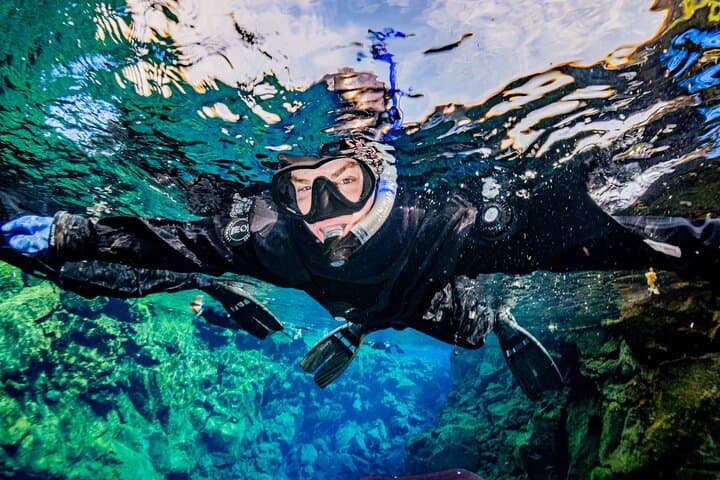
Practicalities are straightforward: meet at Þingvellir (about a 50-minute drive from Reykjavík), get fitted into a drysuit and dry-gloves, receive a short safety briefing, then glide with a guide for about 25–30 minutes in water typically near 2–4°C. Tours run roughly 2–3 hours including kit and a warm drink afterward. You’ll need moderate fitness, the ability to float and follow guidance, and to meet height/weight and age limits. Dress in warm layers to change into, protect electronics, and expect cancellations in severe weather.
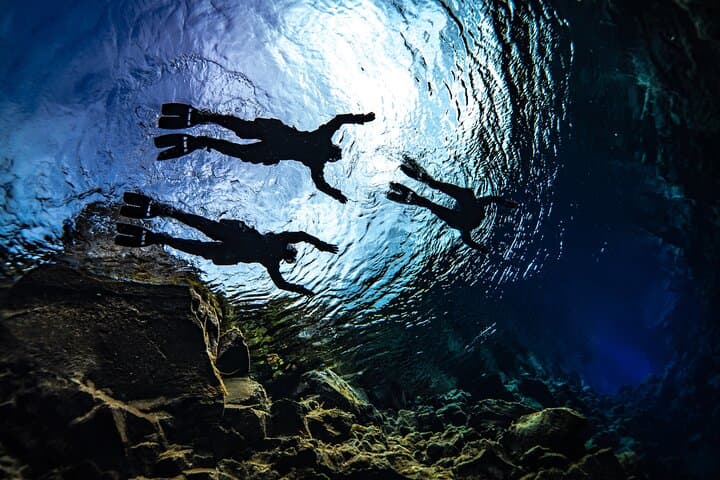
Silfra rewards quiet attention: currents that nudge you forward, canyon walls that whisper their volcanic past, and a silence that turns each breath into part of the landscape. Go prepared, respect park rules, and the memory will last longer than the cold.
moderate.
2–3 hours.
Moderate fitness and comfort in cold water required; you should be able to swim and float while following a guide.
Water temperatures are around 2–4°C; a drysuit (and provided dry-gloves) keeps you dry and insulated, though you’ll still feel cold during entry/exit and should dress warmly before and after.
No advanced experience required — guides brief you and stay with small groups, but you should be comfortable in the water and able to follow instructions.
Operators require height, weight, and age; typical restrictions include minimum height ~145 cm, maximum weight ~130 kg, and age range 12–60, plus BMI limits — check your tour’s booking questions.
Yes — tours may cancel for safety or insufficient participants; you’ll usually get a full refund if cancelled more than 24 hours before departure.
Þingvellir hosted the Alþingi (Iceland’s national assembly) from 930 CE and sits astride the Mid-Atlantic Ridge where the Eurasian and North American plates diverge.
Silfra sits inside a national park with strict rules; stay on designated paths, follow guide instructions, and minimize impact — the fragile water clarity depends on limited disturbance.
Diving Island operates guided outdoor trips and adventures with an emphasis on safety, stewardship, and memorable experiences.
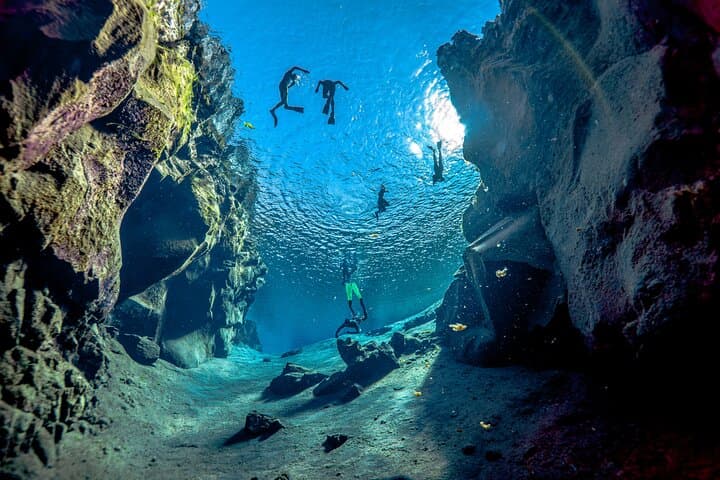
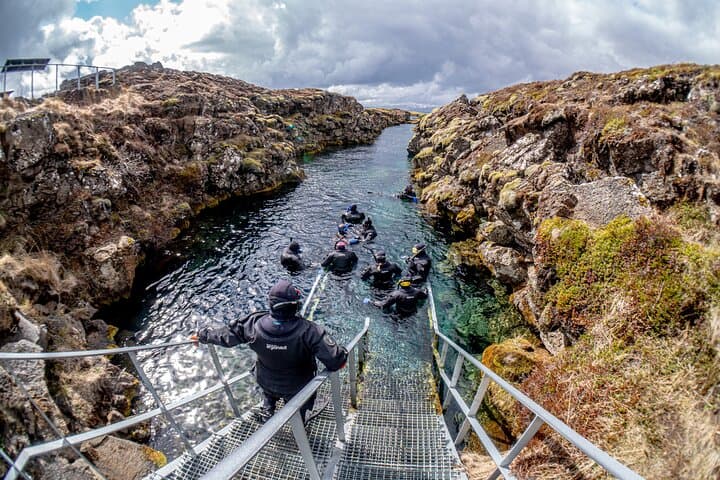
You stand on the rocky rim of Þingvellir, wind pinching cheeks while the fissure ahead looks like a slice in the earth — a glass-blue crack where two tectonic plates casually drift apart. The water in Silfra is not just clear; it behaves like a polished mirror, daring you to trust its depth before you slip into a world where visibility exceeds 100 meters and every boulder and filament of algae holds a crystalline, almost surgical presence.
You stand on the rocky rim of Þingvellir, wind pinching cheeks while the fissure ahead looks like a slice in the earth — a glass-blue crack where two tectonic plates casually drift apart. The water in Silfra is not just clear; it behaves like a polished mirror, daring you to trust its depth before you slip into a world where visibility exceeds 100 meters and every boulder and filament of algae holds a crystalline, almost surgical presence.
Silfra exists because the North American and Eurasian plates pull apart along the Mid-Atlantic Ridge; meltwater from the Langjökull glacier filters through volcanic rock for decades before emerging here. Þingvellir itself is a cultural landmark — Iceland’s parliament, the Alþingi, met on these plains from 930 CE — so your snorkel begins amid geology and history in equal measure.
Practicalities are straightforward: meet at Þingvellir (about a 50-minute drive from Reykjavík), get fitted into a drysuit and dry-gloves, receive a short safety briefing, then glide with a guide for about 25–30 minutes in water typically near 2–4°C. Tours run roughly 2–3 hours including kit and a warm drink afterward. You’ll need moderate fitness, the ability to float and follow guidance, and to meet height/weight and age limits. Dress in warm layers to change into, protect electronics, and expect cancellations in severe weather.
Silfra rewards quiet attention: currents that nudge you forward, canyon walls that whisper their volcanic past, and a silence that turns each breath into part of the landscape. Go prepared, respect park rules, and the memory will last longer than the cold.