THE ADVENTURE COLLECTIVE® · Independent discovery and booking for outdoor travel

A compact, interpretive waterfall day that pairs the intimate cascades of Twin Falls with the thunder of Snoqualmie Falls. Expect 1.5–2.5 miles of hiking, regional history, and a guide who blends natural science with local lore.
A compact, interpretive waterfall day that pairs the intimate cascades of Twin Falls with the thunder of Snoqualmie Falls. Expect 1.5–2.5 miles of hiking, regional history, and a guide who blends natural science with local lore.
You step off the van at Hagen Coffee Roasters with the damp, green smell of the Cascade foothills already tugging at your jacket. The guide folds a map into a joke and points the van toward a ribbon of river that seems to be daring you to follow it—first to Twin Falls, then to the much larger pulse of Snoqualmie Falls. The day moves in beats: a short, interpretive hike through old-growth pockets, an optional extension up rougher trail, and a drive that opens to a wide, thunderous viewpoint.
Verified experiences and guided adventures in the surrounding area.
Operated by Jared M. Hart · North Bend, Washington
You step off the van at Hagen Coffee Roasters with the damp, green smell of the Cascade foothills already tugging at your jacket. The guide folds a map into a joke and points the van toward a ribbon of river that seems to be daring you to follow it—first to Twin Falls, then to the much larger pulse of Snoqualmie Falls. The day moves in beats: a short, interpretive hike through old-growth pockets, an optional extension up rougher trail, and a drive that opens to a wide, thunderous viewpoint.
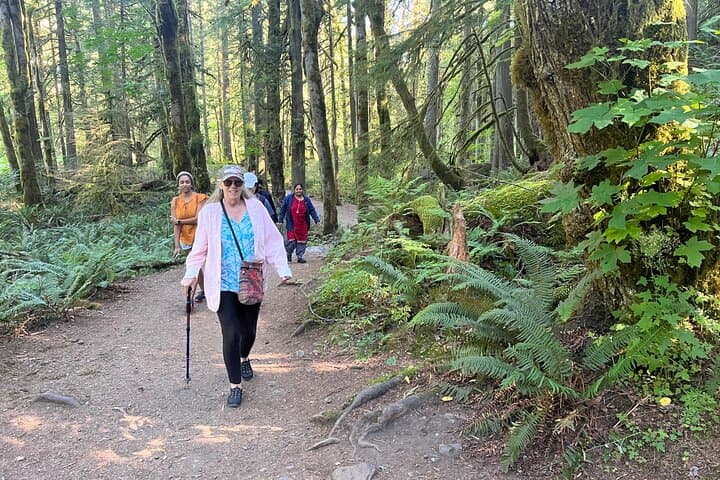
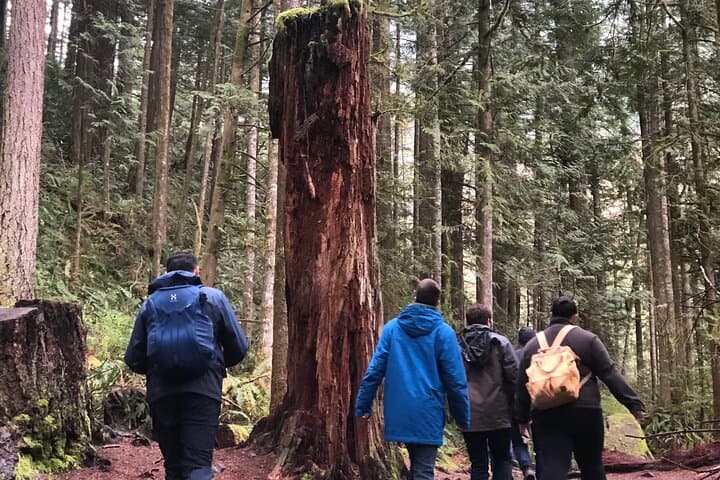
Twin Falls is intimate by comparison—water sluices through basalt, veiling the trail in mist and cool air. The first option on this tour is about 1.5 miles round-trip with roughly 300 feet of elevation gain to the first overlook; the extension stretches to about 2.5 miles and tightens into steeper, rooty terrain, adding another moderate climb. The route threads through a temperate rainforest where maples and Douglas-fir lean across the path like patient listeners to the guide’s stories.
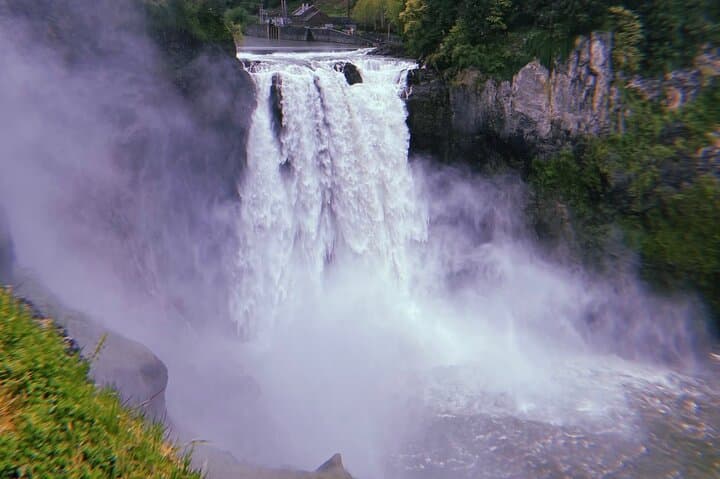
Snoqualmie Falls throws a different voice at you. From the overlook the falls send an audible drop that rearranges conversation. Geologically, both sites are carved into volcanic flows and glacial deposits—water exploiting seams in ancient basalt—and culturally they sit on land long inhabited by Coast Salish people who read these waters as life and power long before tourism arrived.
The guide blends natural history with local lore—salmon runs, hydroelectric development, and yes, the Pacific Northwest’s appetite for mysteries: UFO anecdotes, Bigfoot whispers and other entertaining diversions that keep the ride lively without stealing the landscape’s show.
Practical edge: the Twin Falls trail is singletrack, sometimes muddy and slick; the extension packs in roots and small rock steps. Expect variable terrain and short scramble sections if you go further. Snoqualmie’s main viewpoint is paved and accessible but can be crowded midday; mornings and late afternoons give softer light and fewer people.
Bring waterproof layers, grippy trail shoes and at least 1 liter of water—you’ll sweat on the climb and chill when the wind finds the falls. Leave time for photography: the guide schedules an hour of solo hiking on Twin Falls and a generous viewpoint stop at Snoqualmie.
This is a four-hour experience suited to anyone comfortable on 2–3 mile hikes with short climbs. It’s equal parts waterfall immersion and regional storytelling: a compact loop to see two of western Washington’s best cascades while learning what carved them and what keeps people talking about them.
moderate.
4 hours.
Moderately fit—comfortable walking up short climbs and uneven singletrack for 1.5–2.5 miles.
The first option is about 1.5 miles round-trip (easy–moderate); the extension is roughly 2.5 miles round-trip and includes steeper, rooty sections.
Snoqualmie Falls’ main overlook is paved and wheelchair-accessible; Twin Falls trail is singletrack with roots and steps and is not fully accessible.
Service animals are allowed per the tour operator; pets typically aren’t recommended due to trail conditions and crowds—confirm with the guide first.
Twin Falls trailhead has limited parking in nearby trail lots; Snoqualmie Falls has a larger parking area but it fills quickly on weekends—carpool or arrive early.
There are no special permits required beyond any local parking or facility fees; the tour includes applicable landing/facility fees.
Wear insulated, waterproof layers, warm gloves and a hat; traction devices (microspikes) can be useful if ice is present on colder days.
The falls sit on land historically used by Coast Salish peoples; later the Snoqualmie Falls site became central to regional hydroelectric development in the early 20th century.
Stay on trails to protect riparian vegetation and salmon spawning habitat; avoid stepping on moss and root mats which take decades to recover.
Jared M. Hart operates guided outdoor trips and adventures with an emphasis on safety, stewardship, and memorable experiences.
You step off the van at Hagen Coffee Roasters with the damp, green smell of the Cascade foothills already tugging at your jacket. The guide folds a map into a joke and points the van toward a ribbon of river that seems to be daring you to follow it—first to Twin Falls, then to the much larger pulse of Snoqualmie Falls. The day moves in beats: a short, interpretive hike through old-growth pockets, an optional extension up rougher trail, and a drive that opens to a wide, thunderous viewpoint.
You step off the van at Hagen Coffee Roasters with the damp, green smell of the Cascade foothills already tugging at your jacket. The guide folds a map into a joke and points the van toward a ribbon of river that seems to be daring you to follow it—first to Twin Falls, then to the much larger pulse of Snoqualmie Falls. The day moves in beats: a short, interpretive hike through old-growth pockets, an optional extension up rougher trail, and a drive that opens to a wide, thunderous viewpoint.
Twin Falls is intimate by comparison—water sluices through basalt, veiling the trail in mist and cool air. The first option on this tour is about 1.5 miles round-trip with roughly 300 feet of elevation gain to the first overlook; the extension stretches to about 2.5 miles and tightens into steeper, rooty terrain, adding another moderate climb. The route threads through a temperate rainforest where maples and Douglas-fir lean across the path like patient listeners to the guide’s stories.
Snoqualmie Falls throws a different voice at you. From the overlook the falls send an audible drop that rearranges conversation. Geologically, both sites are carved into volcanic flows and glacial deposits—water exploiting seams in ancient basalt—and culturally they sit on land long inhabited by Coast Salish people who read these waters as life and power long before tourism arrived.
The guide blends natural history with local lore—salmon runs, hydroelectric development, and yes, the Pacific Northwest’s appetite for mysteries: UFO anecdotes, Bigfoot whispers and other entertaining diversions that keep the ride lively without stealing the landscape’s show.
Practical edge: the Twin Falls trail is singletrack, sometimes muddy and slick; the extension packs in roots and small rock steps. Expect variable terrain and short scramble sections if you go further. Snoqualmie’s main viewpoint is paved and accessible but can be crowded midday; mornings and late afternoons give softer light and fewer people.
Bring waterproof layers, grippy trail shoes and at least 1 liter of water—you’ll sweat on the climb and chill when the wind finds the falls. Leave time for photography: the guide schedules an hour of solo hiking on Twin Falls and a generous viewpoint stop at Snoqualmie.
This is a four-hour experience suited to anyone comfortable on 2–3 mile hikes with short climbs. It’s equal parts waterfall immersion and regional storytelling: a compact loop to see two of western Washington’s best cascades while learning what carved them and what keeps people talking about them.