THE ADVENTURE COLLECTIVE® · Independent discovery and booking for outdoor travel

Settle into a chair and let the Snake River carry you past the Teton Range—three relaxed hours of close wildlife viewing and quiet river scenery. Guides supply binoculars, blankets, and local knowledge for a float that suits all fitness levels.
Settle into a chair and let the Snake River carry you past the Teton Range—three relaxed hours of close wildlife viewing and quiet river scenery. Guides supply binoculars, blankets, and local knowledge for a float that suits all fitness levels.
A summer sun slides along the river and the guide eases the boat into a quiet current; the sound is the kind that makes conversation slow down. On this three-hour float, chairs are set up in the pontoon like theater seats for a show that never loudly announces itself: the Teton Range rises to the west, cut in sharp angles that etch into blue sky, while the Snake River threads silver through cottonwood groves and grass flats. Bald eagles wheel overhead, pelicans drift like punctuation marks, and the occasional moose appears at the water’s edge, head bowed as if in private contemplation.
Verified experiences and guided adventures in the surrounding area.
Operated by Snake River Float Tours · Jackson, Wyoming
A summer sun slides along the river and the guide eases the boat into a quiet current; the sound is the kind that makes conversation slow down. On this three-hour float, chairs are set up in the pontoon like theater seats for a show that never loudly announces itself: the Teton Range rises to the west, cut in sharp angles that etch into blue sky, while the Snake River threads silver through cottonwood groves and grass flats. Bald eagles wheel overhead, pelicans drift like punctuation marks, and the occasional moose appears at the water’s edge, head bowed as if in private contemplation.
The Snake River is both recent and ancient—the product of glacial carving and volcanic shaping that left a broad valley known today as Jackson Hole. Euro-American trappers and mountain men followed the river corridor in the 19th century, while the Shoshone and other Indigenous groups have relationship with these waters for generations. Today the float operates inside the Greater Yellowstone ecosystem, a landscape still governed by seasonal rhythms: spring melt, summer migrations, autumn drawdowns, winter hush.
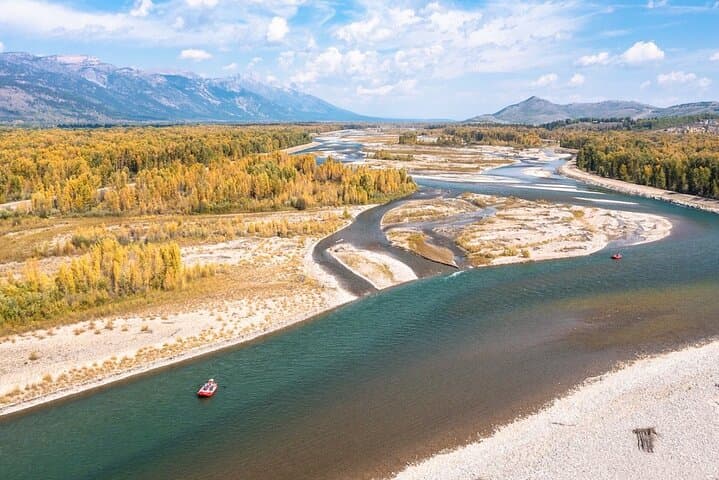
Geology is visible here: the Tetons are a fault block range that rose abruptly while the valley sank, and the river responds in braided loops, oxbows, and slow pools where beavers engineer the margins. Guides point out features and wildlife—binoculars and Yeti blankets are provided to keep the focus on comfort—so the trip reads as both natural history lesson and slow-motion wildlife safari.
Practicalities are straightforward. The tour meets at a visible pickup point in the Jackson area—look for the white school bus. Trips last about three hours and are pitched for all fitness levels; chairs and shaded canopies make the journey accessible for families and older travelers. Water, a fan mister, and binoculars are supplied, but bring a sun hat, layered outerwear, and a camera with a zoom lens. Mornings are quieter and cooler; late afternoon trips deliver warm light but more boat traffic. Guides will alter the route to follow wildlife sightings and river conditions, and trips can be canceled for weather or low attendance.
For photographers and keen naturalists, timing and patience reward you: a slow float gives multiple vantage points of the Tetons without the climb. Respect the animals—keep voices low and follow the guide’s instructions to avoid disturbing nesting birds or foraging mammals. With comfortable seats, knowledgeable guides, and a river that dares you to unwind, this float is an easy, high-value way to read the landscape of Jackson Hole at river pace.
easy.
3 hours.
Suitable for most fitness levels; requires the ability to step into a low boarding ramp and remain seated for the trip.
The excursion runs approximately three hours from meeting time to return.
Yes—binoculars and Yeti blankets are provided on the trip for guest comfort.
Yes; the trip is rated easy and accessible for most ages, but passengers must be able to step into the boarding area.
Common sightings include bald eagles, pelicans, osprey, great blue herons, sandhill cranes, river otters, beavers, deer, elk, and occasionally moose.
Trips may be canceled for inclement weather; the tour operator offers a full refund if you cancel at least 24 hours before departure or if organizers cancel due to weather.
Meet at the designated pickup point in the Jackson area—look for the white school bus as the meeting landmark.
The Snake River corridor has been a travel and resource route for Shoshone peoples long before Euro-American trappers arrived in the 19th century; later it became a route for ranching and early tourism tied to the Tetons.
Operations run inside the Greater Yellowstone ecosystem; follow guide instructions to minimize disturbance, pack out waste, and avoid shoreline trampling to protect nesting birds and riparian plants.
Snake River Float Tours operates guided outdoor trips and adventures with an emphasis on safety, stewardship, and memorable experiences.
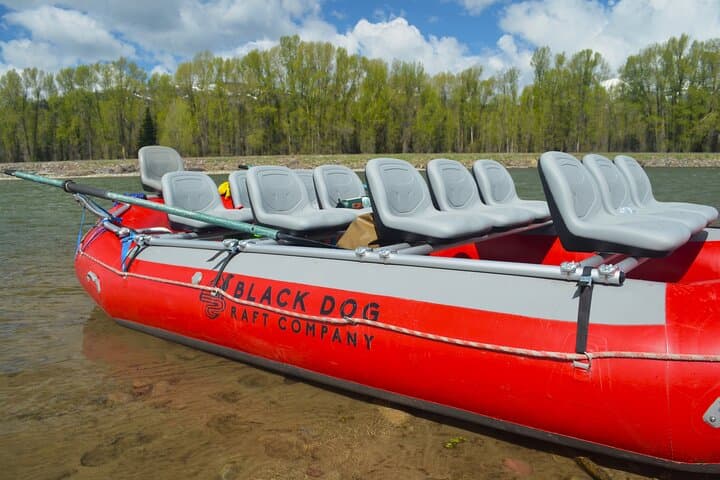
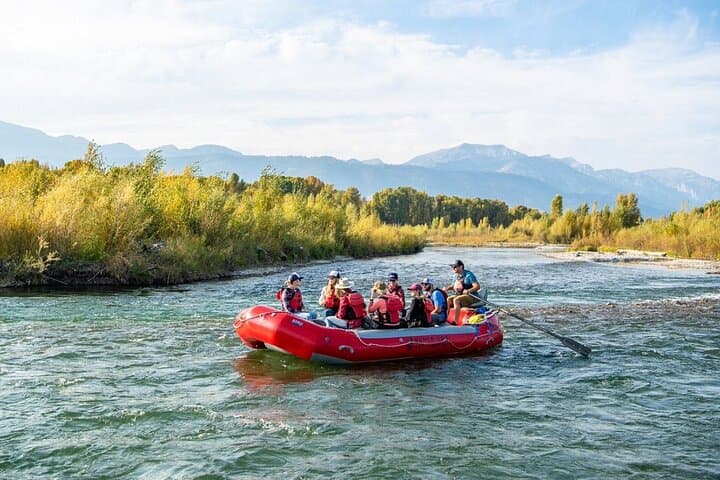
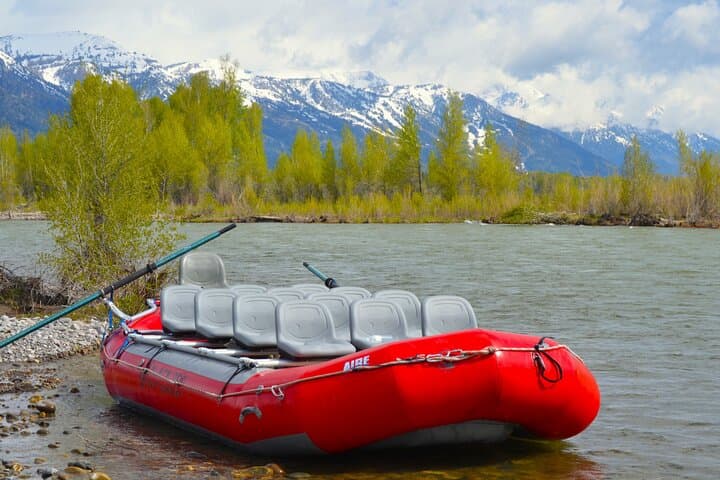
A summer sun slides along the river and the guide eases the boat into a quiet current; the sound is the kind that makes conversation slow down. On this three-hour float, chairs are set up in the pontoon like theater seats for a show that never loudly announces itself: the Teton Range rises to the west, cut in sharp angles that etch into blue sky, while the Snake River threads silver through cottonwood groves and grass flats. Bald eagles wheel overhead, pelicans drift like punctuation marks, and the occasional moose appears at the water’s edge, head bowed as if in private contemplation.
A summer sun slides along the river and the guide eases the boat into a quiet current; the sound is the kind that makes conversation slow down. On this three-hour float, chairs are set up in the pontoon like theater seats for a show that never loudly announces itself: the Teton Range rises to the west, cut in sharp angles that etch into blue sky, while the Snake River threads silver through cottonwood groves and grass flats. Bald eagles wheel overhead, pelicans drift like punctuation marks, and the occasional moose appears at the water’s edge, head bowed as if in private contemplation.
The Snake River is both recent and ancient—the product of glacial carving and volcanic shaping that left a broad valley known today as Jackson Hole. Euro-American trappers and mountain men followed the river corridor in the 19th century, while the Shoshone and other Indigenous groups have relationship with these waters for generations. Today the float operates inside the Greater Yellowstone ecosystem, a landscape still governed by seasonal rhythms: spring melt, summer migrations, autumn drawdowns, winter hush.
Geology is visible here: the Tetons are a fault block range that rose abruptly while the valley sank, and the river responds in braided loops, oxbows, and slow pools where beavers engineer the margins. Guides point out features and wildlife—binoculars and Yeti blankets are provided to keep the focus on comfort—so the trip reads as both natural history lesson and slow-motion wildlife safari.
Practicalities are straightforward. The tour meets at a visible pickup point in the Jackson area—look for the white school bus. Trips last about three hours and are pitched for all fitness levels; chairs and shaded canopies make the journey accessible for families and older travelers. Water, a fan mister, and binoculars are supplied, but bring a sun hat, layered outerwear, and a camera with a zoom lens. Mornings are quieter and cooler; late afternoon trips deliver warm light but more boat traffic. Guides will alter the route to follow wildlife sightings and river conditions, and trips can be canceled for weather or low attendance.
For photographers and keen naturalists, timing and patience reward you: a slow float gives multiple vantage points of the Tetons without the climb. Respect the animals—keep voices low and follow the guide’s instructions to avoid disturbing nesting birds or foraging mammals. With comfortable seats, knowledgeable guides, and a river that dares you to unwind, this float is an easy, high-value way to read the landscape of Jackson Hole at river pace.